
Related videos:
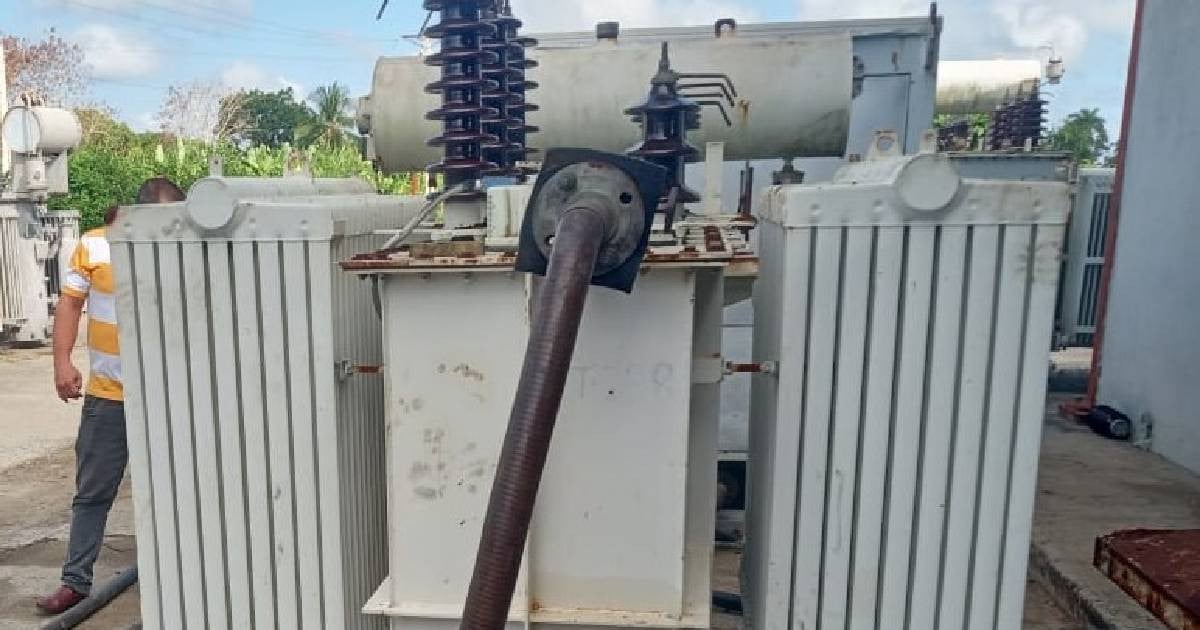
The province of Las Tunas has reported 11 thefts of dielectric oil and parts from electrical transformers so far this year, a situation that has left thousands of customers affected by prolonged power outages.
The technical director of the Electric Company of Las Tunas, engineer Anisley Santiesteban Velázquez, acknowledged the seriousness of the issue during a tour of the transformer workshop in the province.
"With the incidents in Yariguá and Lora, in the municipality of Jesús Menéndez, we have reached 11 criminal acts related to the theft of oil and transformer parts," stated Santiesteban in statements collected this Sunday by the official newspaper 26.
The community of Yariguá, located west of the city of Las Tunas, has been without electricity for four days following the theft of the dielectric oil from the transformer that supplied the area, leaving more than 4,000 residents in the dark amid the already critical energy situation in the country.
In response to the increase in these incidents, the Electric Company announced a package of measures that combines surveillance, repairs, and community involvement to try to protect an increasingly vulnerable infrastructure.
Among the actions listed is the repair of perimeter fences at 44 substations deemed a priority, many of which are damaged or in disrepair, allowing for easier access by criminals.
They also began installing solar lamps to keep the areas illuminated at night.
“To ensure that there is always lighting at night,” Santiesteban explained, referring to a strategy aimed at reducing the conditions of darkness that facilitate thefts.
The most striking measure has been the installation of chemical traps in cooperation with the Ministry of the Interior, although the authorities refrained from providing details about their operation.
Additionally, the plan includes hiring four security agents for each of the 44 prioritized substations. The executive also took the opportunity during his speech to issue a public call to those interested in joining these surveillance efforts.
The situation reflects how the economic crisis and the ongoing deterioration of the electrical infrastructure have turned transformer and fuel theft into a recurring problem, further exacerbating power outages and the hardships faced by entire communities in Cuba.
The theft of dielectric oil is not an isolated phenomenon in Las Tunas. On April 19, the theft of 600 liters of oil in Amancio left 40% of that municipality without electricity, affecting nearly 4,947 customers, a polyclinic, and a water pumping station.
The phenomenon extends across the island. In Santiago de Cuba, a man died and another suffered severe burns on April 11 when a transformer exploded while they were attempting to steal dielectric oil.
In Matanzas, a man was arrested in Jagüey Grande after leaving more than 4,400 homes, a hospital, and a polyclinic without electricity.
In Sancti Spíritus, three men were prosecuted for electrical sabotage after being caught in the act, while in Granma, the theft of dielectric oil left a community in Bayamo in the dark in April.
The legal framework has tightened. "Some time ago, a ruling from the People's Supreme Court announced that any crime related to electrical infrastructure will be considered sabotage," recalled Santiesteban Velázquez, referring to Ruling 475 from May 2025, which establishes penalties of seven to 15 years in prison, and up to 30 years or life imprisonment in severe cases.
Nevertheless, the thefts continue. The stolen oil is resold on the black market as a lubricant or fuel for tractors for up to 500 Cuban pesos per liter, in a context where the electricity generation deficit exceeds 2,200 MW and outages affect 70% of the population.
Filed under: