
Related videos:
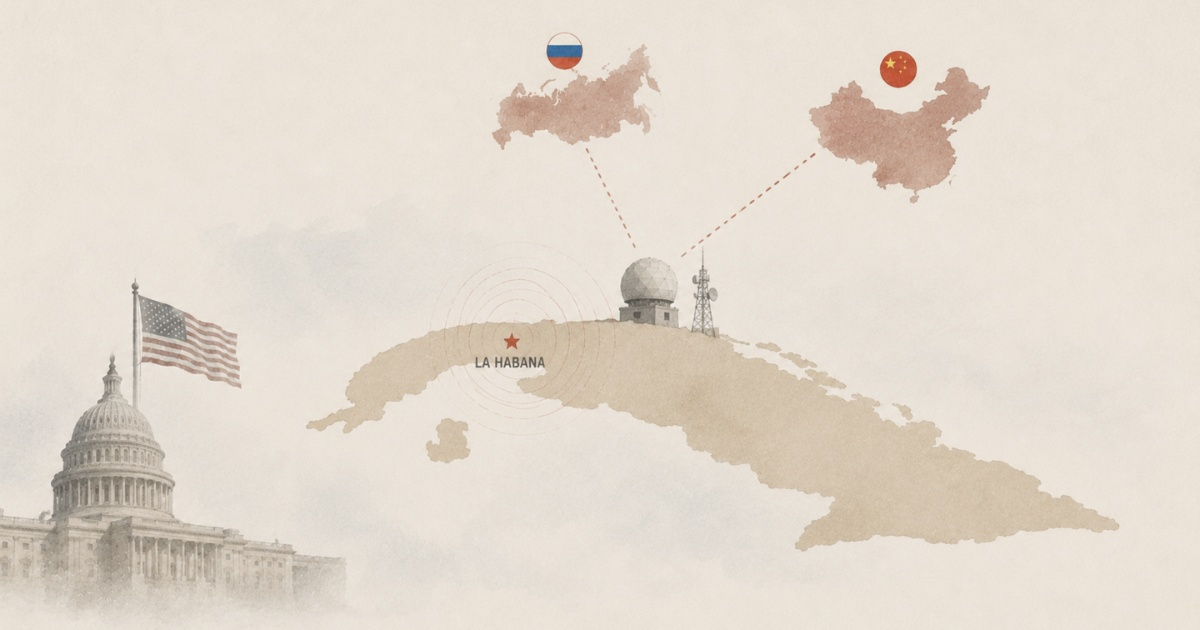
China and Russia have nearly tripled their intelligence personnel in Cuba since 2023 and invested in electronic listening facilities designed to spy on U.S. military bases in Florida, according to officials familiar with classified U.S. intelligence assessments, as stated in a report published this Friday by the Wall Street Journal.
The facilities, located just about 100 miles (160 kilometers) off the U.S. coast, are positioned to monitor two military headquarters in Florida that oversee operations in the Middle East and Latin America.
According to the report, both Beijing and Moscow have incorporated more modern equipment into their respective facilities, enhancing their ability to intercept military communications, maritime traffic, and other intelligence signals from the southeastern United States.
The U.S. government is aware that China has been operating a surveillance facility in Cuba since at least 2019, but new assessments indicate that the expansion has continued at an accelerated pace. Reports suggest that China could pay Cuba billions of dollars to host or upgrade these facilities, while the Havana regime downplays or denies the extent of the cooperation.
In December 2024, the Center for Strategic and International Studies (CSIS) identified at least 12 facilities linked to signals intelligence associated with China in Cuba, distributed across four main sites: Bejucal, El Wajay, Calabazar, and El Salao. The latter, located in Santiago de Cuba, is about 70 miles from the Guantanamo Naval Base.
The WSJ report comes at a time of heightened diplomatic tension. On April 28, Secretary of State Marco Rubio publicly accused Cuba of hosting Chinese and Russian intelligence operations, warning that "Washington will not allow any foreign military, intelligence, or security apparatus to operate with impunity just 90 miles from the shores of the United States."
China rejected the accusations. The spokesperson for the Ministry of Foreign Affairs, Lin Jian, described cooperation with Cuba as “legitimate, transparent, and in accordance with international law”, while Beijing accused the U.S. of “inventing pretexts and spreading rumors.”
On May 14, the CIA director, John Ratcliffe, traveled to Havana and met with Interior Minister Lázaro Álvarez Casas and Cuban intelligence officials. During the visit, Ratcliffe warned that the "window of opportunity" would not remain open indefinitely and that "Cuba cannot continue to be a platform for adversaries to advance hostile agendas in the hemisphere."
The Cuban Deputy Foreign Minister responded that "Cuba has never threatened the U.S.," in a stance that the regime has consistently maintained in response to each new accusation.
Tension escalated further on May 17, when Axios reported that Cuba had acquired more than 300 military drones, with discussions about possible uses against U.S. installations, including the Guantanamo Naval Base, warships, and Key West.
The National Defense Authorization Act signed in December 2025 requires the Pentagon to submit a detailed report to Congress on the intelligence capabilities of China and Russia in Cuba before June 2026, making the new WSJ report a direct endorsement of the maximum pressure campaign that the Trump administration is maintaining against Havana.
Filed under: