
Related videos:
The Indio Hatuey Experimental Station for Pastures and Forage, located in Perico, Matanzas, announced the receipt of a donation of supplies and equipment valued at approximately 128,000 dollars to strengthen the CIENPINOS project in Cuba.
The assistance was financed by the Swedish Agency for International Cooperation (ASDI) and managed by the Tropical Agricultural Research and Higher Education Center (CATIE), based in Costa Rica.
According to the official publication from Indio Hatuey, "the resources benefit 33 farms in Pinar del Río (Viñales and La Palma) and Cienfuegos (Cumanayagua and Abreus)."
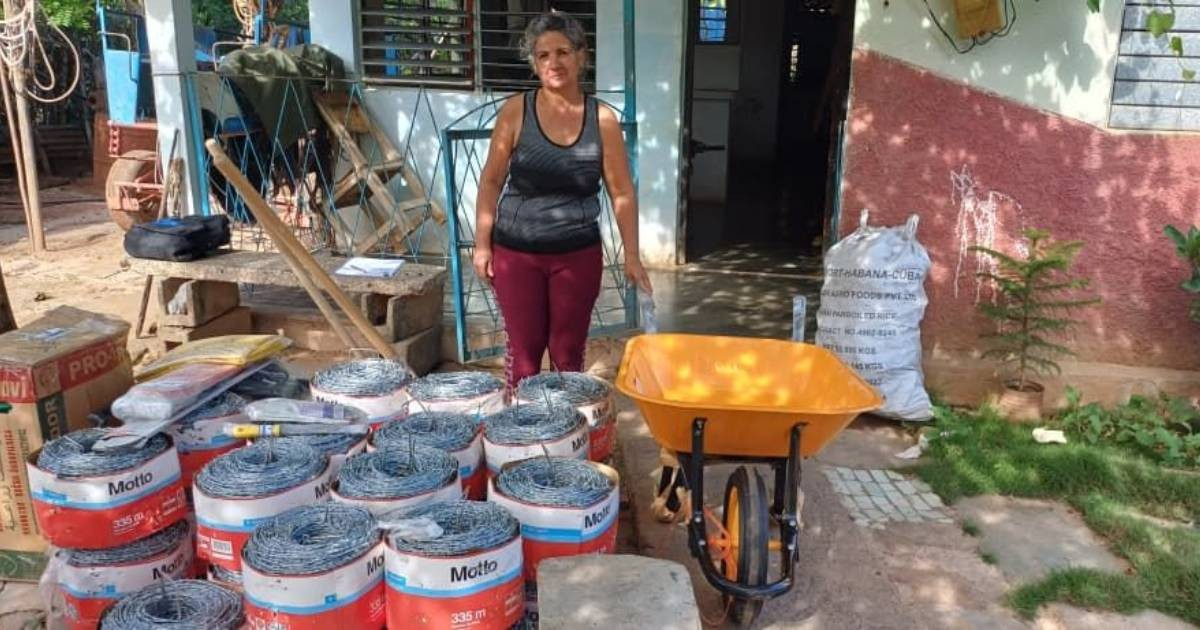
Among the supplied items, barbed wire rolls of the brand Motto, STIHL chainsaws model MS 192, PRO-18 sprayers, wheelbarrows, and various tools were identified, as shown in the photographs accompanying the announcement.
The institution described the initiative as an effort to "promote sustainable practices, improve working conditions, and enhance productivity with an environmental focus."
CIENPINOS is a cooperation project launched in April 2023 whose name combines the provinces of Cienfuegos and Pinar del Río, and works on two value chains: silvopastoral goats and pasture-raised pigs in mixed pine-oak forests.
The donation arrives amidst an unprecedented agricultural and food crisis on the Island.
According to the World Food Program, between 2018 and 2023, Cuban production of pork declined by 95%, rice by 87%, beans by 70%, and milk by 58%.
Cuba imports about 70% of the food it consumes, with an estimated annual expenditure of 2 billion dollars.
In April 2026, 96.91% of the Cuban population lacked adequate access to food, according to the Food Monitor Program, and five provinces—among them Cienfuegos and Matanzas—were at critical levels of food survival.
The agricultural sector has had to resort to oxen, buffalo, and windmills due to the fuel shortage, and the planting campaign at the end of April 2026 was only completed at 70%.
The economist Pedro Monreal described the current agricultural crisis as “more profound and longer-lasting” than that of the Special Period.
In that context, the donation to 33 farms —although modest compared to the national scale of the problem— contrasts with the widespread scarcity faced in rural Cuba, where the Day of the Farmer finds empty markets and the official press acknowledges that "there is no economy for a nationwide solution."
Filed under: