
Related videos:
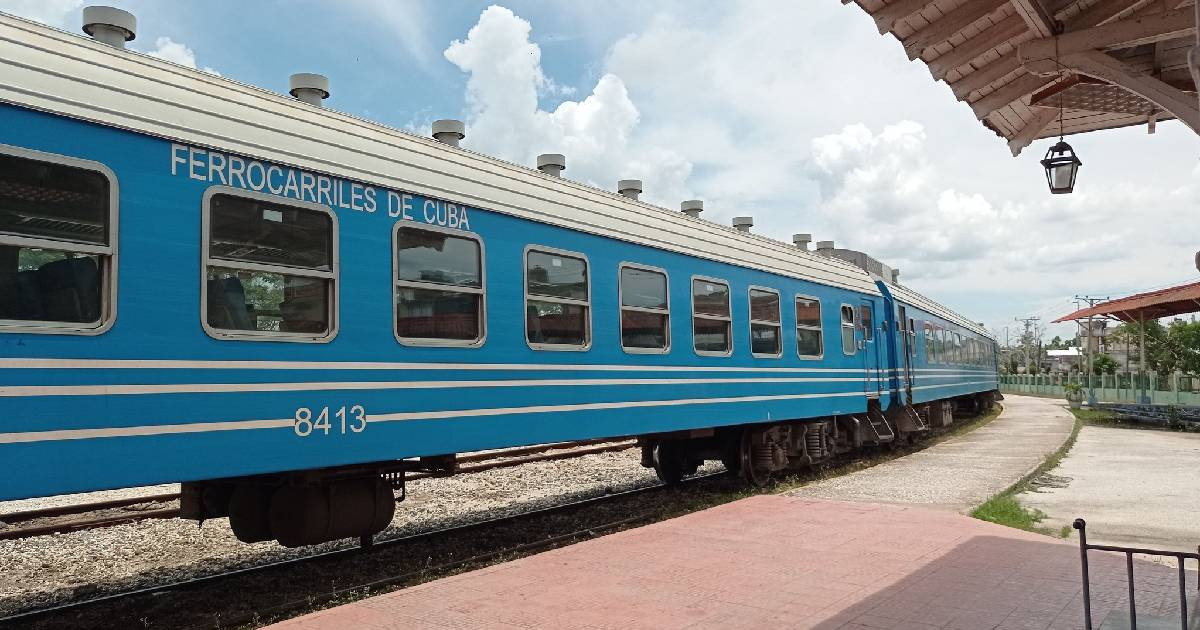
The parents of a Cuban woman took 27 hours to complete the train journey from the city of Holguín to Havana, as they departed on Friday at 3:20 p.m. and arrived on Saturday at 6:30 p.m., according to a Facebook post that describes the trip as a true railway odyssey.
Laura Labrada Utria recounted her parents' experience with a blend of amazement and irony. "During that same period, one could take a plane, traverse the entire planet, and land in China. But no, my parents preferred slow travel, veryyy slow, to fully appreciate the national scenery in all its glorious detail and end up nearly fainting," she emphasized.
The time taken nearly doubles the estimated journey under normal conditions. The Holguín–Havana route, which covers approximately 735 km, should be completed in about 16 hours according to travel planning platforms. The recorded 27 hours reflect the state of collapse of the Cuban railway system.
The incident is not isolated. In February, passengers on the Havana–Santiago de Cuba train were stranded in Camagüey due to a broken locomotive, with reports of travel times extending up to 30 hours.
In January, another train on the same route departed with over three hours of delay and was still stopped in Camagüey at 3:45 a.m. the next day, with unsanitary bathrooms.
The structural crisis explains these chronic delays. The Ministry of Transportation (Mitrans) acknowledged in 2025 that out of the 20 locomotives needed, only 14 were operational on average during 2024, and just 63% of the planned cars were functioning properly.
The fuel shortage worsens the situation. The Minister of Energy, Vicente de la O Levy, admitted on May 13 that Cuba had "no fuel, no diesel, only associated gas."
Venezuela interrupted its oil shipments, Mexico practically suspended its supplies in January, and a Russian shipment of 730,000 barrels that arrived on March 31 ran out by early May.
In light of this situation, Cuba has reduced the frequency of trains and buses to one departure every eight days per destination since February, when Mitrans declared a state of emergency in transportation.
Road transport is also not immune to the crisis; in March, a rented bus from Santiago to Havana suffered six breakdowns and took almost 20 hours, with a fare of 17,000 pesos.
The situation will worsen in the coming weeks. The Minister of Transport, Eduardo Rodríguez Dávila, announced on May 15 that starting June 18, trains to Santiago, Guantánamo, Holguín, and Bayamo-Manzanillo will only operate one round trip approximately every two weeks, leaving millions of Cubans with even more limited interprovincial transportation options.
Filed under: