
Related videos:
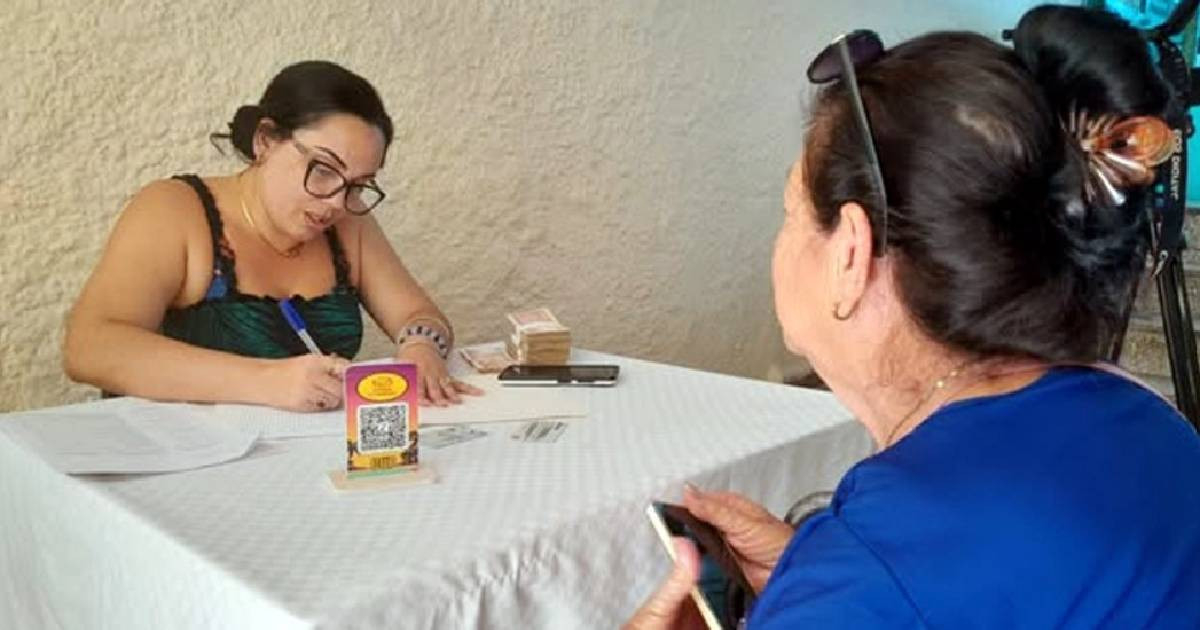
The municipal government of Holguín has launched a pilot plan to pay pensions in cash to retirees through nearly 20 micro, small, or medium enterprises (mipymes) and private economic actors, in direct response to the collapse of the banking system and the exhausting queues that older adults endure each month, reported this Sunday by the station Radio Holguín.
The initiative, endorsed by an official procedure from the Central Bank of Cuba (BCC), anticipates that around 5,000 pensioners (9.6% of the total) in the municipality will receive their money through this method in a phased approach, as confirmed by Ada Karenia Guerra, deputy director for the Economy in the municipal government.
The company Benjully Bar was the first to participate, making payments to around 50 retirees from the popular council of Centro de ciudad Norte.
Other SMEs participating in the project include Fajardo's Pizza, La Emperatriz, Frenas Conmigo, Excelencia Reyes, Provarte, and LiuMonte, among others.
The mechanism allows businesses to use the cash collected from their own services to pay retirees directly, avoiding the need for the money to go through the bank before reaching them, the source added.
The chairwoman of the BCC, Juana Lilia Delgado Portal, directed to extend this modality nationwide.
The municipality of Holguín has more than 52,000 retirees, but only 5,000 will benefit in this first phase, highlighting the magnitude of the problem in relation to the limited scope of the solution.
Two days before the announcement, dozens of retirees crowded the bank branches in Holguín to collect their pensions, in scenes described by digital creator Pedro Lorenzo Hechavarría Pupo as "A new month... The same problem."
"Terrible, it’s the same all over the country, it’s truly abusive," summarized Rosa Luz, a Facebook user, upon seeing the images of the lines of retirees in Holguín.
This is not the first time that the government has turned to non-state actors to compensate for the shortcomings of the state banking system. In April, the BCC launched a similar pilot plan in four municipalities of Havana - La Lisa, Playa, Plaza de la Revolución, and Old Havana - supported by the Metropolitan Bank and the Ministry of Labor and Social Security.
In that Havana pilot program, businesses had to request their inclusion to be declared "Non-Banking Agents" and received commissions as an incentive.
The scenes of elderly people sleeping in bank doorways in Camagüey using sheets and cardboard to secure their place in line, or police organizing queues in Cienfuegos, have become a recurring sight throughout the country.
The maximum pension in Cuba is 4,000 Cuban pesos per month, less than 10 dollars at the informal exchange rate, while the basic basket in Havana is approximately 12,000 pesos per person, three times that amount.
Cuba has over 1.7 million retirees who depend on a collapsed banking system, with scarce ATMs, terminals rendered unusable due to power outages, and branches operating on reduced hours, while the banking policy launched in 2023 worsened the situation instead of resolving it.
Filed under: