
Related videos:
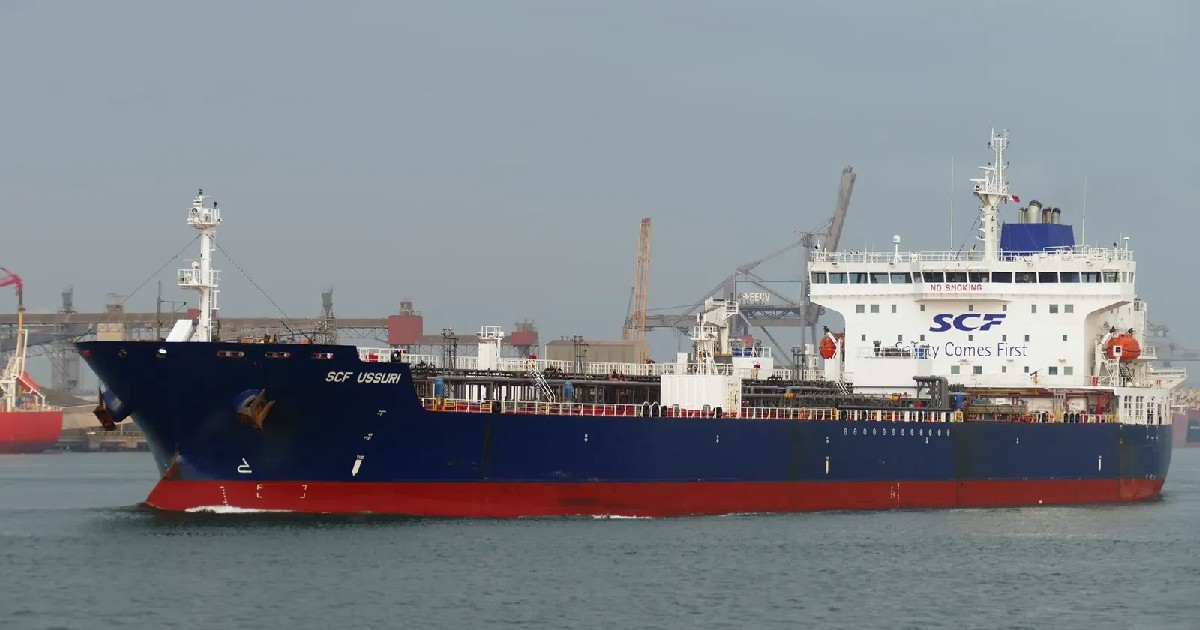
The Russian tanker Universal, which is carrying around 250,000 barrels of diesel that are greatly needed in Cuba, took an unexpected turn in its trajectory and is now heading towards the South Atlantic, moving away from the Cuban coast with an unknown destination.
Jorge Piñón, researcher at the Energy Institute of the University of Texas, confirmed the change to CiberCuba.
"It's not just the change in direction but also the speed. After more than thirty days in limbo, the Universal has made a clear change of course, entering the South Atlantic, far from Cuban shores. Its speed has increased from 1.3 knots to 10.5 knots, indicating a specific destination. The final destination is still unknown," said Piñón.
The vessel, sanctioned by the United States (OFAC), the European Union, and the United Kingdom (OFSI), had been sailing at minimal speeds and with an erratic course since departing from the Russian port of Vysotsk on January 18, 2026.
The maritime tracking systems register its destination as "FOR ORDER," meaning there is no defined port of arrival, which maintains uncertainty about whether the cargo will ultimately reach the island.
The timeline of their movements reflects weeks of indecision
On April 27, it was sailing at 3.4 knots on a northwest course; by May 13, it had reduced its speed to just one knot; on May 18, it was moving at 0.6 knots.
The turn towards the southeast registered this weekend represents the first clear sign that the vessel has a specific destination, although it has not been disclosed what that is.
El Universal belongs to the Russian state shipping company Sovcomflot and was built in 2009. Its history includes changes of flag under the registrations of Cyprus, Liberia, Gabon, Barbados, and Comoros before once again flying the Russian flag in 2025, a common practice in the so-called phantom fleet that Moscow uses to evade sanctions.
The diversion of the ship arrives at the worst time for Cuba
The only Russian shipment received in 2026 —730,000 barrels of crude brought by the Anatoly Kolodkin, which docked in Matanzas on March 31— was depleted in early May.
The Cuban Minister of Energy, Vicente de la O Levy, admitted on May 14 that the country had "absolutely no fuel, no diesel, only associated gas."
Since then, blackouts have reached record deficits of up to 2,153 MW, leaving more than half of the country without electricity simultaneously.
The precedent of the vessel Sea Horse —which in March 2026 diverted its cargo of Russian diesel from Cuba to Trinidad and Tobago after new OFAC restrictions— illustrates how the pressure from Washington can change maritime routes without the need for direct intervention.
According to maritime tracking data, the estimated arrival of the Universal is set for June 7, although this information lacks validity as long as the destination remains listed as "unordered."
Filed under: