
Related videos:
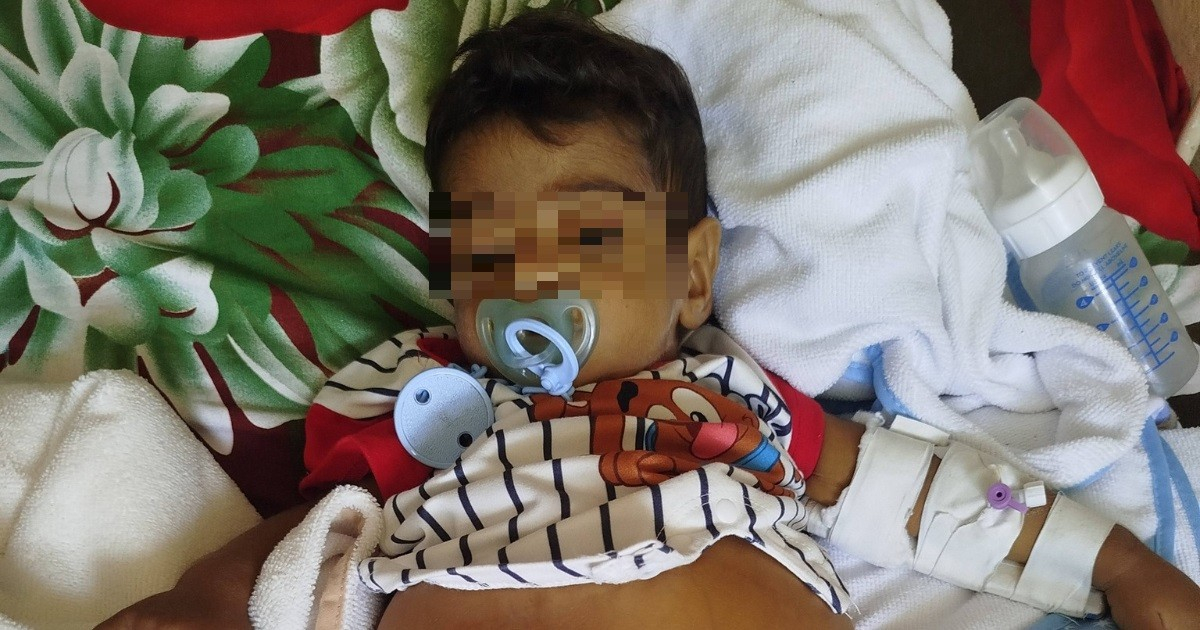
Yamilka Lafita, known on social media as Lara Crofs, announced that she is in contact with the parents of baby Raybel David Gómez Santana, a 10-month-old boy from Sancti Spíritus who urgently needs a liver transplant, and whose case was spread this Monday along with the desperate plea from his parents: “Please, don’t let my son die.”
Lafita, who in 2024 led the solidarity campaign that allowed the child Amanda Lemus Ortiz —also from Sancti Spíritus and suffering from the same illness— to be brought to Spain for the transplant that the Cuban healthcare system was unable to provide, confirmed that she will support this family in the same way.
"It is a case very similar to that of our Amanda, but even more delicate due to the baby's age and the seriousness of her situation," wrote the activist on her Facebook profile.
Lafita reported that she spoke directly with Raudelvis Gómez Carabeo, the father of the baby, who explained everything the family is going through.
"We speak clearly and directly: they are desperate parents trying to save their child's life, and they will go, just like Mila and Emmanuel did at their time, to the very last consequences to save their baby's life," wrote the activist.
Raybel David suffers from biliary atresia without a gallbladder or common bile duct, a congenital disease that obstructs the flow of bile and causes progressive liver damage.
The Kasai surgery performed on him failed, and the baby is showing severe liver failure with ascites and edema, with visible inflammation in the abdomen and feet.
Both the father and the mother are compatible to donate a portion of their liver.
"We are both compatible; whoever is needed donates a part," Raudelvis stated.
The main bureaucratic obstacle is the lack of an acceptance letter from a Spanish hospital: without that document, the Consulate of Spain does not grant the humanitarian visa.
That same knot was what Amanda Lemus Ortiz's family faced, and it was precisely Lara Crofs who resolved it by coordinating directly with the Hospital Universitario La Paz de Madrid.
Amanda's transplant took place on March 15, 2024, where her father donated a portion of his liver, following a solidarity campaign that raised over $20,000.
In January 2026, Amanda celebrated her fourth birthday with an exemplary recovery, in painful contrast to what the Cuban regime had in store for her: months of waiting and refusals while her liver deteriorated.
Not all cases have ended that way.
The eight-month-old baby Rafael Junior Chávez Carrera died on June 29, 2025 at the William Soler Pediatric Hospital in Havana without receiving the transplant he needed, despite his mother being a compatible donor.
That pattern—children who die or are about to die because Cuba cannot perform pediatric liver transplants or facilitate them abroad—repeats itself while the regime justifies the 148% increase in the infant mortality rate by citing technological restrictions due to the U.S. embargo.
Lafita, despite acknowledging that she is going through a complicated personal moment, was unequivocal: "Even though I'm in a really tough spot right now, I will support you in every way I can, just like I did with Amanda. I hope to have the support of the entire Cuban community."
His message concluded with a phrase that encapsulates the urgency: "Saving what is human is the immediate concern."
Filed under: