
Related videos:
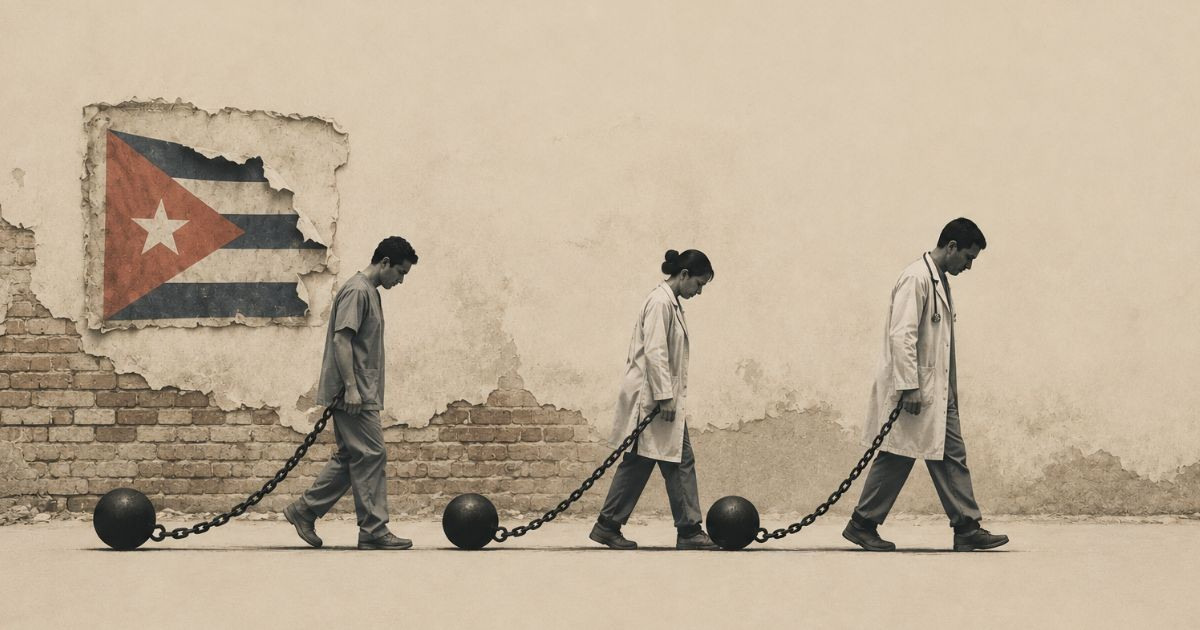
The Cuban regime celebrated this Monday the 63rd anniversary of its international medical cooperation program with an official event in which high-ranking officials presented the missions as a symbol of altruism, while international organizations document them as a modern form of slavery.
The doctor Gretza Sánchez Padrón, director of the Central Medical Cooperation Unit (UCCM), described the program as "the noblest face of the revolution" and "the embrace of a people small in size but immense in values."
And although Cuban doctors are, in general, an example of sacrifice and selflessness—especially during the current crisis, where they often perform "magic" to save lives—the so-called medical missions operate as a modern system of exploitation that primarily benefits the coffers of the regime.
In the event, the first Deputy Minister of Public Health, Tania Margarita Cruz Hernández, also spoke, presenting official figures: more than 600,000 collaborators sent to 165 countries over six decades, 14 million lives saved, 18 million surgical interventions, and more than five million births attended.
Cruz Hernández stated that currently, Cuba has "more than 16,000 collaborators in 50 countries around the world" and accused the United States of pressuring governments to terminate contracts with Cuba, rhetorically asking: "Who do they condemn? They condemn the unprotected, depriving them of the universal right to health and life."
Sánchez Padrón, on behalf of the cooperators, reaffirmed "absolute loyalty to the Homeland, to the Revolution" and expressed explicit support for Raúl Castro and Miguel Díaz-Canel.
The official discourse contrasts radically with what international organizations document.
On April 7th, the Inter-American Commission on Human Rights (CIDH) published a report of 199 pages which concludes that the program operates with serious indications of forced labor, human trafficking, and modern slavery, and recommended that all countries on the continent withdraw from it.
The report, based on testimonies from 71 professionals on missions in 109 countries, documented that the Cuban state retains between 60% and 97.5% of the salary paid by recipient countries: in Mexico, the government paid about $3,750 monthly for a Cuban doctor, while the professional received only $200.
In addition to that wage retention, there is the confiscation of passports and academic documents, political surveillance, and reprisals against those who leave the mission.
Article 135 of the Cuban Penal Code punishes abandonment with a prison sentence of three to eight years, and Decree-Law 306 of 2012 allows for a prohibition on returning to Cuba for eight years.
In September 2025, Cuban doctors who broke away from the mission in Italy described the situation with one phrase: "They blackmail you with your credentials."
In 2019, defected doctors had already declared to the agency AFP that the program constituted a "system of modern slavery." One of them, identified as Orazal Sánchez, was direct: "The sad thing is that we are still slaves. We believe we are free, but as long as we have family in Cuba, we continue to work for that system."
In April 2025, the European Parliament approved Amendment 311, which classifies Cuban medical brigades as "modern slavery" and "forced labor" in the central document of European foreign policy.
International pressure has had an effect: in the first months of 2026, Guatemala, Honduras, Jamaica, Guyana, Antigua and Barbuda, the Bahamas, Dominica, Grenada, and even Nicaragua—historical ally of the regime—canceled or did not renew their agreements with the program.
Medical missions generate between 4.882 billion and 8 billion dollars annually in foreign currency for the Cuban government, making them the primary source of income for the regime, surpassing tourism, while more than 300 Cuban doctors are trapped in a migratory limbo in the United States.
Filed under: