
Related videos:
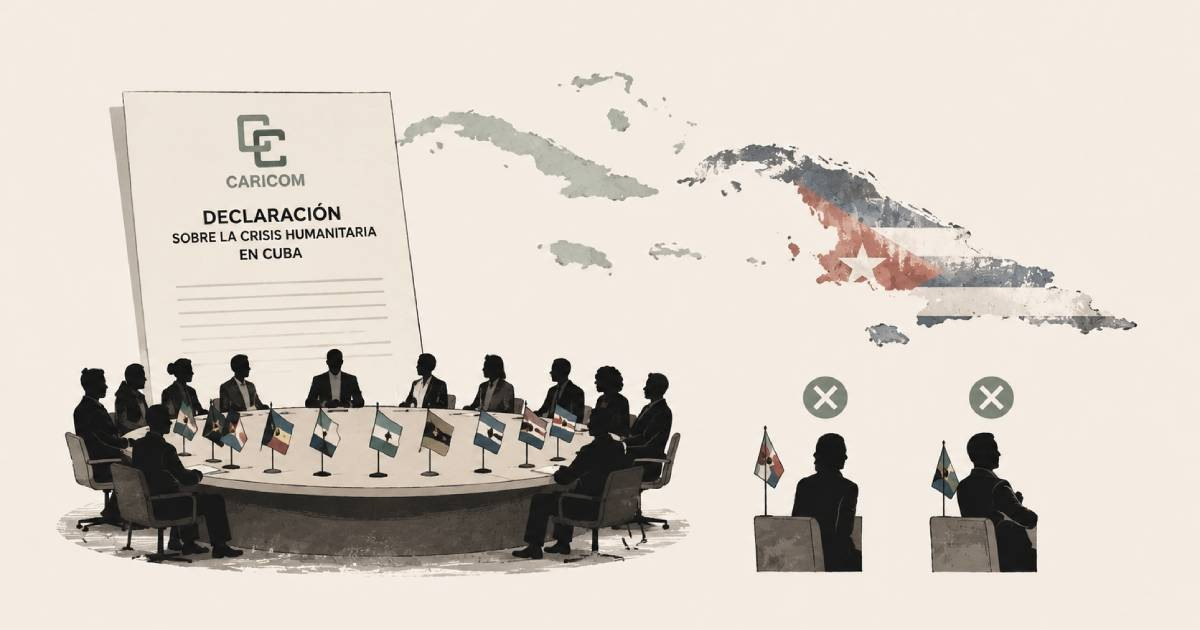
The Council of Foreign and Community Relations (COFCOR) of the Caribbean Community (CARICOM) expressed concern on Wednesday over the worsening crisis in Cuba and the rising tensions with the United States, although the statement revealed divisions within the regional bloc itself.
Guyana and Trinidad and Tobago formally distanced themselves from the statement approved during the 29th COFCOR meeting, held in Paramaribo, Suriname, marking an unusual rift regarding the Cuban issue within CARICOM.
In the document, the regional body questioned the tightening of the economic and financial measures imposed against Havana and raised concerns about the humanitarian impact of the energy crisis facing the island. It also expressed worry over recent statements regarding a potential military escalation in the Caribbean.
"The COFCOR unequivocally reaffirms Cuba's sovereign right to import and receive fuel," the text states, warning that any military action would "fundamentally destabilize the security structure of the entire region."
However, the statement avoids delving into other internal factors that have contributed to the Cuban economic deterioration, including the collapse of the energy infrastructure, years of lack of state investment, and the deep productivity crisis that plagues the island's economy.
The administration of Donald Trump has intensified pressure on the Cuban regime since January 2026 through new sanctions specifically targeting fuel supplies. Washington asserts that these measures aim to restrict the funding sources of the Cuban government and push for political changes and greater civil liberties.
Meanwhile, extended power outages, fuel shortages, and the decline of basic services continue to impact the Cuban population, causing concern among Caribbean governments that maintain educational and health ties with the island.
The COFCOR noted that the situation also affects CARICOM citizens who study and reside in Cuba, particularly medical students from various countries in the region.
The reservation from Guyana and Trinidad and Tobago was not officially explained, although both countries have strong economic and energy interests linked to the United States. In the case of Guyana, the oil boom driven by ExxonMobil and the territorial dispute with Venezuela increase its strategic dependence on Washington. Trinidad and Tobago, on the other hand, needs U.S. approvals to develop gas projects related to Venezuela.
The concern in the Caribbean about the humanitarian deterioration in Cuba had been growing for several months prior. At its 50th Summit of Heads of Government, held in February in Saint Kitts and Nevis, CARICOM had already agreed on a coordinated humanitarian response. In March, it announced the shipment of food, medicine, and solar panels to Cuba with logistical support from Mexico, and Saint Vincent and the Grenadines contributed an additional $100,000 in April.
Beyond the content of the statement, the episode reflects how the deterioration of the situation in Cuba is starting to generate tensions even among Caribbean governments that have historically been close to Havana.
Filed under: