
Related videos:
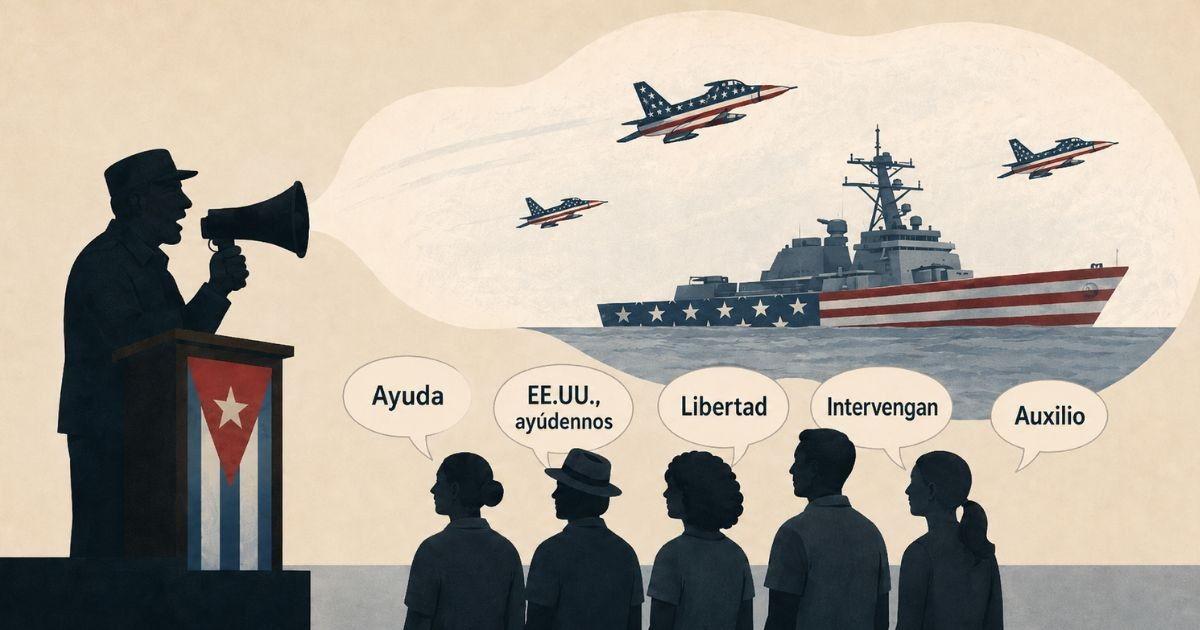
The Cuban regime launched a rhetorical offensive on Thursday, accusing the United States of using the threat of military invasion as a tool of psychological intimidation against the Cuban people, framing the escalation of tensions within the context of the so-called American "military-industrial complex."
The official narrative, spread by the Deputy Minister of Foreign Affairs Carlos Fernández de Cossío, asserts that "war is the most lucrative and dynamic industry in the U.S. economy" and that major U.S. media "justify wars, incite them, and deliberately overlook the human cost."
The official statement concludes that the agitation over a supposed military aggression against Cuba is a media operation with a specific purpose: "to provide the dirty service of trying to intimidate Cubans, a people that long ago lost their fear."
The Deputy Minister of Foreign Affairs Carlos Fernández de Cossío responded to the Politico report from last Wednesday—which revealed that the Pentagon has troops and weaponry ready in the Caribbean, pending only final approval from President Donald Trump—with a rhetorical question: "Isn't there a lack of a motive to justify killing, mutilating, causing destruction and misery?".
The regime's response comes amid an unprecedented escalation from Washington.
Last Tuesday, Foreign Minister Bruno Rodríguez Parrilla addressed the UN Security Council to urge Secretary-General António Guterres to halt what he described as a "military aggression" that "would lead to a bloodbath."
The report from Politico, signed by Paul McLeary, confirmed that the USS Kearsarge, with 2,500 Marines on board, was off the coast of Virginia preparing for a new deployment to the Caribbean, where the aircraft carrier group USS Nimitz has already been operating since May 20.
This Thursday, Axios revealed that the Trump administration internally describes its strategy as "accelerationism" — to hasten the gradual collapse of the regime — and that it has already conducted military simulation exercises for intervention scenarios in Cuba.
A defense official clarified to Axios that "there is no invasion planned or imminent," although he added, "When the president says we need to act, we will be ready for anything."
The Secretary of State Marco Rubio declared last Wednesday in a cabinet meeting that "Cuba is in serious trouble" and that "having a failed state just 145 kilometers from our shores poses a threat to the national security of the United States."
Since January 2026, the Trump administration has imposed more than 240 sanctions against the Cuban regime and intercepted at least seven tankers, resulting in a reduction of fuel imports by between 80% and 90%, which has worsened power outages of more than twenty hours a day in over 55% of the national territory.
The Cuban National Assembly issued a declaration describing the situation as "real and dangerous," while Miguel Díaz-Canel has invoked the doctrine of the "War of All the People" and warned that "no aggressor will find surrender in Cuba."
Analyst Yaxys Cires from the Cuban Observatory of Human Rights summarized the moment with an assessment that contrasts with the official rhetoric from Havana: "I believe it is very difficult for Cuba to emerge from the coming months with a political and economic structure similar to the current one."
Filed under: