
Related videos:
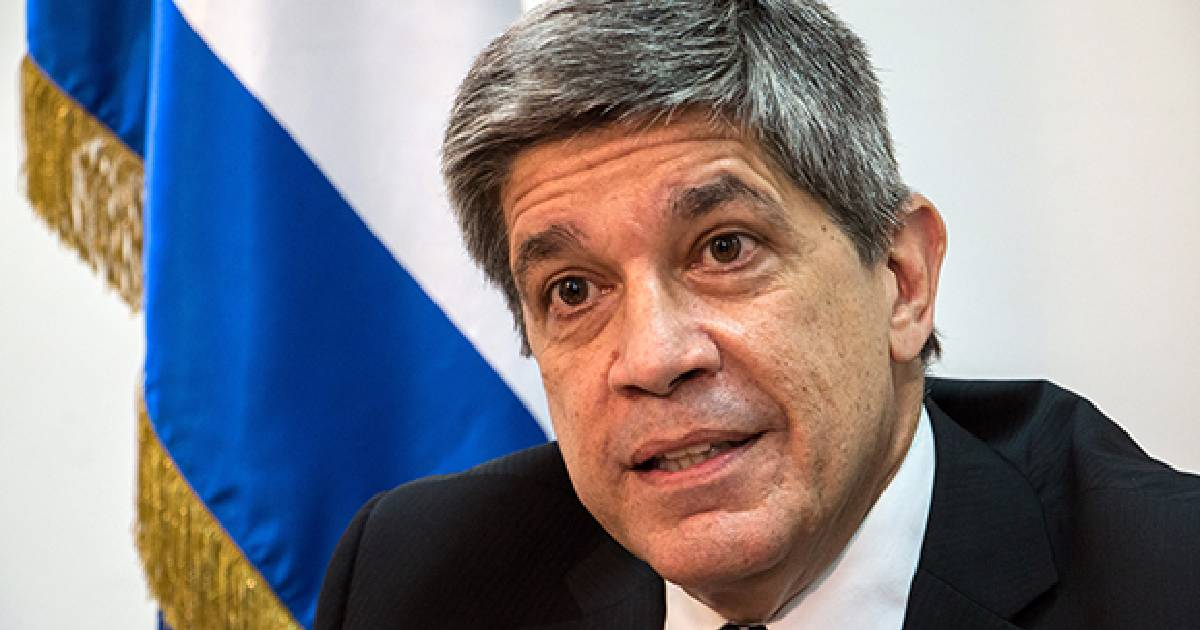
The Deputy Minister of Foreign Affairs of Cuba, Carlos Fernández de Cossío, published a series of statements this weekend in which he affirmed that Cuba is ready for dialogue with the United States in order to resolve bilateral issues, while denying that the island poses a threat to Washington and rejecting any U.S. interference in the Cuban political system.
The statements from the deputy minister come during one of the most tense and diplomatically active moments in relations between the two countries in recent years, marked by criminal accusations, high-level contacts, and a deep economic crisis on the island.
In a direct and schematic message, Fernández de Cossío outlined four positions of the regime:
- "No, Cuba does not pose any threat to the U.S."
- "No, the U.S. does not have the right to determine Cuba's political system."
- "Yes, the extreme economic difficulties in Cuba are the result of a calculated plan by the U.S. to inflict pain on the entire population."
- "Yes, Cuba is ready for dialogue in order to address bilateral issues."
The attribution of the Cuban economic crisis to the U.S. embargo contrasts with the reality of an island that has endured 67 years of communist dictatorship, with daily blackouts lasting many hours, and shortages of food, water, and fuel as a direct result of the regime's management.
The immediate context is tumultuous
On May 20, the U.S. Department of Justice filed formal charges against Raúl Castro and five former Cuban military officials for the downing of the aircraft of Brothers to the Rescue on February 24, 1996, which resulted in the deaths of four individuals: Carlos Costa, Armando Alejandre Jr., Mario de la Peña, and Pablo Morales.
The next day, Fernández de Cossío described the accusation as a "cowardly act" and part of an "aggressive escalation" by Washington, and warned that any attempt to act within Cuba would face "fierce resistance from the Cuban people."
Despite the rhetoric, both governments have maintained contact. On May 14, CIA Director John Ratcliffe visited Havana for a meeting that the Cuban government itself confirmed and described as oriented towards "political dialogue."
On May 12, President Donald Trump wrote on Truth Social: "Cuba is asking for help, and we are going to talk!" to which President Miguel Díaz-Canel responded the next day that Cuba was "always willing to engage in dialogue."
However, the regime has set clear red lines regarding any negotiation: it will not negotiate its political system, the exit of its leaders, or the situation of political prisoners, which it considers an "internal matter."
In the opposite sense, Secretary of State Marco Rubio stated on May 21 that Cuba does indeed pose a threat to the national security of the U.S. and described the Cuban system as a "failed state" with a "broken" economy, in addition to referring to Raúl Castro as a "fugitive from U.S. justice".
On May 23, the head of the Cuban mission in the U.S., Lianys Torres Rivera, reaffirmed the willingness to engage in dialogue under the same conditions: openness on bilateral issues such as migration, trade, and the list of State Sponsors of Terrorism, but an absolute refusal to negotiate on sovereignty or political system.
Filed under: