
Related videos:
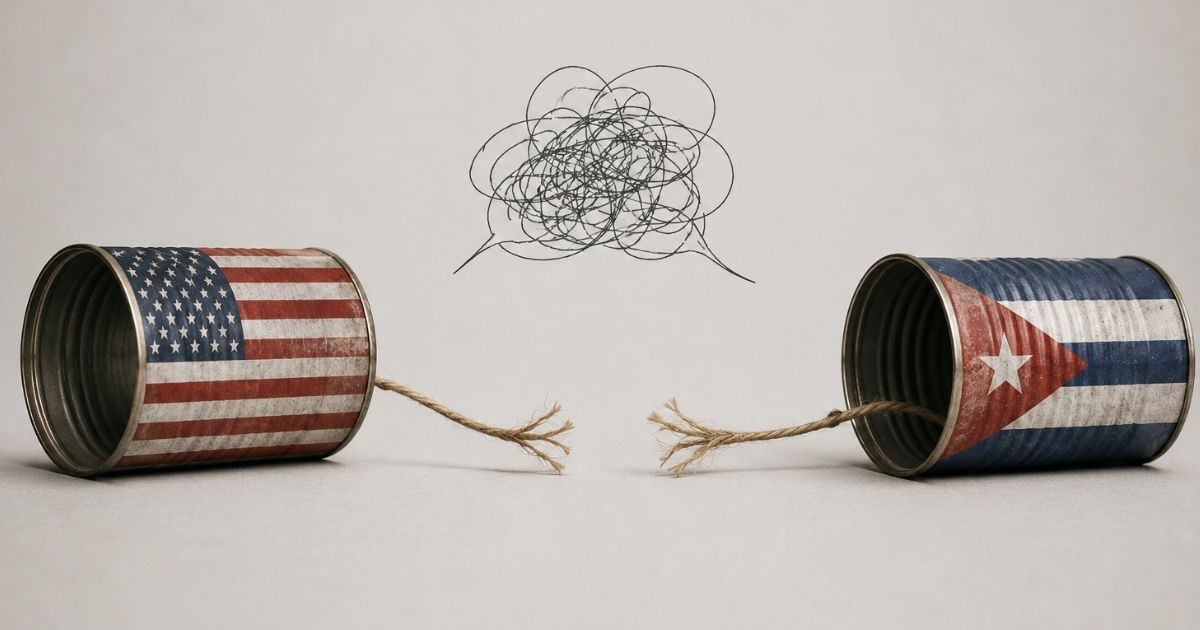
The Deputy Minister of Foreign Affairs of the Cuban regime, Josefina Vidal, acknowledged this Thursday that "there has not been much progress in the dialogues between Havana and Washington" and that from the island "they doubt the responsibility and seriousness of the U.S. government regarding this process."
The statements were made on the sidelines of a parliamentary hearing convened by the National Assembly of People's Power under the title "Cuba Wants Peace," where lawmakers denounced the oil blockade imposed since January, the heightened sanctions, and the threats of military intervention.
Vidal specified that, although the exchange channel "remains open," Washington "continues to adopt very harmful coercive measures" alongside the contacts, which raises "doubts regarding the responsibility and seriousness" of the process.
The regime's admission aligns with what Secretary of State Marco Rubio already acknowledged on May 21: "Honestly, I don't see much progress" in the negotiations, despite confirming recent diplomatic contacts, including CIA Director John Ratcliffe's visit to Havana on May 14 and 15.
In an exclusive interview with PBS NewsHour, Vidal provided a devastating account of the internal situation: “Imagine a country that hasn’t received a drop of oil in five months. We have had to postpone surgeries. This has impacted electricity generation and, as a result, health services, education, and water supply.”
He described the situation as a "collective punishment" without justification, amid a context where power outages exceed 20 hours a day in more than 55% of Cuban territory.
Vidal rejected the Trump administration's accusations that Cuba poses a threat to U.S. national security and denied the existence of intelligence operations by China or Russia from Cuban territory: "The U.S. government is not telling the truth. U.S. agencies know very well that Cuba is not and has never been a threat."
Regarding Rubio, she was straightforward: "He doesn't know Cuba. He has never been to Cuba. He doesn't understand Cuba. It seems he is not familiar with the history of Cuba."
The regime made its singular red line clear in any negotiations: "Issues related to our internal order are the exclusive competence of the Cuban people and only the Cuban people," Vidal stated, outright dismissing any discussion of internal political changes.
The military context in which these statements are made is one of high tension.
According to a report by Politico from Wednesday, the Pentagon has troops and weapons ready in the Caribbean, and only Trump's final approval is needed to take action.
That same day, Axios revealed that the administration internally describes its strategy as "accelerationism" and has already conducted military simulation exercises for intervention scenarios.
Rubio, for his part, insisted on Wednesday during the cabinet meeting that the U.S. will continue to engage in dialogue with Cuba, although he described the regime as "incompetent communists" and pointed out that GAESA controls 70% of the economy without benefiting the people.
The June 5 deadline set by Washington for foreign companies to cease operations with GAESA or face secondary sanctions is approaching, adding pressure that threatens to further exacerbate the economic crisis already afflicting the Cuban people.
Filed under: