
Related videos:
The meteorologist Matt Devitt warned this Thursday about the return of Saharan dust to the Caribbean, noting that large columns of dust will move westward from Africa over the next two weeks, extending into June 2026.
According to Devitt's forecast, the dust will cross the Caribbean and could also reach the United States, following the seasonal pattern that repeats each year between May and October.
"It’s that time of year again: large columns of dust will head west from Africa over the next two weeks, entering June. It will cross the Caribbean and could also reach the United States," wrote the meteorologist in his post.
The phenomenon, technically known as Saharan Air Layer, is a mass of hot, dry air laden with dust that moves over the tropical Atlantic every three to five days, according to the National Oceanic and Atmospheric Administration (NOAA).
The peak of the activity season intensifies in mid-June and reaches its highest point between the end of that month and mid-August.
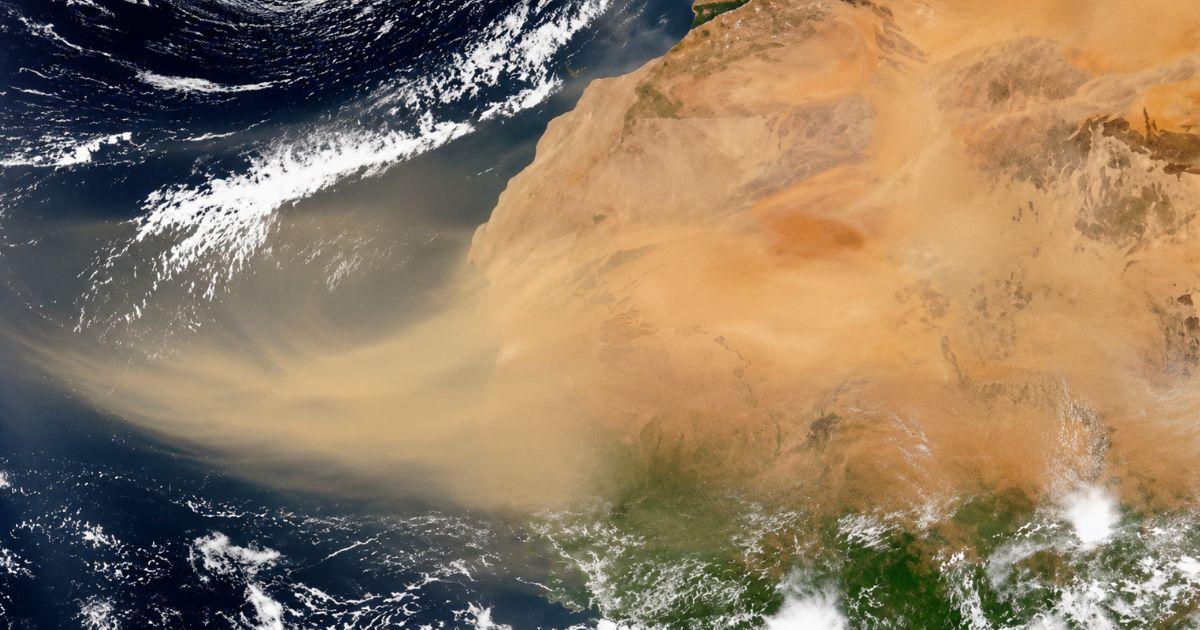
A satellite image included in the forecast shows a dense cloud of gold and brown extending from the western coast of Africa — Mauritania, Senegal, and Mali — towards the Atlantic Ocean.
Saharan dust has direct effects on tropical cyclonic activity: the Saharan Air Layer contains approximately 50% less moisture than typical tropical air, which stabilizes the atmosphere, reduces convection, and hinders storm development.
Devitt summarized it this way: "Dust can weaken or suppress tropical activity in the affected areas."
However, the phenomenon also deteriorates air quality and worsens respiratory conditions such as asthma, rhinitis, and eye irritation, especially in children, the elderly, and individuals with pre-existing lung diseases.
Cuba experiences this phenomenon every year, with the most intense episodes concentrated between June and August.
In July 2024, the most significant outbreak of Saharan dust in two years was recorded over the Atlantic, and in June 2025, a new cloud affected the island and approached Florida.
Cuban health authorities recommend avoiding prolonged exposure to the outdoors, staying hydrated, and addressing any respiratory symptoms during dust episodes.
As a positive visual effect, the dust produces vibrant colored sunrises and sunsets that tend to capture attention throughout the region.
The Colorado State University includes Saharan dust as one of the environmental variables in its 2026 Atlantic hurricane season forecast, noting that when dust levels decrease in late summer, cyclonic activity may surge significantly.
Filed under: