
Related videos:
The Cuban Institute of Meteorology (INSMET) published its official forecast for the 2026 hurricane season in the North Atlantic this Wednesday, anticipating a "less active" season that is expected to be less intense than usual, with 11 tropical cyclones predicted for the entire basin.
The document, prepared by the Forecast Center and the Climate Center of INSMET, states that "the fundamental oceanic and atmospheric conditions that regulate tropical cyclonic activity over the Atlantic Ocean, the Gulf of Mexico, and the Caribbean Sea anticipate the development of a less active hurricane season than normal."
Of the 11 cyclones forecasted, five could reach hurricane category and two would be major hurricanes.
The estimated geographical distribution is eight cyclones in the Atlantic, two in the Caribbean Sea, and one in the Gulf of Mexico.
For Cuba, INSMET establishes a moderate danger: the probability that at least one hurricane will impact the island is 40%, a figure slightly higher than the country's historical climatological risk of 35%.
The probability of a tropical storm impacting the island is even higher: the institute places it at 75%.
The determining factor of the forecast is the increasing likelihood of the development of an event El Niño – Southern Oscillation (ENSO) starting in June or July, which could persist until the end of 2026.
INSMET warns that "a light ENOS event would not limit cyclonic activity in the Atlantic region, but moderate or strong events reduce that activity," and points out that "there is currently a possibility that this ENOS will be a moderate event or greater."
This moderate forecast stands in stark contrast to the 2025 hurricane season, which was exceptionally active and reached 105% of the historical average.
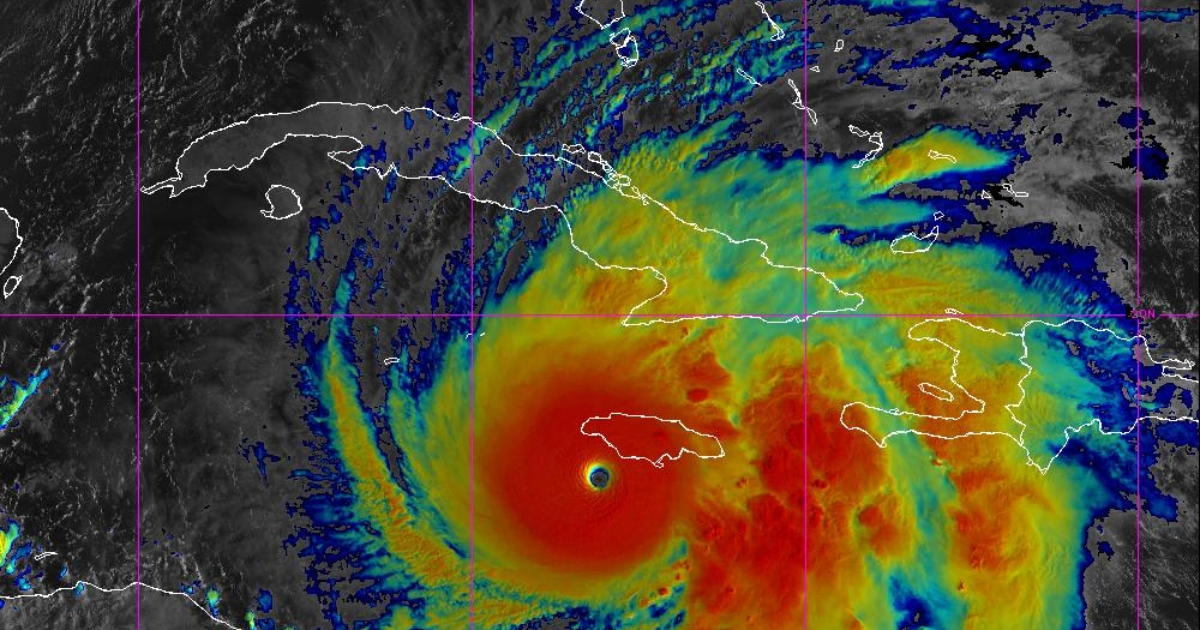
That year was dominated by Hurricane Melissa, which made landfall in eastern Cuba on October 29, 2025, as a Category Three hurricane, with sustained winds of 195 km/h, becoming the third most destructive hurricane in Atlantic history.
Melissa damaged more than 116,000 homes in the eastern part of the island and affected over 3.5 million Cubans in the provinces of Santiago de Cuba, Holguín, Granma, and Guantánamo.
The INSMET forecast for 2026 generally aligns with that of the Colorado State University (CSU), which projected in April 13 named storms, six hurricanes, and two major hurricanes, equivalent to 75% of an average season during the period 1991-2020.
The institute also warned that the outlook for the summer of 2026 in Cuba indicates temperatures above the historical average and rainfall close to the norm, adding pressure on a population that has not yet fully recovered from the aftermath of Melissa.
INSMET specified that the forecast for the 2025 hurricane season published in May of that year estimated 15 tropical cyclones and eight hurricanes, with a 50% likelihood of a hurricane affecting Cuba, figures that were vastly exceeded by reality.
An update on the 2026 cyclone activity forecast in the North Atlantic will be issued by INSMET next August.
Filed under: