
Related videos:
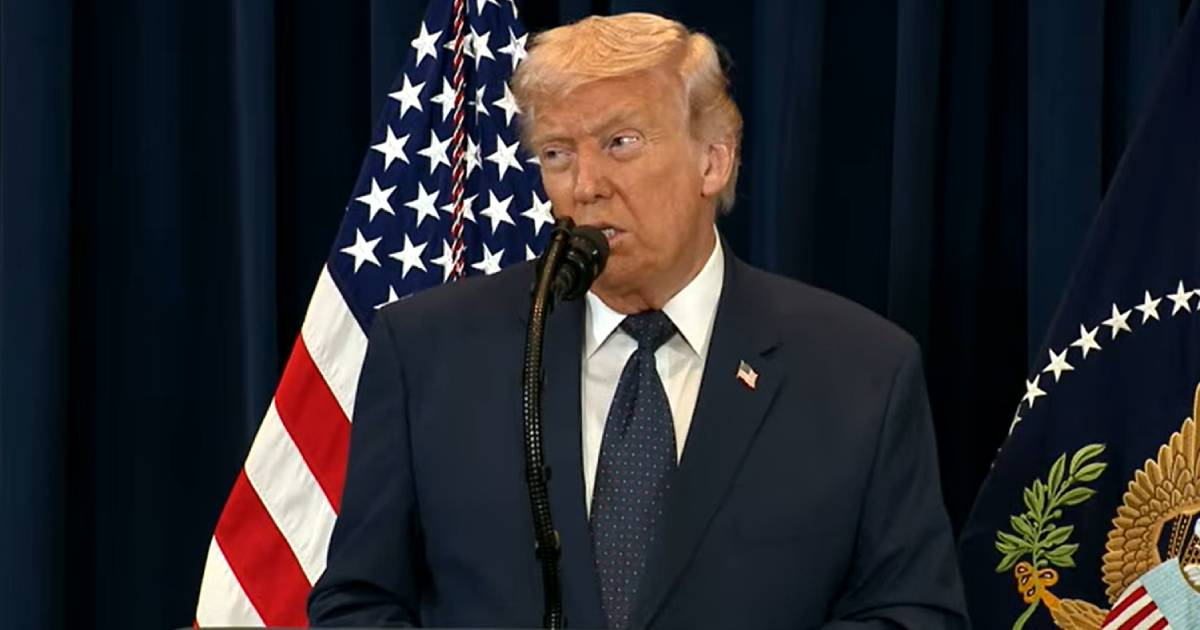
The Cuban regime used its television program Mesa Redonda to blame the executive orders of President Donald Trump for the crisis affecting the electric, hydraulic, and transportation sectors in the country.
The engineer Rubén Campos Olmo, general director of the Electric Union (UNE), described the impact of the executive order signed by Trump on January 29, 2026, as "devastating," as it prohibits the entry of fuel and lubricants to Cuba.
Campos Olmo explained that after Trump's order, Cuba stopped receiving the necessary fuel to refine and produce derivatives for electricity generation.
"Practically an equivalent power of 1,300-1,400 MW was left without fuel backup," he stated, adding that "this figure alone represents more than 50% of what can be generated at night."
Before the executive orders, distributed generation —which includes the sites in Moa and Mariel, the barges in the Bay of Havana, fuel engines, and diesel generators— provided between 700 and 800 MW daily. That capacity has disappeared from the system.
As the sun sets, the Cuban electrical system currently operates with only 1,100-1,200 MW, depending on the thermal units in service.
Campos Olmo highlighted the case of the Isle of Youth, which was previously considered the territory with the best electricity generation in the country. "When this situation arose, the Isle shifted to a generation regime of approximately six hours a day out of 24," he stated.
In early April, a donation of 100,000 tons of crude oil from Russia arrived in Cuba, allowing for a temporary improvement starting on the 17th of that month. "We went through a period of improvement that lasted just over two weeks, and the levels of impact significantly decreased," explained the executive. However, by the end of May, the system had returned to the critical levels seen previously.
"We, the electrical workers, are fully aware of the impact we are causing, but it must be stated that the main reason for these impacts is our inability to secure fuel for the capacities we have available," declared Campos Olmo.
The government also stated that the water crisis in Cuba has worsened due to the combination of energy deficits, fuel shortages, and limitations on importing equipment and parts.
The National Institute of Hydraulic Resources explained that the system relies almost entirely on electricity, as thousands of pumping stations need to operate between 18 and 24 hours a day.
Electrical interruptions reduce pumping time and cause low pressure, which particularly affects tall buildings and densely populated areas.
Currently, about 2.7 million people are experiencing issues with water supply. In addition, voltage fluctuations frequently cause failures in pipelines and hydraulic equipment.
The agency receives only 37% of the fuel it needs and has had to prioritize national repairs and the use of solar energy at pumping stations to maintain service. Efforts are also being made to explore alternatives such as wells, reservoirs, and windmills to address contingencies, but the results are yet to come.
Regarding transportation, Minister Eduardo Rodríguez Dávila acknowledged that the fuel shortages have caused a drastic decline in both public and private services.
Interprovincial bus routes have been reduced from daily departures to only three times a week, while trains now operate every 16 days. National flights and the ferry to the Isle of Youth have also decreased.
The crisis affects essential services such as the transportation of dialysis patients, students, and basic goods. To address the situation, the government prioritizes health and school transportation, promotes electric vehicles, and loosens regulations for electric tricycles.
However, authorities admit that local and intermunicipal transportation remains very inadequate, especially in rural areas.
The regime's narrative clashes directly with Washington's position
The Secretary of State Marco Rubio rejected the argument of the oil embargo both on May 5 and yesterday, during a cabinet meeting chaired by Trump. Rubio pointed out that Venezuela used to gift oil to Cuba, which the regime sold again at 60% without benefiting the population, and described the Cuban government as "a group of incompetent communists."
Rubio also pointed to GAESA —the military conglomerate that controls between 40% and 70% of the Cuban economy— as the main structural problem.
"The country has been taken over by a company that controls 70% of the economy. None of that money is allocated to help the Cuban people, absolutely nothing.", stated the Secretary of State.
The energy crisis has roots that predate the 2026 sanctions: years of maintenance debt in the thermal power plants and the gradual reduction of subsidized Venezuelan supply since 2022.
The depletion of Russian oil by the end of April had already foreshadowed the return to the current critical situation.
Since January 2026, the United States has imposed over 240 sanctions against the Cuban regime, including measures against GAESA and, on May 19, against 11 individuals and three additional entities, including the Minister of Energy and the Minister of Communications.
The deadline set by the State Department for foreign companies to cease operations with GAESA is on June 5.
Filed under: