
Related videos:
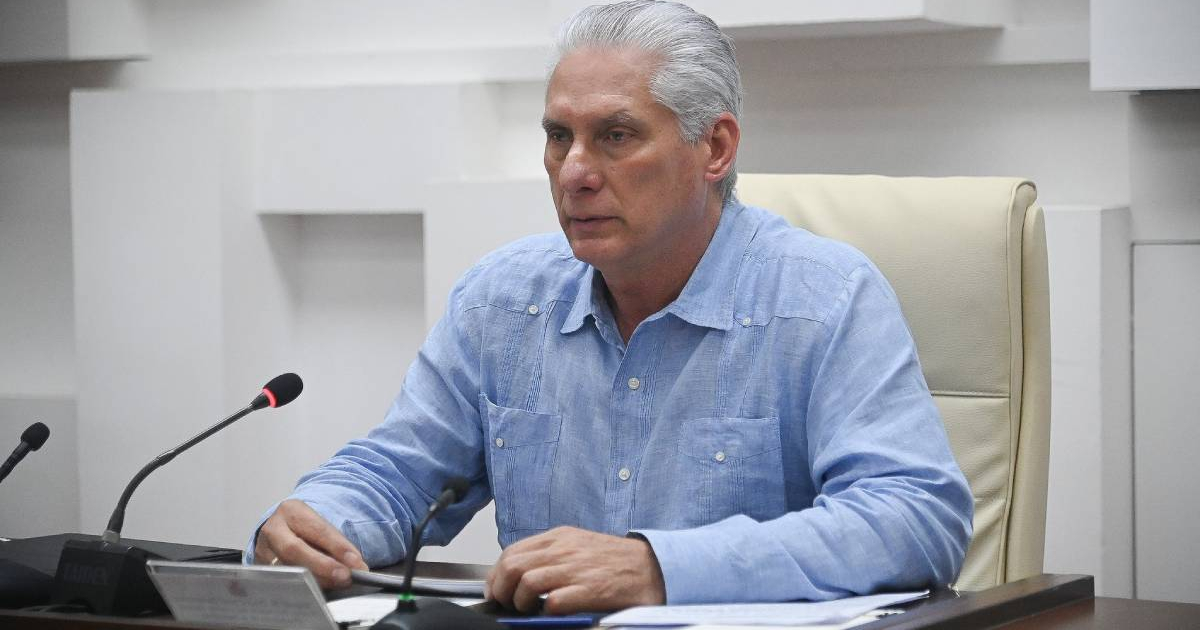
Miguel Díaz-Canel sparked a wave of criticism and ridicule on social media after posting a message on Thursday congratulating the Council of Churches of Cuba on its 85th anniversary, in which he stated that the ecumenical body "has become a bridge of dialogue and brotherhood; and has enriched the spirituality of our nation."
The post, shared simultaneously on Facebook and X, was met with skepticism and sarcasm by Cubans who recalled the regime's long history of religious persecution.
The comment that best summarized the general sentiment was blunt: "Go confess your sins along with my daughter's father."
Other users were equally straightforward. "Miguel Díaz-Canel Bermúdez, please, before you speak, make sure your tongue is connected to your brain. Many years of confrontation with the Catholic Church, ostracism of believers, suppression of Christmas, zero dialogue, zero listening to the demands of the clergy. The Cuban people have a memory," wrote one of the commenters.
The accusation of hypocrisy was recurring. "Now the COMMUNISTS believe in GOD... What would the inventors of that failed ideology say if they were to come back?" another user mocked.
Several comments pointed directly to the political opportunism behind the gesture. "Churches were banned and persecuted for decades in Cuba. Now they are receiving them with open arms. Why? Because they are the ones who will control humanitarian aid to the people. Pure hypocrisy and opportunism," remarked an internet user.
There were those who called for accountability on other fronts: "CANEL, TELL US CUBANS ABOUT GAESA, WHO THEY ARE AND WHAT THEY DO," demanded another comment.
The historical background fueling the rejection is specific: in 1961, the regime confiscated more than 450 religious schools and expelled hundreds of priests; during the 1960s and 1970s, Cuba was declared an atheist state, and members of the Communist Party were not allowed to profess any religion or publicly baptize their children. "Look at that, even the religious have become," recalled a user, "after for many years, a member of the PCC or any other organization had to baptize their children in secret."
The constitutional reform of 1992 removed the officially atheistic character of the Cuban state and redefined it as secular. Subsequently, the visit of John Paul II in 1998 marked a turning point in the relationship between the Church and the State, favoring greater visibility and openness of religious life on the island.
The message from Díaz-Canel to the Council of Churches takes place in a very specific political context. On May 14, the regime defended its collaboration with the Church following the offer of 100 million dollars in humanitarian aid that the United States conditioned to be distributed exclusively by the Catholic Church and independent organizations, without government mediation.
On that same day, Foreign Minister Bruno Rodríguez Parrilla, who days earlier had described the offer as a "fairy tale" and a "lie," changed his stance and stated that Cuba "has no issues working with the Catholic Church."
The shift did not go unnoticed. When the regime then tried to approach religious institutions, mockery poured in against Díaz-Canel on social media, with Cubans interpreting the move as a tactic to avoid being excluded from the flow of international aid amid an unprecedented humanitarian crisis.
"Decades of being an instrument of control and surveillance for the true Church. It is not the council of Churches; it is the council of communists," summarized one of the comments under the ruling party's post.
Filed under: