
Related videos:
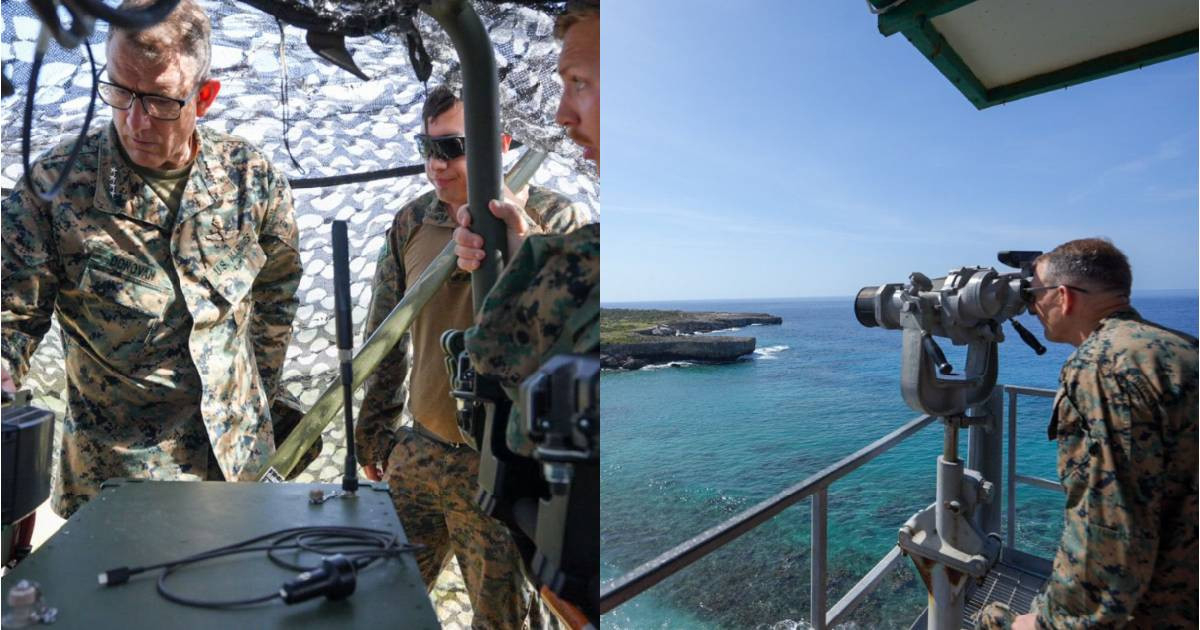
General Francis L. Donovan, commander of the United States Southern Command, personally inspected all aspects of the security posture of the Guantanamo Naval Base this Friday, during a visit that included a comprehensive assessment of the perimeter and meetings with facility officials.
According to the information from that military agency on its X profile, Donovan discussed with the base officials the protection of the force, operational readiness, and measures to ensure the safety of military personnel, their families, and the joint force stationed at the facility.
The inspection occurs at a time of heightened tension between Washington and Havana, with an unprecedented U.S. military presence in the Caribbean in decades.
On the same day, the 24th Marine Expeditionary Unit assumed its mission in the Caribbean with over 1,300 personnel under Operation Southern Spear, replacing the 22nd expeditionary unit. The aircraft carrier USS Nimitz strike group had entered the Caribbean on May 20.
The specific threat against the base itself is the direct backdrop of Donovan's visit. According to a recent report from the U.S. media outlet Axios, Cuba may have acquired more than 300 military drones from Russia and Iran since 2023, and Cuban officials are said to have discussed plans to use them against the base, U.S. military vessels, and possibly Key West.
El analista Andy S. Gómez advirtió que esos drones representan un riesgo real.
"If we were to capture Raúl Castro, I'm afraid those defensive drones would turn offensive and fire at the United States," he noted.
Gómez also noted that the base is exposed. "The base in Guantánamo is very close to where they can be attacked; that is a possibility, but I am completely confident that our military capability will be able to intercept these drones from Key West to the north," he added.
The Cuban regime, for its part, intensified its rhetoric before international organizations. The Cuban ambassador Rodolfo Benítez Verson denounced during this day at the UN Disarmament Conference in Geneva a supposed threat of American military aggression.
"Cuba will continue to advocate for the primacy of reason, dialogue, and peace. However, if military aggression occurs, rest assured that the Cuban people will fight, to the last consequences, to defend their sovereignty and independence," Benítez warned.
In diplomatic terms, Cuban Deputy Minister Josefina Vidal acknowledged on Thursday that "there has not been much progress in the discussions between Havana and Washington" and questioned the "responsibility and seriousness" of the U.S. administration.
Secretary of State Marco Rubio admitted on May 21 that he does not see "much progress" in the talks either.
On June 5, the deadline set by Washington for foreign companies to cease operations with the Cuban military business conglomerate GAESA expires, or they risk facing secondary sanctions, which could further intensify pressure on the regime in the coming days.
Filed under: