
Related videos:
The Minister of Culture of Cuba, Alpidio Alonso Grau, declared in an interview with the Cuban News Agency published this Friday that in the island "no one gets left behind" and that the country "respects the human right to access everything that contributes to one's full development."
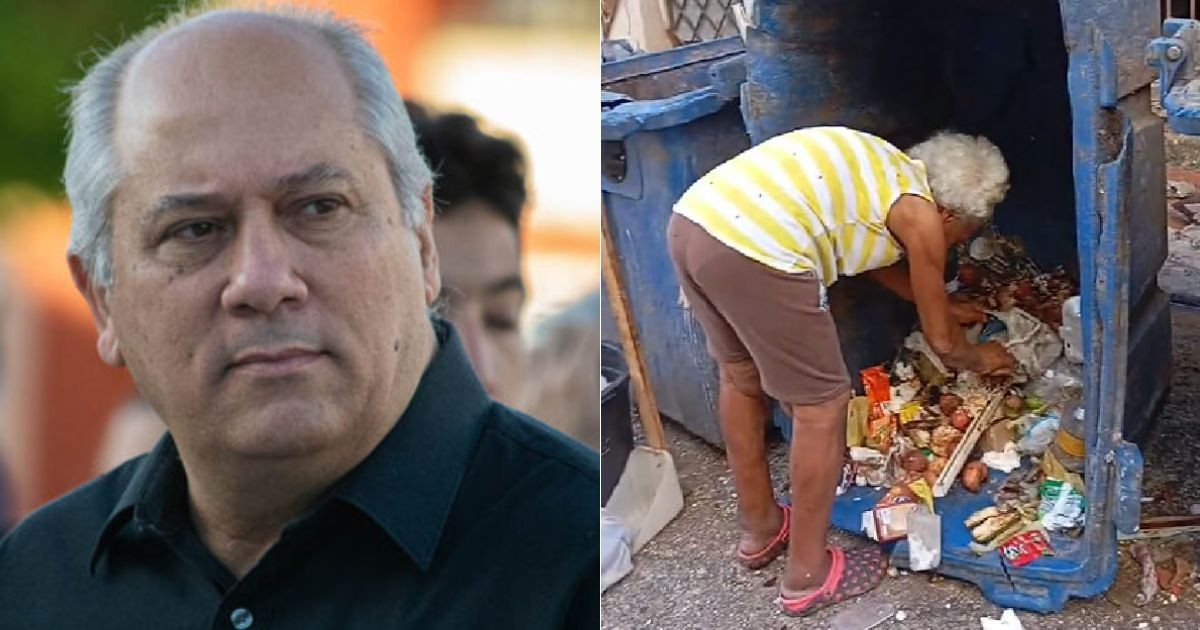
The statement, made with all the seriousness characteristic of the regime's nomenclature, deserves a standing ovation—or at least a hearty laugh—from the millions of Cubans who have been without electricity, food, and medicine for months.
Alonso did not stop there. He also asserted that Cuba is "the demonstration that a different world can exist where the struggle for power does not prevail, but rather harmony among peoples." That harmony, it seems, includes blackouts of more than 20 hours a day, an average state salary of less than 13 dollars per month, and a food shortage that has turned the quest for food into the main daily activity for a large part of the population.
The minister attributed Washington's hostility towards Havana to the "frustration of imperialism" due to its inability to subdue a territory "small in size, but immense in convictions," the source indicated. What was not mentioned is that this territory, so immense in convictions, recorded in December 2025 electricity deficits that exceeded 2,100 MW, with entire provinces in darkness for practically the whole day. The outlook in the early months of 2026 has only continued to worsen.
Alonso also defended the former dictator Raúl Castro against U.S. accusations related to the downing of aircraft in February 1996, calling them a "continuation of the imperial policy designed to discredit the nation and its historical vanguard." Meanwhile, the historical vanguard presides over a country where the year 2025 ended with blackouts and promises of silence and where only 24% of the essential medicines were available by the end of 2024.
The healthcare system, another revolutionary pride that the minister did not mention, operates with almost 30% fewer doctors than in 2019: from over 100,000 professionals, it has decreased to 75,364 in 2025. Infant mortality in Havana reached 10.1 per 1,000 live births, above the national average. Of course, no one is left behind.
The exodus is also significant. More than a million Cubans are said to have left the island since 2021, reducing the estimated population to between 8.6 and 8.8 million, according to independent calculations, down from 11.3 million previously. This is the most eloquent way in which the Cuban people have responded to the social project that the minister describes so enthusiastically.
Alonso did acknowledge, almost in passing, that artists work "still lacking resources." But he hastened to emphasize that there is "a vigorous and multigenerational artistic movement" committed to the revolutionary project. What he did not recall is that in January 2021 he was accused of physically assaulting young artists and activists who were protesting in front of the Ministry of Culture, an episode that sparked a wave of calls for resignation that, of course, the regime ignored.
That same minister who today speaks of respecting the full development of the human being was the one who, in 2018, announced that the Decree 349 "would be applied progressively", a regulation that expands state control over artistic creation and was rejected by artists and intellectuals both inside and outside of Cuba. And who in 2021 characterized the boycott of the XIV Havana Biennial — driven in solidarity with political prisoners — as a "counter-revolutionary campaign."
The minister concluded his speech with a phrase that could well serve as an epitaph for 67 years of dictatorship: "Culture will not stop; it will resist and continue to accompany the people in their struggle to defend the homeland and keep transforming the country." Meanwhile, a large part of the Cuban people continues to transform their destiny in the only way they have left: by packing their bags.
Filed under: