
Related videos:
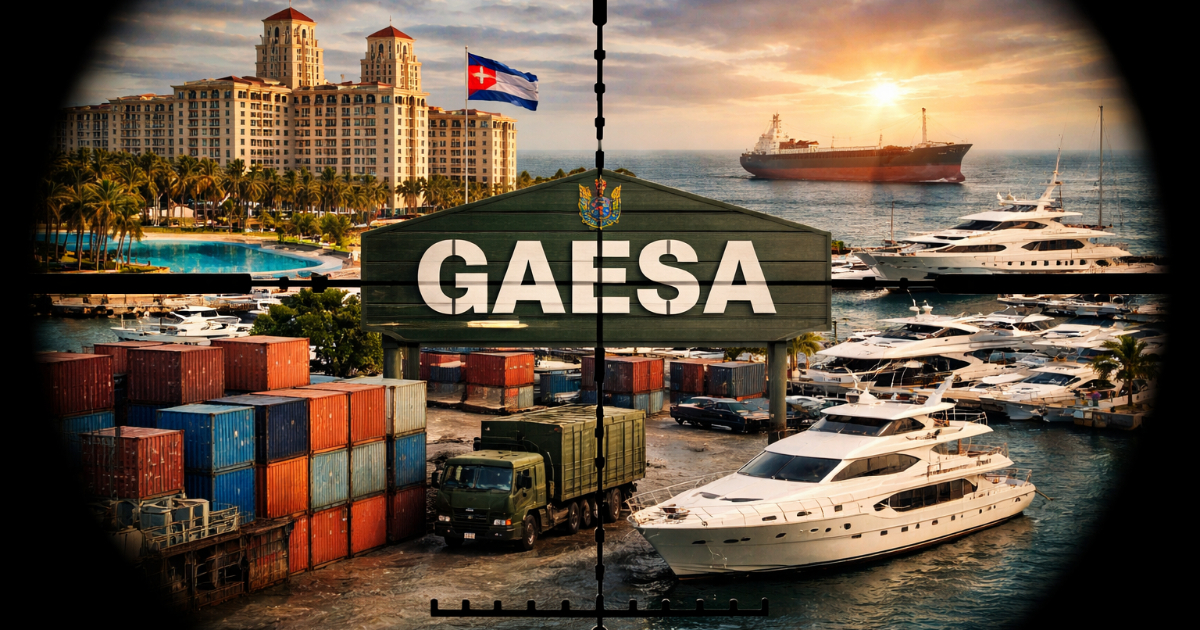
The official newspaper of the Communist Party of Cuba, Granma, published a lengthy institutional defense article titled "Cuba, the GAE and the United States: Anatomy of a State Calumny" this Tuesday.
The text regarding the Business Administration Group (GAE) claims the military conglomerate as a patriotic institution, asserts that it is transparent, and denies that it serves as a means for the personal enrichment of the Castro elites.
The article from Granma directly addresses the sanctions imposed by Washington on May 1 through Executive Order 14404, which designated GAESA as a central target of the maximum pressure policy against the Cuban regime.
He describes the U.S. sanctions as "the most intense, disproportionate, and dangerous escalation in the recent history of relations between Cuba and the United States" and attributes them to "ideologues of the Cuban-American far right."
He asserts that "the GAE is not an opaque structure, nor parallel to the Cuban state," and adds that "it is not the result of secrecy, nor of elites, and certainly not a means for the enrichment of a select few."
To support that thesis, the text lists a series of supposed contributions from the conglomerate:
- the construction of over 10,000 homes in various provinces
- investments in the Lidio Ramón Pérez thermoelectric plant in Holguín
- hydraulic works such as the East-West and North-South water transfers
- repairs to polyclinics and schools
The article cites the leader Miguel Díaz-Canel, who, at the 8th Congress of the Party, acknowledged the "business improvement" developed within the Revolutionary Armed Forces as an experience that "later served the country."
It also references a quote from Army General Raúl Castro, who is said to have described GAESA's work as undertaken "without the slightest desire for protagonism, as serious matters are handled."
The official defense arrives at a time of unprecedented pressure. Secretary of State Marco Rubio announced on May 7 direct sanctions against GAESA, its CEO Ania Guillermina Lastres Morera —a brigadier general of the FAR— and the mining company Moa Nickel S.A.
The State Department accuses GAESA of controlling up to 20 billion dollars in illicit assets held in foreign bank accounts, and of managing revenues that "likely triple the Cuban state's budget."
Washington described the conglomerate as "the core of Cuba's kleptocratic communist system," designed "to generate revenue not for the Cuban people, but solely for the benefit of its corrupt elites."
The sanctions include secondary measures against any foreign entity operating with GAESA, with a grace period that expires on June 5—just three days after the publication of the Granma article—for foreign companies to sever their ties with the conglomerate.
The pressure also extended to the family of the head of GAESA. On May 21, agents from the U.S. Immigration and Customs Enforcement arrested Adys Lastres Morera in Miami, the sister of Ania, who was subsequently transferred to a detention center in Louisiana.
Rubio warned in his statement on May 7 that "new sanctions are expected in the coming days and weeks," suggesting that the pressure campaign on the regime's military conglomerate is far from over.
Filed under: