
Related videos:
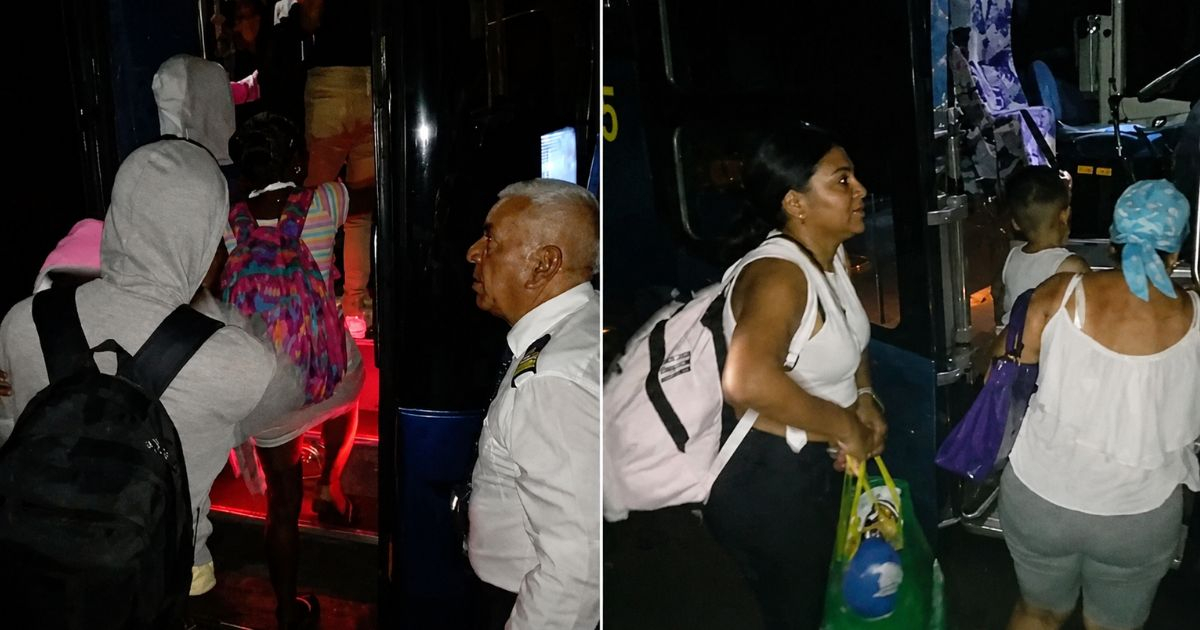
The evacuation of the 900 passengers from train number 13 Santiago-La Habana, derailed near midnight on Tuesday at kilometer 669 of the central line, close to the town of Omaja, in the province of Las Tunas, was completed on Wednesday, according to Periódico 26.
The derailment occurred at 9:16 PM on Tuesday, near the terminal of the town of Omaja, in the municipality of Majibacoa, to the east of the province. No injuries or fatalities were reported among the passengers or crew.
The 900 passengers were evacuated by bus with the assistance of the province of Holguín and are continuing their transfer to various destinations in the central and western regions of the country.
The 23 passengers who were waiting to board the train at the central station in Las Tunas were also moved, receiving assistance throughout the night from officials of the Ministry of Transportation.
Healthcare personnel from the municipality of Majibacoa, with guidance from the Provincial Public Health Directorate, provided ongoing medical care to travelers.
The governor of Las Tunas, Yelenis Tornet Menéndez, confirmed this Wednesday morning that "the transfer operations began in the early hours of June 3, 2026."
For his part, Reynaldo Reyes Silva, delegate of the Ministry of Transport in the region, confirmed that "both passengers and crew received continuous care."
The highest authorities of the province and the leadership of the Ministry of Transport arrived at the site to supervise the transfer operation.
The accident is part of a sustained pattern of derailments in the Cuban railway network.
Las Tunas has been the scene of at least three of these incidents in less than two years: in Jobabo in August 2024, in Bartle in October 2025 with 577 passengers on board, and now in Omaja.
The Santiago-Havana train itself has recently accumulated incidents: it was stranded in Camagüey in January 2026 and again in February 2026, allegedly because the locomotive was in the workshop.
In May 2025, the Holguín-Havana train derailed in Camagüey, leaving 18 injured with no fatalities, in one of the most serious accidents in recent times.
The structural causes are well documented: 67% of Cuban railways require maintenance, between 60,000 and 80,000 concrete sleepers are needed annually, but only about 15,000 are financed, and only between 12 and 14 heavy locomotives of the 34 required are operational.
Ferrocarriles de Cuba recorded 20 incidents affecting railway safety in 2024 and at least nine in 2025, attributed to loose livestock on the tracks, technical deficiencies in the infrastructure, and operational negligence, reflecting the accumulated collapse after decades of dictatorship and the absence of real investment in the transportation system.
Filed under: