
Related videos:
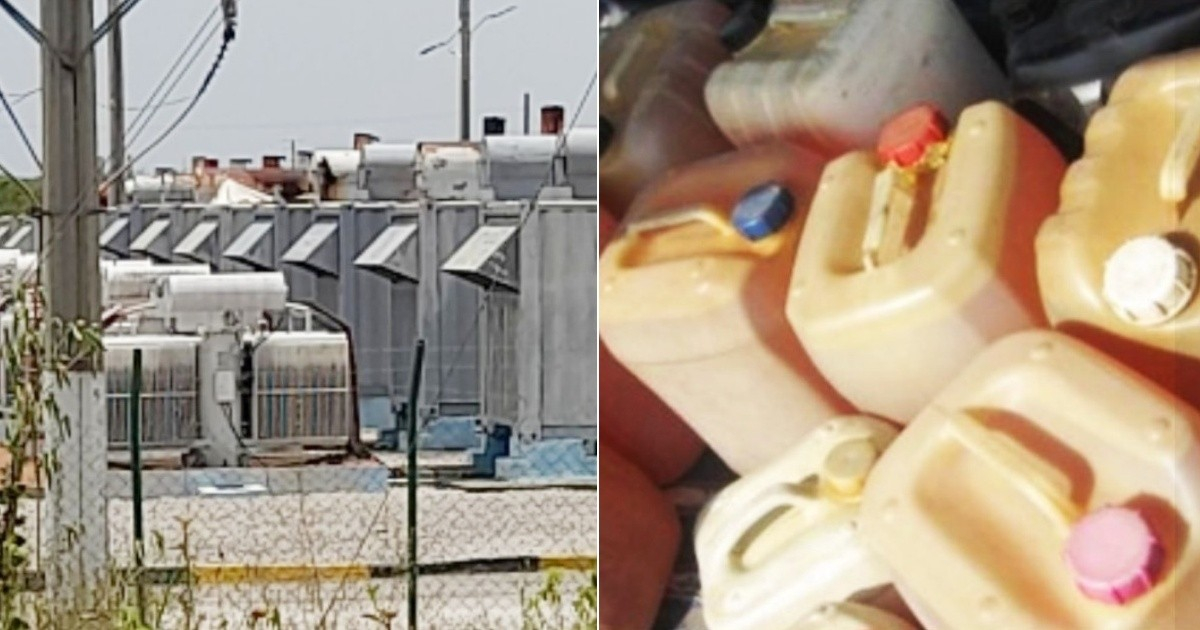
At least seven people have been arrested in the municipality of Guantánamo for being part of an organized network involved in diesel theft from a 110 kV generator, according to information from the Facebook profile "Guantánamo y su verdad", which reported the case based on the testimony of a follower.
Those involved were directly linked to the operation and protection of the site, and they took advantage of the night shifts to steal fuel on more than one occasion.
The theft and the concealed damage
The volume of stolen diesel amounts to approximately 300 liters, but the actual damage is considerably greater.
To conceal the shortage, the authors filled the engines with water, which resulted in the contamination of around 900 additional liters of diesel that can no longer be used.
The total impact on the available fuel thus exceeds 1,200 liters between what has been stolen and what has been rendered unusable, a direct blow to the already precarious electricity generation in the province.
The network was not limited to theft; there was an organized chain for marketing diesel in the informal market.
In at least one of the operations, those involved shared more than 50,000 Cuban pesos, an amount that reflects the extremely high value that fuel has reached amid the energy crisis.
The citizen reaction: Between condemnation and distrust
The post generated a wide reaction on social media, with three predominant streams of opinion.
Most condemn the theft and demand harsh penalties: "Let the full weight of the law fall on those responsible," wrote a user. Others point to institutional responsibility: "More control and supervision are needed; it’s not just about sanctioning the workers, but also those who were supposed to oversee."
A third perspective links the phenomenon to the economic crisis without absolving the perpetrators: "The economic crisis pushes some people to commit crimes, although that does not exempt them from responsibility."
But perhaps the comment that best summarizes the state of opinion is the simplest: "The word that explains these facts is just one: chaos."
The distrust in the regime's ability to eradicate these practices was also evident in another widely circulated reflection: "What is concerning is that workers are punished while the leaders face no consequences."
A context of extreme blackouts
The case occurs in one of the provinces most affected by the Cuban electrical crisis. In April 2026, residents of Guantánamo protested over power outages that left them with electricity for only 45 minutes to an hour a day.
In May 2026, the energy crisis forced the distribution of unpasteurized milk due to a lack of fuel for the boilers, and the national electricity deficit exceeded 2,100 MW, worsening blackouts throughout the province.
In that scenario, diesel generators became the last line of defense to sustain hospitals and vital services, making fuel theft at these sites have an immediate and direct impact on the population.
A widespread phenomenon throughout Cuba
The Guantanamo case is not isolated. The MININT identified generators as one of the main hotspots for fuel theft in the country, and between January and August 2025, 350,000 liters of stolen fuel were recovered across the national territory.
In August 2025, four individuals were arrested in Holguín for stealing 411 liters of diesel from ETECSA's generator in Cacocum, facing charges of sabotage. In October 2025, a state program uncovered another theft network involving generators in Havana, where the fuel was stored in residences and sold to private transporters.
CUPET publicly acknowledged that these thefts involve workers, security staff, brigade leaders, and executives from the state entities themselves.
The Cuban Penal Code of 2022 classifies sabotage of energy facilities with sentences ranging from seven to 30 years in prison for its aggravated forms.
Filed under: