
Related videos:
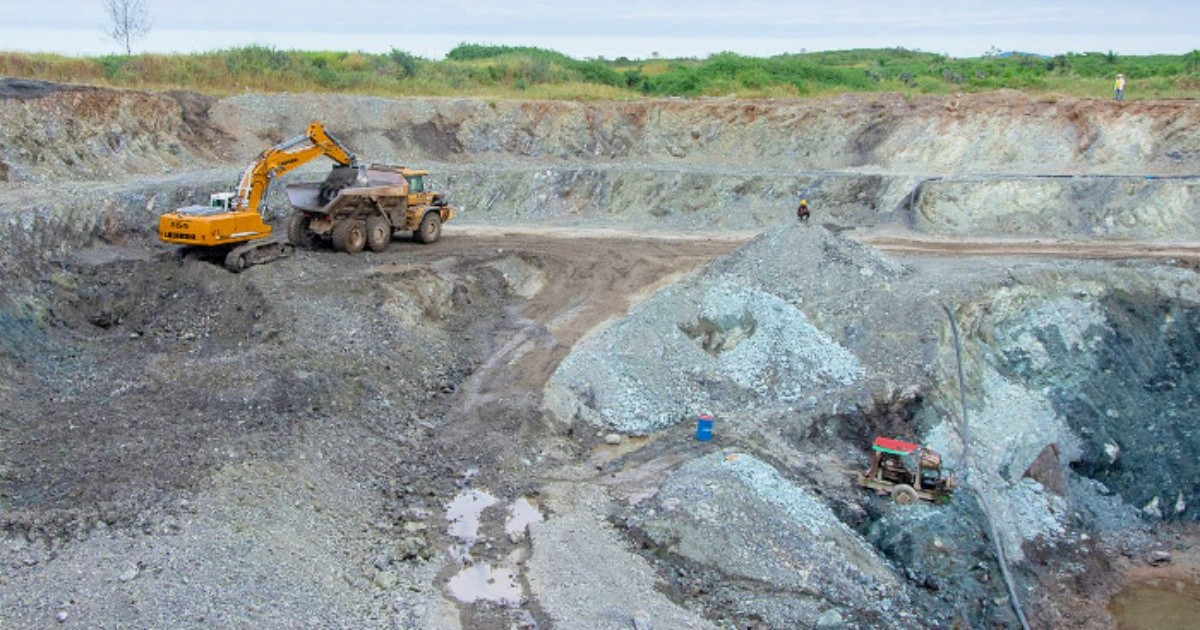
The Office of Foreign Assets Control (OFAC) of the U.S. Department of the Treasury added Minera La Victoria S.A. to its list of Specially Designated Nationals and Blocked Persons on Thursday, just 15 days after the Cuban regime publicly formalized the grant of a 20-year mining concession for gold and copper to that company.
The sanction occurred within the framework of the third wave of measures against Cuba under the Executive Order 14404, signed by President Trump on May 1, 2026, which expanded the scope of restrictions on the energy, defense, metals and mining, financial services, and security sectors in Cuba.
Minera La Victoria S.A. is a Cuban-Australian joint venture established on August 14, 2020, comprised of the Cuban state company GeoMinera S.A. and the Australian company Antilles Gold Limited, which is listed on the Australian stock exchange.
The Cuban regime had granted that company, through Agreement 9902 of the Council of Ministers—adopted on June 3, 2024, and published in the Official Gazette on May 20, 2026—the exclusive right to exploit and process gold and copper on 752.20 hectares in the Nueva Sabana area, municipality of Baraguá, province of Ciego de Ávila.
The agreement, signed by Prime Minister Manuel Marrero Cruz, stipulated that "the duration of the concession granted is twenty years, extendable in accordance with the provisions of Law 76 'Mining Law', dated December 21, 1994."
The construction of the mine began in December 2025 with the Chinese contractor Xinhai Mining as the entity executing the contract, with the aim of launching operations before the end of 2026.
The financing included a loan of 5 million dollars from Antilles Gold to the joint venture and a line of credit of 17.1 million dollars from Xinhai Mining, deliberately structured to avoid Western lenders due to the risk of sanctions.
The market analysis from April 2026 indicated a potential commercial launch in 2027, dependent on the price of gold. The sanction puts that timeline and the project's viability at direct risk.
The measure is part of a progressive escalation of pressure on the economic and military leadership of the regime. On May 7, Washington sanctioned GAESA and the state-owned miner Moa Nickel S.A.
On May 18, it targeted high-ranking officials of the Cuban intelligence. In this third wave, in addition to Minera La Victoria, the Ministry of the Revolutionary Armed Forces (MINFAR) as an institution, the Committees for the Defense of the Revolution (CDR), the Cuban Institute of Friendship with the Peoples (ICAP), the travel agency AMISTUR Cuba SA, and individuals such as President Miguel Díaz-Canel, his wife Lis Cuesta Peraza, stepson Manuel Anido Cuesta —a resident in Madrid— and Alejandro Castro Espín along with his son were also sanctioned.
The OFAC warned in the Frequently Asked Question 1258 published on the same day that "the risk of secondary sanctions extends to transactions with any entity in which GAESA, MININT, or MINFAR have, directly or indirectly, a 50% or more interest."
The deadline granted to foreign companies to finalize operations with GAESA expired this Friday, a day after this new round of sanctions, in a deliberate effort to maximize the impact on the regime's economy.
Filed under: