
Related videos:
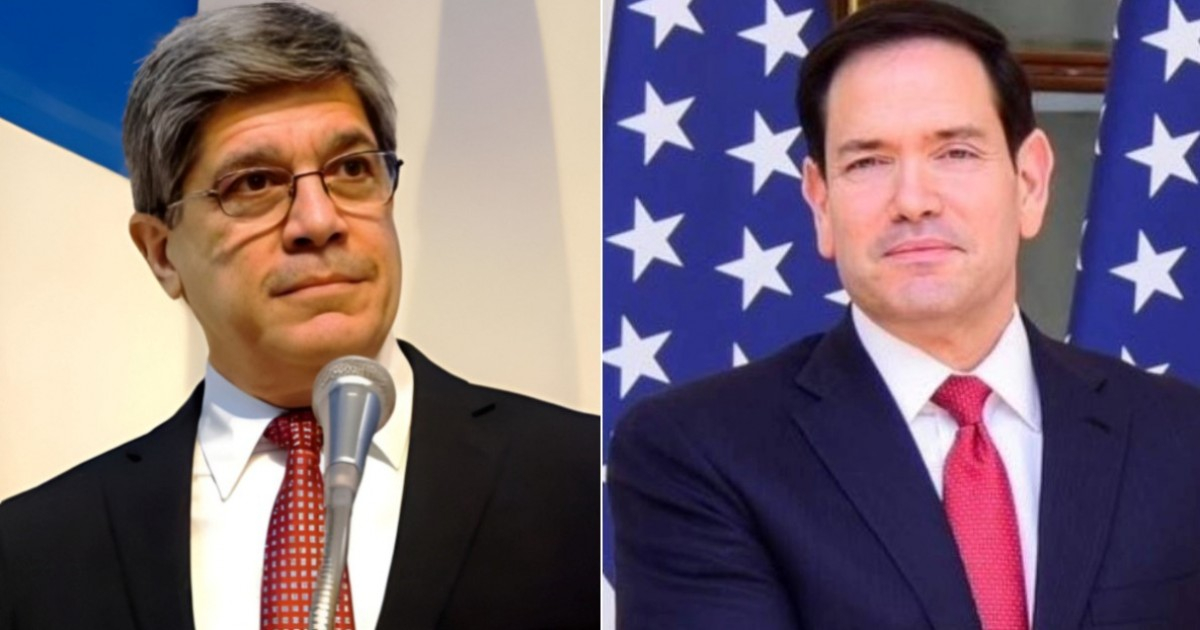
The Deputy Minister of Foreign Relations of Cuba, Carlos R. Fernández de Cossío, published a response on Facebook to U.S. Secretary of State Marco Rubio, stating that "Marxism and Marxist societies are not threats to the U.S."
The publication comes one day after Rubio announced new sanctions against five Cuban entities and stated that “for decades, Cuba has been the world capital of radical leftist terrorism”, adding that the Trump administration "will no longer tolerate radical Marxist regimes in our hemisphere."
In his message, Cossío listed what he believes are real threats to Washington: "selfishness, racism, intolerance, and armed violence," as well as "the shocking and growing inequality," political corruption, and "the increasing role of money in government management and the selection of leaders."
The official also criticized U.S. foreign policy by stating that "the arrogance with which other nations are attacked, foreign interests are imposed upon them, and their values and sovereign rights are disregarded" is equally a threat.
Cossío concluded his publication with a defense of the system that has governed Cuba for 67 years: "Marxism and socialism, consciously driven, aim for the greatest social justice and solidarity."
The statement contrasts sharply with the reality faced by the Cuban people under the same system: blackouts of up to 24 hours daily, generation deficits exceeding 2,100 MW, and a food crisis in which 33.9% of households reported that at least one member went to bed hungry in the last 30 days, according to the survey "En Cuba Hay Hambre 2025."
This is not the first time that Cossío has responded to Rubio's statements.
Last Wednesday, the deputy minister accused the U.S. of trying to destroy the Cuban economy and wrote on X that "lying in congressional hearings is free," referring to Rubio's appearance before the Senate Foreign Relations Committee, where the Secretary of State described GAESA as a "military holding company" that controls 70% of the Cuban GDP and has between $14 billion and $17 billion in assets.
On Thursday, the Office of Foreign Assets Control (OFAC) added ruler Miguel Díaz-Canel, his wife Lis Cuesta Peraza, and Alejandro Castro Espín, the son of Raúl Castro, to its list of Specially Designated Nationals in the largest sanctions offensive by the Trump administration against the Island.
This Friday also marks the deadline set by Washington for foreign companies to sever their ties with GAESA under the threat of secondary sanctions, as part of Executive Order 14404 signed on May 1.
From the Oval Office, Trump referred to Cuba as a "failed nation" and promised to address the Island after resolving the crisis with Iran, while Cuba's GDP is projected to decline between 6.5% and 7.2% for 2026, according to The Economist Intelligence Unit, marking the worst economic moment the dictatorship has faced in decades.
Filed under: