
Related videos:
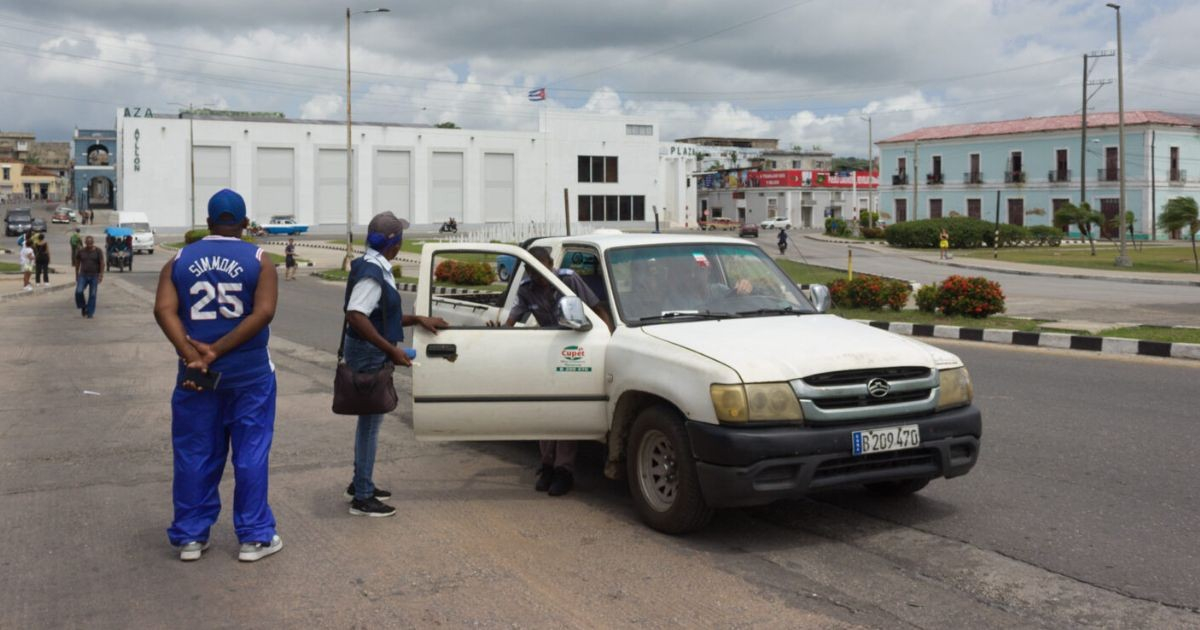
The authorities of Matanzas announced that drivers of state vehicles who refuse to pick up passengers at the designated points will lose their Transportation Operating License, the necessary document without which they cannot operate while providing service.
Gerardo Collado, municipal director of Transportation in Matanzas, announced the measure directly at the Viaduct stop, one of the few economically accessible pickup points for the population.
"The driver of state media who does not stop to pick up passengers will have their Operating Transport License revoked," he warned.
The announcement comes amid a mobility crisis that has residents of Matanzas waiting for long hours under the sun to reach their destinations.
The Paradero del Viaducto is one of the few options for citizens to travel to areas such as the Canímar or Buey Vaca rivers, or to enter the city through Peñas Altas.
State drivers avoid picking up passengers with various excuses: they claim they're heading to nearby destinations, keep the back seats occupied with boxes or suitcases, or say they need to go to a service station to get fuel or air for the tires.
Inspectors like Enrique Romero, present at the stop under the sun, must persuade drivers to fulfill their obligation and thereby reduce the endless waiting line.
The so-called riquimbilis—motorized tricycles—exist as an alternative, but they are not an economical daily option for most of the population.
The situation reflects the collapse of the transportation system in the province. In February 2026, transportation in Matanzas was virtually paralyzed, with only one daily departure on the Havana-Matanzas route and the train to the east running every eight days.
In September 2025, only 63 out of 129 buses were operational in the province, amounting to 48.8% of the available fleet, and the city maintained just nine urban routes in operation.
Nationally, the situation is not better: the National Bus Company was operating only 219 buses out of a total of 558 at the end of 2025, according to data on the interprovincial transport crisis in Cuba.
The requirement for state vehicles to pick up passengers at designated points is not new. Since March 2022, it was established in Matanzas that state vehicles must stop at marked locations as part of the "solidarity transport" scheme, implemented as an emergency measure due to the collapse of the system.
The threat of revoking licenses represents an escalation in official pressure on drivers, who have historically avoided this obligation.
The that the Cuban energy crisis has a "systemic and increasingly severe" impact on transportation, and that Cuba had been without sufficient fuel for over three months.
Filed under: