
Related videos:
Cuba is once again at the center of a dangerous geopolitical storm. Not due to its own strength, but because of the explosive combination of a dictatorship in terminal crisis, an exhausted population, increasingly brutal repression, and a growing confrontation between the Castro-communist regime and the United States.
The Island is experiencing the worst crisis in its history: extreme poverty, famine, endless blackouts, a healthcare crisis, paralyzed transportation, miserable wages, social despair, and a public discontent that the Political Police tries to suppress through imprisonment, violence, torture, threats, and terror.
In this context, Washington has intensified its rhetoric and actions. The executive order from the President of the United States designating the Cuban regime as an unusual and extraordinary threat to U.S. national security marks a turning point. This is further compounded by new economic sanctions, warnings to foreign companies operating in sectors controlled by the Cuban military, pressure on fuel supplies, investigations, indictments, and an environment of increasing international isolation for Havana.
The accusation against Raúl Castro for seven criminal charges, including four murders related to the downing of two small planes belonging to the humanitarian organization Brothers to the Rescue, places the old Castro regime in a situation it believed impossible for decades: having to answer to U.S. justice.
The fall of Nicolás Maduro in Venezuela on January 3 changed the regional equation as well. For years, Caracas was the great economic, oil, and political lifeline of castroism. Without Venezuela, Cuba is much more exposed. Without subsidized oil and without a powerful continental backing, Havana increasingly relies on its other patrons: Russia and China.
This is where the greatest danger arises. Moscow has made it clear that it is not willing to abandon its old Caribbean ally. The recent Russian signals of energy, financial, and political support for the Cuban regime are not gestures of humanitarian solidarity; they are strategic moves. Russia does not want to lose the last significant symbolic piece of the Cold War in the Americas. In light of Putin's strategic failure in his war against Ukraine, it sees Cuba as an important trump card.
China, for its part, does not view Cuba with ideological nostalgia, but rather with imperial calculation. For Beijing, the Island is an exceptional platform: located just 90 miles from the United States, in the heart of the Caribbean, with a regime that is needy, dependent, and willing to cede sovereignty in exchange for survival. China wants Taiwan, and having Cuba under its influence is a highly useful resource for negotiating with the United States.
Cuba could once again become a political, diplomatic, technological, and eventually military aircraft carrier against the United States. Intelligence reports already indicate the presence of espionage facilities linked to China and Russia in Cuban territory.
In the 21st century, visible nuclear missiles on launch pads are not necessarily required to create a serious threat. Listening stations, radar systems, cyber capabilities, electronic intelligence, naval presence, military cooperation, and control of strategic infrastructures are sufficient. A desperate regime can sell everything: ports, telecommunications, bases, information, territory, and national sovereignty.
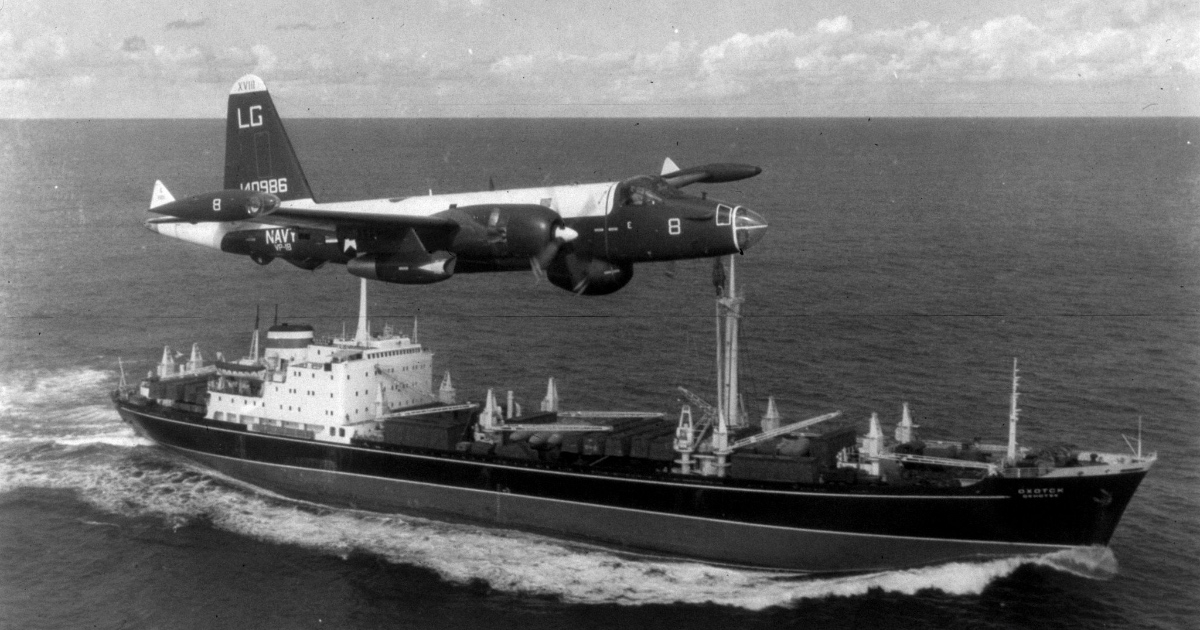
A comparison with the 1962 crisis would not be accurate, but it is unavoidable. After the failure at the Bay of Pigs and the inability of Operation Mongoose to bring down the Castro regime, the Soviet Union decided to install nuclear missiles in Cuba. Nikita Khrushchev aimed to alter the global strategic balance by using the island as a launching pad against the United States. John F. Kennedy imposed a naval quarantine, and the world stood on the brink of a nuclear war that could have been the start of World War III and, due to its atomic nature, perhaps the last one.
But the outcome of that crisis also had a tragic consequence for the Cuban people. The negotiations between Kennedy and Khrushchev ended with the withdrawal of the missiles, but they also ensured the continuity and strengthening of Fidel Castro's regime. The dictatorship took advantage of that indirect protection to consolidate itself internally, multiply its repressive apparatus, and export subversion. With money, weapons, and Soviet support, Havana backed guerrillas in Latin America, sent troops to Africa, intervened in Angola and Ethiopia, supported "revolutionary" movements, and became, for decades, an active threat to freedom across several continents.
Today, the risk is that history will repeat itself in new forms. If the United States lets its guard down, Russia and China will attempt to economically rescue the Cuban regime, rearm it, modernize its intelligence capabilities, and turn it into a permanent hostile enclave in the Caribbean. Following the weakening of the Chavista axis in Venezuela, Cuba and Nicaragua remain Moscow and Beijing's main assets in the Western Hemisphere. For Putin and Xi Jinping, saving the Castro regime means preserving a platform for pressure against the United States and for influence in Latin America.
The Cuban regime, cornered by its economic failure and the growing rejection from its own people, will do everything possible to avoid a transition to democracy. It will seek fuel, money, means of repression, diplomatic support, and military guarantees. And it will look for these precisely among the strategic enemies of the United States. Havana does not want real reforms; it wants to survive. It does not want to free political prisoners; it wants to negotiate impunity. It does not want to liberalize the economy; it wants to maintain military control over national wealth. It does not want sovereignty; it wants foreign protection to continue oppressing Cubans.
Thus, we can assert that we are facing an October Crisis 2.0: not necessarily a nuclear missile crisis, but a crisis of strategic Russian and Chinese penetration in Cuba, amid the internal collapse of the regime and increasing U.S. pressure. The difference this time is that the United States must not repeat the mistake of 1962. It is not enough to contain the threat. The underlying problem is not just the presence of Russian or Chinese forces. It is the existence of a criminal, anti-U.S., repressive dictatorship that is subservient to the enemies of freedom.
The only lasting solution for Cuba, for the United States, and for the Western Hemisphere is the end of the Castro-communist regime and the beginning of a real democratic transition. A free Cuba would cease to be an adversarial platform 90 miles from Florida and would become a natural ally of American democracies. Cuba without Castroism would mean freedom, democracy, human rights, an open economy, national reconstruction, well-being, and prosperity.
The United States must act swiftly, firmly, and with strategic clarity. It cannot allow Russia, China, or any other ally of the Cuban tyranny to provide it with oxygen or strengthen it. The moment demands decisiveness to prevent the dictatorship from continuing to use the people as a shield, hostage, and forward base for hostile powers.
The original October Crisis left a bitter lesson: preserving world peace should not mean perpetuating the enslavement of a nation. The current crisis must not end with another agreement that leaves the Cuban people at the mercy of their executioners. This time, the security of the United States and the freedom of Cuba are fully aligned. And this historic opportunity must not be jeopardized.
Filed under: