
Related videos:
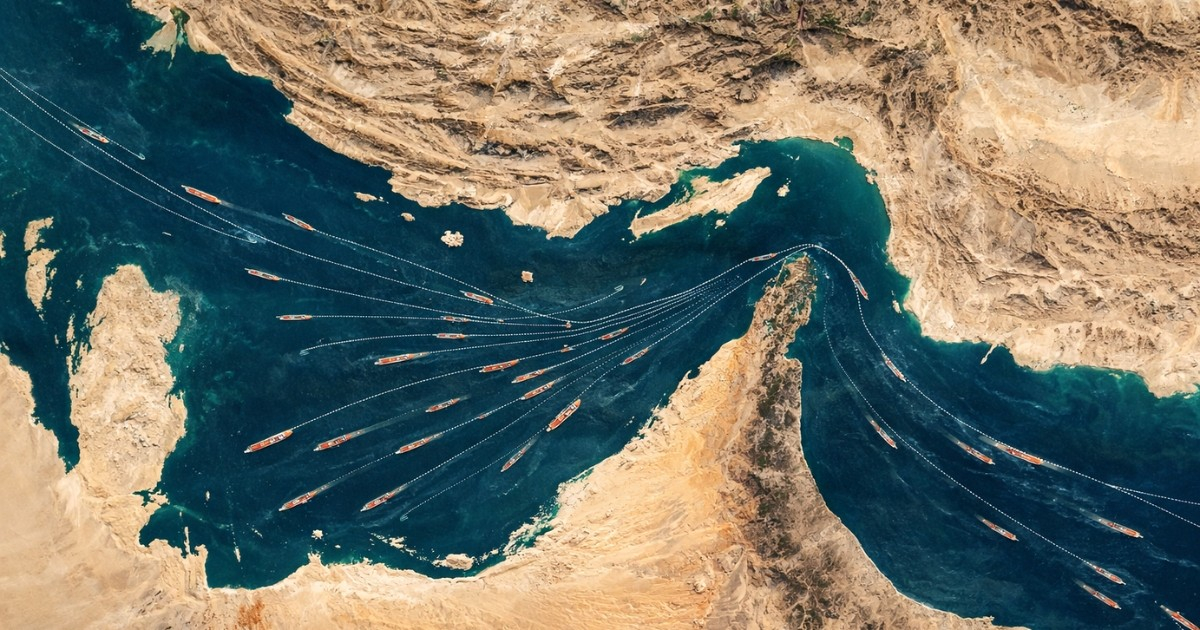
The Islamic Revolutionary Guard Corps (IRGC) announced this Wednesday the complete closure of the Strait of Hormuz "until further notice," warning that any vessel attempting to cross the passage will be considered an accomplice of the enemy and may be attacked.
The IRGC justified the measure by claiming "repeated violations of the ceasefire terms by the American enemy," referring to the new wave of bombings that U.S. Central Command (CENTCOM) carried out the same day against numerous targets in Iranian territory, describing the operation as "a response to ongoing Iranian aggression."
In its statement, the IRGC Navy was explicit: "We warn that no vessel shall depart from its anchorage in the Persian Gulf or the Gulf of Oman. Approaching the Strait of Hormuz will be considered cooperation with the enemy."
Iran claims that it also responded to the U.S. bombings with attacks against the headquarters of the Fifth Fleet in Bahrain and against military bases in Jordan and Kuwait, as reported by Reuters.
However, CETCOM denied the fact. "The Islamic Revolutionary Guard Corps of Iran claims that the Strait of Hormuz is closed. TRUTH: Commercial vessels continue to transit in and out of the Strait of Hormuz this night," the U.S. Command posted on X.
The escalation began on June 9 when an American Apache helicopter was shot down near the strait. Its two crew members were rescued alive approximately two hours later.
Trump accused Iran of the downing and ordered "proportional response" strikes against Iranian air defense systems and radars, which El País described as "the first exchange of fire between the two countries in the two months of ceasefire."
This new closure occurs within the context of a conflict that began on February 28, 2026 with Operation Epic Fury, a joint air campaign by the United States and Israel against Iranian military and nuclear facilities, including Natanz, Isfahan, and Fordow.
The Strait of Hormuz is a route through which approximately 20% of the world's oil supply passes. The first closure in March caused the price of Brent crude to surge from 67 to over 126 dollars. This Wednesday, Brent was around 92-93 dollars, with the average for June being 98.70 dollars.
The closure is not the first: Iran had already closed it again on April 18 after a temporary reopening, demanding that Trump lift the U.S. naval blockade. At the beginning of June, CNN reported that traffic was "exceptionally low" and the passage was "practically closed."
The diplomatic context is equally tense: on June 1, Iran suspended negotiations with the United States citing Israeli attacks in Lebanon, and on June 8, the International Atomic Energy Agency (IAEA) demanded that Tehran disclose its uranium reserves, adding further pressure.
After the bombings on Wednesday, Trump declared: "We hit hard yesterday, we will hit them again", a warning that suggests the military escalation between the two powers is far from over.
Filed under: