
Related videos:
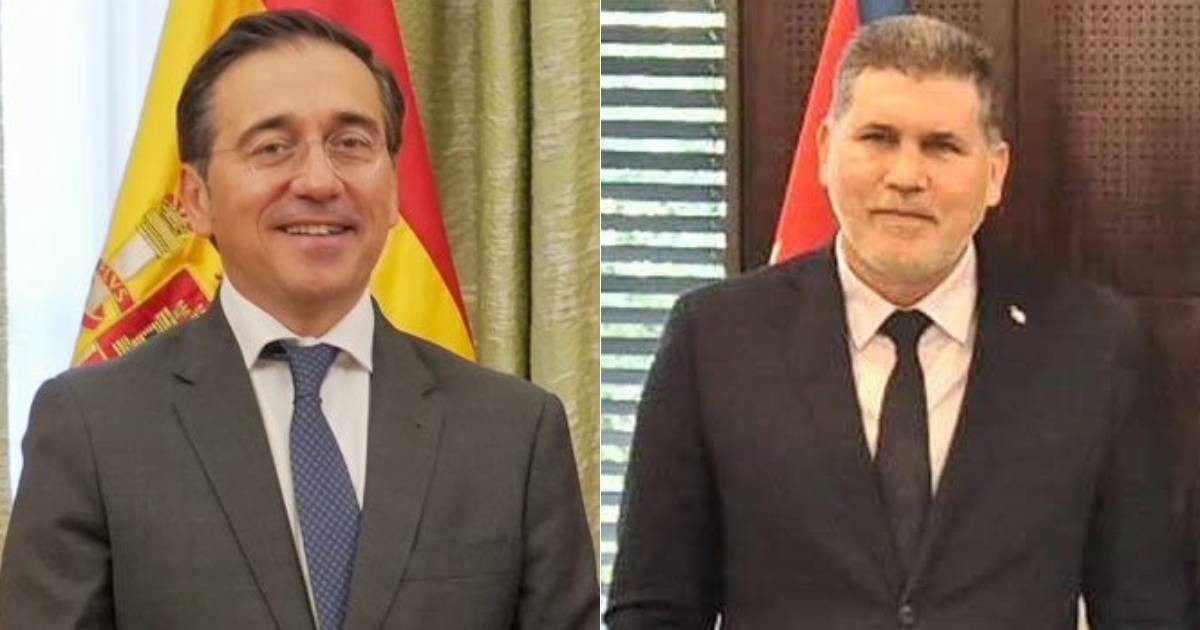
Spain's Minister of Foreign Affairs, European Union and Cooperation, José Manuel Albares, will meet on Thursday in Madrid with Cuba's Vice Prime Minister and Minister of Foreign Trade and Foreign Investment, Óscar Pérez-Oliva Fraga, amid growing concerns over the impact of new U.S. sanctions on Spanish companies operating on the island.
According to the official agenda of the Spanish Government, the meeting will be held at the headquarters of the Ministry of Foreign Affairs and will take place at a particularly delicate time for economic relations between Cuba and Europe, following the implementation of measures initiated by the Trump administration against entities linked to the Cuban military conglomerate GAESA.
The meeting will take place just days after the deadline set by Washington expired for foreign companies to end their ties with structures controlled by the Cuban Armed Forces or face potential secondary sanctions.
The measure has had a direct impact on some of the largest Spanish hotel companies operating in Cuba.
Meliá Hotels International announced on June 3 the termination of management, marketing, and use of its brands in 15 hotels on the island, while Iberostar stopped operating 12 of its 18 Cuban establishments as of June 1. In both cases, the affected hotels had ties to Gaviota, the main tourism company controlled by GAESA.
The pressure on the Cuban regime increased even further on June 4, when Washington expanded the sanctions against the Ministry of the Revolutionary Armed Forces (MINFAR) and the ruling Miguel Díaz-Canel, his wife Lis Cuesta, and several members of the Castro family.
In light of the consequences for the Spanish business sector, the First Vice President and Minister of Economy, Carlos Cuerpo, recently stated that the Spanish government is maintaining a "close monitoring" of the situation and ongoing communication with the affected companies in order to minimize the impact of the U.S. measures.
Pérez-Oliva Fraga's visit to Madrid is part of a European tour in which Havana seeks to strengthen its political and economic ties amid increasing pressure from Washington.
Before arriving in Spain, the Cuban official made a stop in Paris, where he held meetings with French authorities to discuss bilateral cooperation and analyze the consequences of U.S. sanctions.
According to the Embassy of Cuba in France, during these meetings, they discussed "the serious impact of the aggressive and illegal policy of the U.S. government against Cuba," as well as the economic challenges facing the island.
Pérez-Oliva also held meetings with representatives of the Cuban diplomatic mission in France to assess the internal situation of the country and coordinate actions in response to the new measures adopted by Washington.
The Cuban vice prime minister was promoted to his position in October 2025 and belongs to one of the families closest to power on the island. He is the great-nephew of Fidel and Raúl Castro, being the grandson of Ángela Castro, the older sister of both historic leaders of the Revolution.
This is not the first time the Spanish government has discussed with Cuban representatives the impact of U.S. sanctions. In February of this year, Albares met in Madrid with Foreign Minister Bruno Rodríguez, who also conveyed Havana's concerns regarding the tightening of economic measures and their effects on European companies present on the island.
On that occasion, Spain also announced the dispatch of humanitarian aid to Cuba through the Spanish Agency for International Development Cooperation and the United Nations system.
The meeting this Thursday confirms the interest of Havana in preserving its economic relations with Europe in an increasingly complex context for foreign investment on the island, while the companies that still operate in Cuba continue to assess the risks arising from the tightening of U.S. sanctions.
Filed under: