
Related videos:
The Cuban economist Pedro Monreal published this Thursday on his Facebook page "The State as such" an analysis about the potential private import of 250,000 barrels of fuel from the United States to Cuba, an operation led by the company Vanguard Energy, based in Coral Gables, Florida.
Using spot and wholesale prices from the Gulf of Texas, Monreal calculated that 100,000 barrels of gasoline amount to 12.5 million dollars and 150,000 barrels of diesel to 21.8 million, for a total of 34.3 million dollars, excluding transportation costs.
"With spot/wholesale prices in the Gulf of Texas, the value of 100,000 barrels of gasoline is 12.5 million USD, and the value of 150,000 barrels of diesel is 21.8 million. In total, 34.3 million USD, not including transportation costs," wrote the economist.
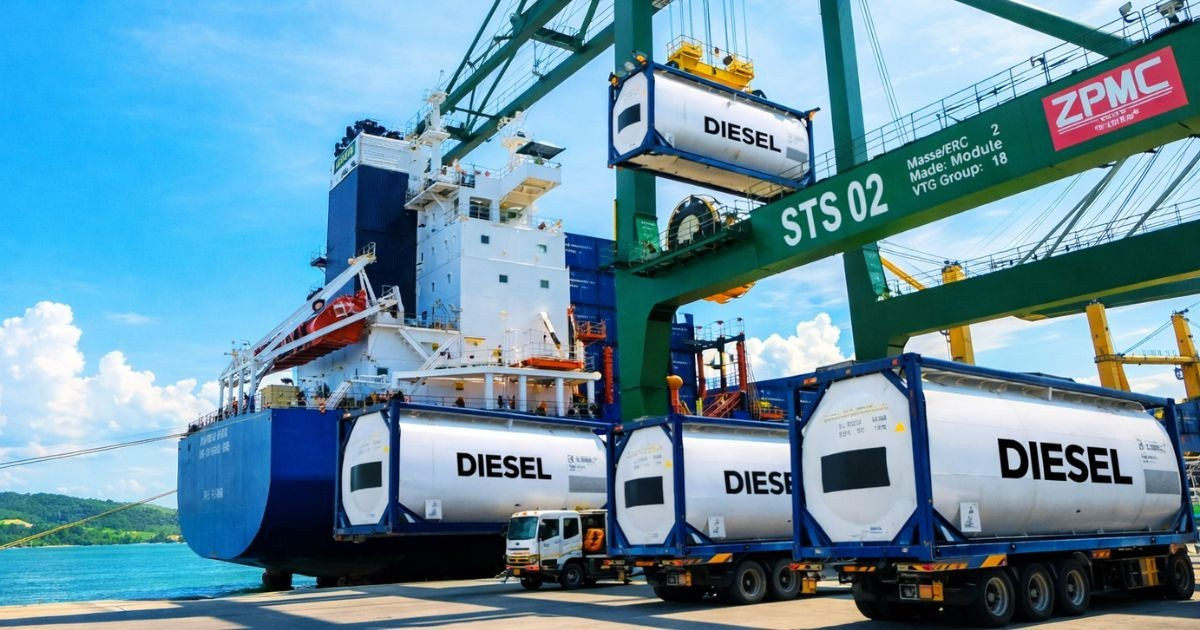
Monreal pointed out that, although the volume would be small compared to the total national demand, its monetary value would be five times greater than all the imports in isotanks made between January and March 2026.
Beyond the commercial aspect, the economist pointed out three structural implications: that the operation would reinforce Cuba's energy dependence on the United States, that it would "launch" the exchange rate between the dollar and the Cuban peso, and that it would have social and political effects that are "difficult to predict."
The analysis is framed within the agreement between Vanguard Energy and an importing agency from Cuba linked to CUPET, reported on Wednesday by the Miami Herald and Bloomberg, which described the operation as the largest shipment of American fuel to Cuba since the Eisenhower era, during the Cold War.
The agreement includes shipments of over 250,000 barrels —100,000 of regular 87-octane gasoline and 150,000 of diesel— at a frequency of once a month or every 40 days.
However, the United States Department of State denied having specifically authorized Vanguard Energy for that transaction, generating controversy regarding the legal status of the agreement.
Vanguard Energy claims to operate under a guideline from the Department of Commerce published on February 25, 2026, which allows exports to the Cuban private sector without a specific license under the "Support for the Cuban People" exception.
Monreal's analysis fits within the context of Cuba's worst energy crisis in decades. Since January 2026, the Venezuelan supply was interrupted following the capture of Nicolás Maduro, and Mexico halted its shipments out of fear of U.S. tariffs.
The electrical deficit reached a record of 2,153 MW on May 13, with blackouts lasting up to 22 hours daily, and the Cuban Observatory of Conflicts recorded 1,311 protests in May related to the energy crisis.
Cuba had already imported fuel from the United States for 11.6 million dollars in the first quarter of 2026, mainly using isotanks from Houston-Galveston, Miami, and New Orleans headed to the port of Mariel— a method that Vanguard Energy itself described as "expensive and inefficient."
"Beyond the 'business' dimension of such an operation, if realized, it would strengthen Cuba's energy dependence on the U.S. and impact the USD/CUP exchange rate. Additionally, there would be social and political effects that are difficult to predict," concluded Monreal.
Filed under: