
Related videos:
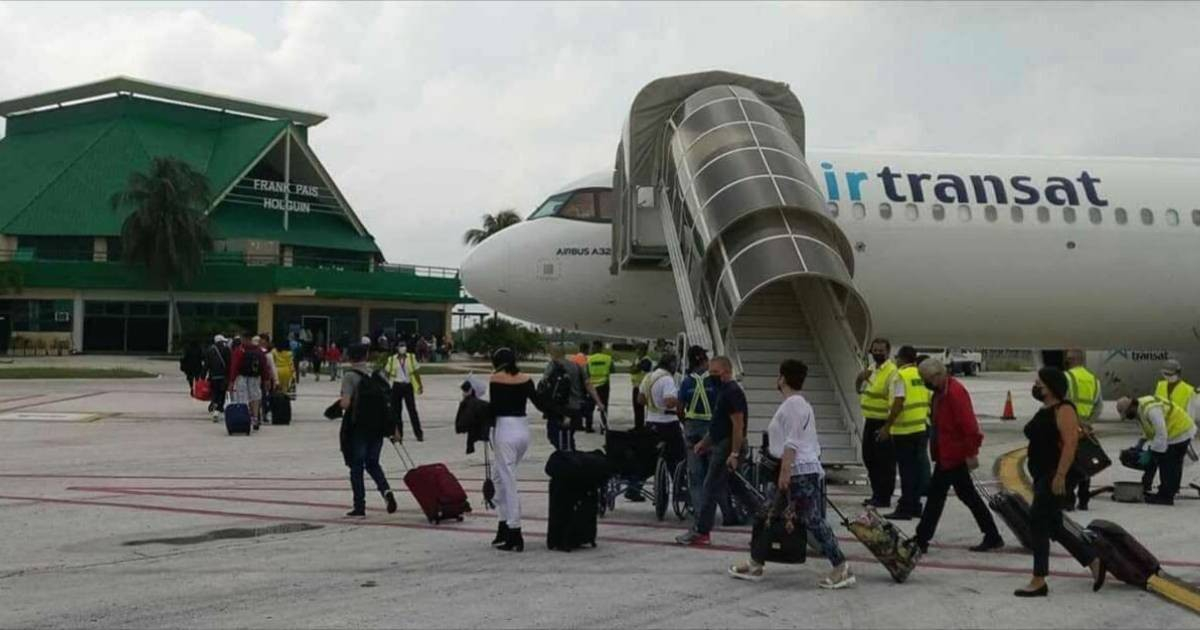
The suspension of flights to Cuba cost Air Transat 25 million Canadian dollars in just one quarter, further indicating the impact that the island's energy crisis is having not only on Cubans but also on foreign companies that have relied on the Cuban tourism market for years.
The Canadian airline reported a net loss of 79 million Canadian dollars during the second quarter of 2026, more than triple the 23 million lost in the same period the previous year, according to The Canadian Press following the company's earnings report.
The executive director of Transat AT, Annick Guérard, attributed the financial decline primarily to the rising fuel prices and the indefinite suspension of operations to Cuba.
"The results for the second quarter fell far short of our expectations, as factors beyond our control severely impacted profitability," the executive stated during a conference with analysts.
According to the company, both factors had a combined impact of 95 million dollars on its adjusted earnings. The increase in fuel costs accounted for approximately 70 million dollars, while the disruption of flights to Cuba led to an additional 25 million in losses.
Air Transat suspended its operations to the island in mid-February, after Cuban authorities warned about the inability to guarantee the supply of Jet A-1 fuel at José Martí International Airport in Havana.
The decision impacted one of the company's most important routes.
Cuba represented about 9% of Air Transat's flights during the first half of 2025 and remained one of the preferred vacation destinations for tourists from Quebec, the province where the airline is headquartered.
The suspension not only impacted the Canadian company.
Alongside Air Canada and WestJet, Air Transat has indefinitely canceled all its flights and holiday packages to the island, a situation that has contributed to the collapse of Canadian tourism, traditionally the main source market of visitors to Cuba.
The figures reflect the magnitude of the decline.
Between January and April 2026, only 125,444 Canadian tourists arrived in Cuba, compared to 346,109 recorded during the same period the previous year, a reduction of 63.8%.
For a tourism sector that was already facing issues with hotel occupancy, service shortages, and infrastructure deterioration, the temporary disappearance of thousands of travelers from Canada has been an especially hard blow.
In light of the worsening of its financial situation, Air Transat announced that it will seek support under the new loan program created by the Canadian government to assist airlines affected by the international fuel crisis.
The company's CFO, Jean-François Pruneau, confirmed that the company aims to obtain the maximum allowed by the program, up to 150 million Canadian dollars.
The situation is further complicated by operational issues unrelated to Cuba. Currently, five of the airline's 42 aircraft are out of service due to the withdrawal of engines manufactured by Pratt & Whitney.
According to Guérard, this situation continues to impact flight schedules and the company's revenue, and a complete solution is not expected before 2028.
Air Transat's difficulties coincide with a challenging scenario for the entire North American airline industry.
The International Air Transport Association (IATA) estimates that the profits of the major airlines in the region will decrease this year by about 3 billion dollars due to the rise in energy prices caused by tensions in the Middle East.
However, in the case of Air Transat, Cuba appears for the first time as one of the factors directly cited by the company to explain the deterioration of its financial results.
What began as a fuel crisis on the island is now having repercussions far beyond Cuban borders, affecting one of the airlines that has historically transported the most tourists to the country.
According to the company's own forecasts, reported by Investing.com, losses per share will remain in negative territory until the first quarter of the fiscal year 2027.
Filed under: