
Related videos:
The official newspaper of the province of Guantánamo, Venceremos, published an article in which the Cuban regime proclaims that the province is «completely electrified», with one caveat that summarizes the contradiction of the announcement: «blackouts aside, which are induced by the genocidal blockade against Cuba».
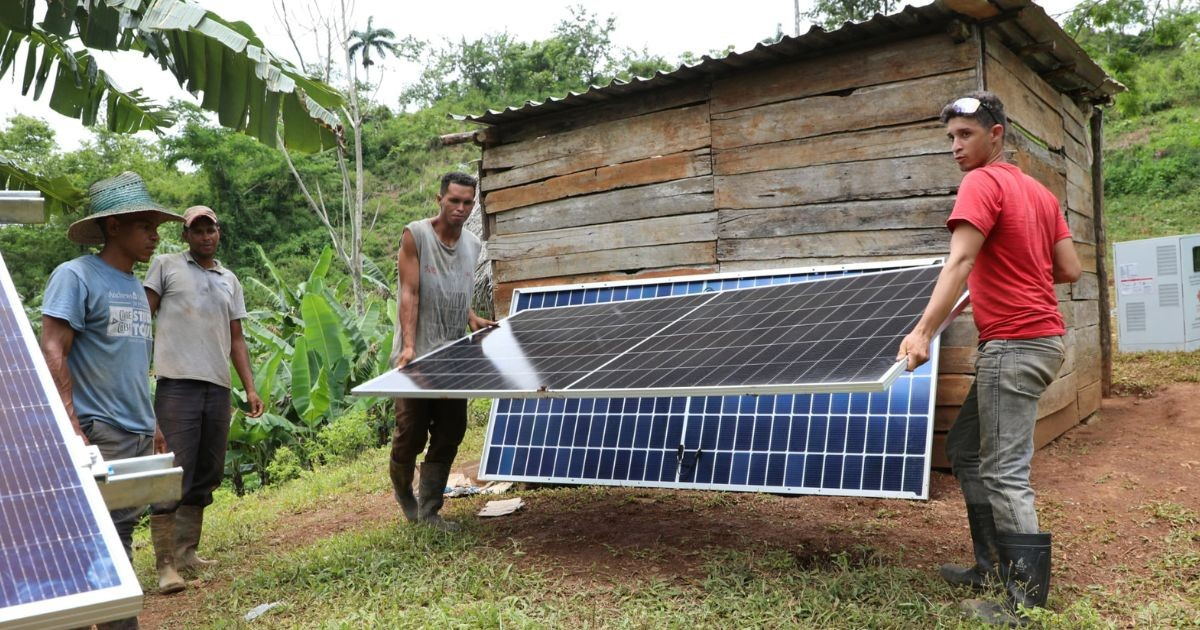
According to the official text, the electric service now covers 181,765 customers registered by the Basic Electric Organization (OBE), along with the residents of 336 isolated homes in remote areas that received 2 kW photovoltaic panels donated by China as part of the Domestic Solar Equipment Assistance Project for Cuba.
The irony of the announcement is hard to ignore: just two days before its publication, the entire province of Guantánamo experienced a power outage for more than 24 hours due to the failure of the 110 kV line that links it to Santiago de Cuba.
Residents reported 29 continuous hours without electricity in Reparto Obrero and up to 33 hours in nearby areas during the blackout last Thursday.
On June 7, the provincial electricity company itself had acknowledged eight damaged transformers with no spare parts available, while municipalities such as Imías, San Antonio del Sur, Jamal, and Maisí were experiencing up to 20 hours daily without service.
In April, residents of Guantánamo held protests with pots and pans denouncing that they only had electricity for 45 minutes to one hour per day.
The solar panels are the technical foundation of the triumphant announcement. The municipalities that benefited the most in the province were Imías with 87 systems installed, Manuel Tames with 79, and Maisí with 49.
Manuel Taboni Joubert, an investment specialist at the Electric Union in Guantánamo, stated to the newspaper Venceremos that the new customers were informed about the operation of the equipment.
"They are equipment that came to improve the lives of these people who had never had access to electricity," he emphasized.
The regime links the achievement to Fidel Castro's so-called Moncada Program, which in 1953 promised "the possibilities of bringing the current to the farthest corner of the Island." The official article concludes: "In Guantánamo, it is a fact."
The panels are part of a batch of 5,000 photovoltaic systems donated by China in November 2025, valued at over 114 million dollars. However, the Cuban government reassigned 2,671 of these systems to "vital centers" in 168 municipalities, including 240 units for the telecommunications company ETECSA, rather than exclusively allocating them to rural housing.
The electricity crisis that the regime attributes to the U.S. embargo has well-documented structural causes: outdated infrastructure, chronic fuel shortages, and decades of mismanagement. On May 14, the national electrical deficit reached a record high, with only 976 MW available against a demand of 3,150 MW, leaving 70% of the country without electricity simultaneously.
Cuba has experienced at least seven total collapses of the National Electric System in the last 18 months, the longest of which lasted 29 hours and 29 minutes on March 16, 2026.
Filed under: