
Related videos:
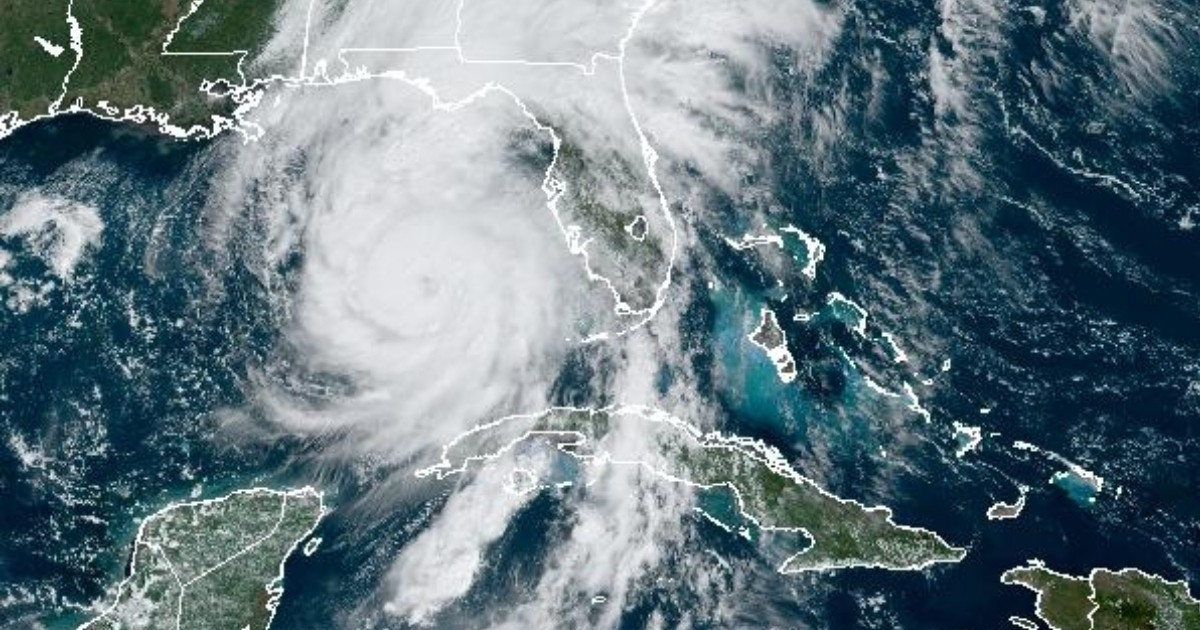
The team of hurricane experts at Colorado State University (CSU) published their June forecast update for the 2026 Atlantic season, which lowers their predictions compared to the April forecast and indicates that tropical cyclonic activity will be the lowest in the entire basin since 2015.
The trigger for the review was the official declaration of the El Niño phenomenon by the National Oceanic and Atmospheric Administration (NOAA) and the National Meteorological Service, which confirmed the presence of conditions associated with this phenomenon in the eastern tropical Pacific.
CSU, the first team to issue seasonal hurricane forecasts since 1984, now predicts 11 named storms, five hurricanes, and two major hurricanes (category three or higher) for 2026, compared to the 13 storms, six hurricanes, and one to three major hurricanes that were projected in April.
These figures fall below the historical 30-year average, which includes 14 named storms, seven hurricanes, and three of category three or higher.
The Accumulated Cyclone Energy (ACE) index, which measures the combined intensity and duration of storms, is expected to be approximately 40% below the historical average, according to new projections.
The likelihood of a major hurricane impacting the United States in 2026 drops to 23%, nearly half of the historical average of 43% recorded between 1880 and 2020.
The odds of impact on the U.S. coastline are as follows: 24% for the entire coast, 14% for the Gulf of Mexico, 11% for the East Coast, and 26% for the Caribbean.
The key factor behind the revision is the type of El Niño that is developing: a canonical or classic episode, with warming concentrated in the eastern Pacific, which historically generates greater wind shear over the Caribbean and the primary hurricane development region in the Atlantic.
"This rapid transition to El Niño is the main reason why we anticipate much below-average activity during this hurricane season in the Atlantic," the CSU team noted in their update.
Temperature anomalies in the Niño 3.4 monitoring region have already surpassed records from other strong episodes that began in 2023, 2015, 1997, and 1982. Seasonal models indicate a 95% probability of a strong or very strong El Niño developing during the peak months of the season, between August and October.
The models also predict the highest wind shear recorded since 1981 for the Atlantic development region this fall, which would hinder the organization and strengthening of tropical systems.
Despite the encouraging outlook, experts warn that a low activity season does not mean the absence of danger.
Hurricane Andrew, in 1992, was the only hurricane of category three or higher in a very inactive season—with only seven named storms—and became one of the most costly disasters in U.S. history after devastating southern Florida.
This warning is particularly relevant for Cuba, which is still suffering from the impact of the hurricane Melissa on October 29, 2025, which made landfall in the eastern part of the Island as a category three, damaging over 116,000 homes and affecting more than 3.5 million people.
The Institute of Meteorology of Cuba (INSMET) had forecast a less active season in May, with 11 cyclones, five hurricanes, and two of major intensity, and estimated a 40% probability that at least one hurricane will impact the Island in 2026, a figure slightly higher than the historical average of 35%.
Ken Graham, director of the National Weather Service at NOAA, summarized the experts' stance on any excess of confidence: "It only takes one storm for it to be a very bad season."
Filed under: