
Related videos:
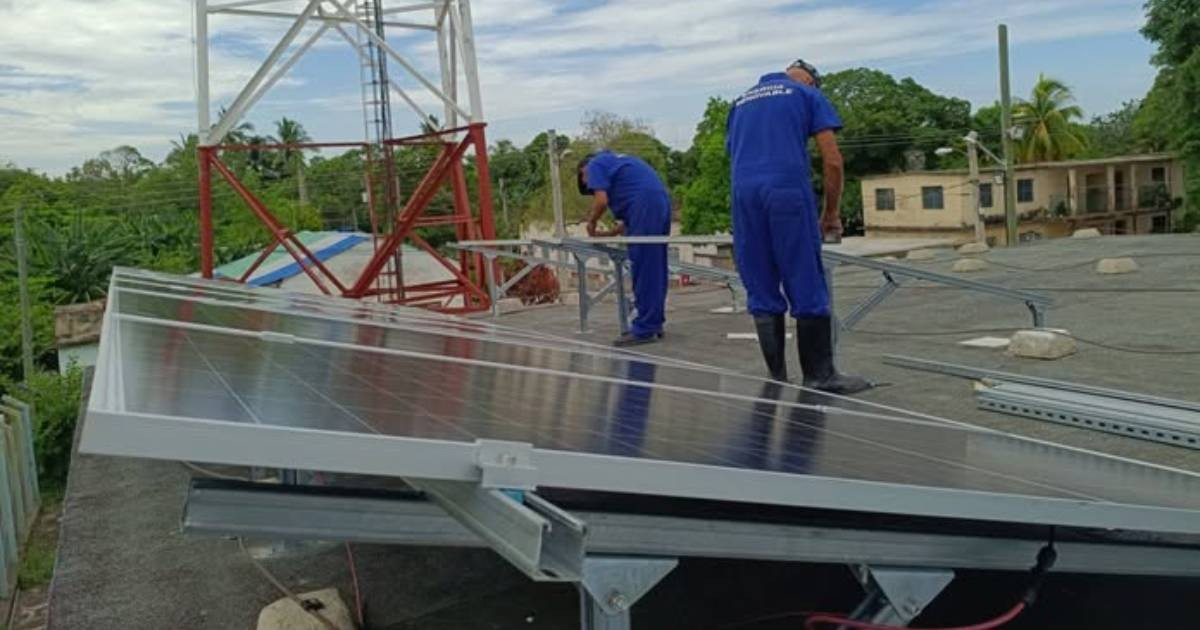
The prolonged blackouts affecting Cuba have forced the Telecommunications Company (ETECSA) to seek emergency alternatives to keep telecommunications operational. In Jobabo, a municipality in Las Tunas, the company began this weekend the installation of a photovoltaic system aimed at preventing the locality from becoming partially cut off every time the electric service fails.
According to the official broadcaster Radio Cabaniguán, the equipment arrived in the region on Saturday, and installation began immediately. The investment exceeds 50 million pesos in the first phase of the project.
The initiative arises amid the deterioration of the National Electric System, whose constant blackouts not only affect homes and workplaces but also mobile and internet services, which are increasingly essential for the communication of Cubans both on and off the island.
According to specialists from ETECSA, the system will consist of solar panels and a battery bank capable of keeping the telecommunications infrastructure operational for seven to eight hours without electricity.
"With good solar radiation, it will continue to provide service throughout the day," explained Yordani Nelson Ceballos Suárez, energy specialist in the Investment Department of ETECSA in Las Tunas.
The batteries will take over energy backup during the night and early morning, although current regulations prevent them from being charged through the conventional electrical grid, so they will rely exclusively on the energy captured by the solar panels.
The installation is part of a strategy implemented by ETECSA to mitigate the impact of the energy crisis on its services. Similar projects are being carried out in other provinces such as Matanzas, Granma, and Villa Clara.
The need for these investments reflects the magnitude of the crisis. According to data previously released by the company itself, during the outages, nearly half of the country's mobile radio bases stop functioning, and more than half of the telecommunications cabinets also fail, resulting in interruptions in phone calls, internet browsing, and other services.
Part of the equipment used in these projects comes from a donation made by China, valued at over 114 million dollars, intended to support infrastructures deemed strategic.
Meanwhile, thousands of Cubans continue to face daily power outages that, in addition to disrupting their daily activities, make it difficult to communicate with family inside and outside the island, a problem that has become one of the most visible consequences of the energy crisis the country is experiencing.
Authorities expect the Jobabo system to be operational before the end of next week.
Filed under: