
Related videos:
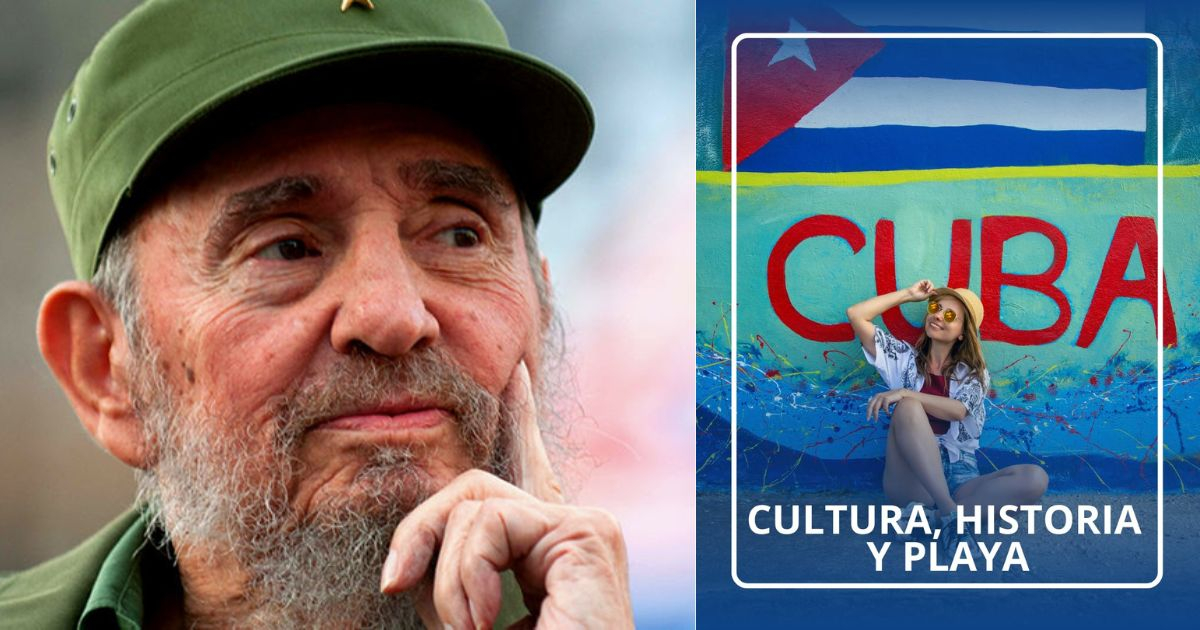
The Chilean-Cuban Institute of Culture "José Martí", a pro-Castro militant organization based in Chile, is promoting a group trip to Cuba from August 10 to 22, 2026, at a cost of 2,000 dollars per person, to participate in the official celebrations of the centenary of Fidel Castro's birth.
The package, operated by Havanatur Chile —the official travel agency of the Cuban state— includes stays in hotels from international chains such as Meliá and Starfish in Havana, Trinidad, Cienfuegos, and Varadero, with all-inclusive options or breakfasts and dinners, transfers in air-conditioned buses, entry visa, and medical insurance.
The itinerary includes four nights at the Capri Hotel in Havana, two nights at the Meliá Trinidad, one night at the Meliá La Unión in Cienfuegos, three nights at the Starfish Cuatro Palmas in Varadero, and two additional nights back at the Capri in Havana.
The trip coincides with the International Colloquium "Fidel: Legacy and Future," scheduled from August 10 to 13 at the Palace of Conventions in Havana, and with the International Book Fair rescheduled for August 10 to 16, both events dedicated to the centenary.
The regime of Miguel Díaz-Canel declared 2026 as the “Year of the Centenary of Fidel Castro” with the official slogan “Fidel is a country”, activating a commemorative program that began on August 13, 2025, and extends until December 4, 2026, which includes the publication of 23 volumes of Selected Works with more than 600 documents.
The contrast between militant tourism and the reality experienced by the Cuban people could not be more brutal: while Chilean travelers will stay in all-inclusive hotels and climate-controlled buses, Cuba is undergoing in 2026 its worst documented energy collapse, with blackouts lasting between 20 to 22 hours daily in Havana and even longer in the interior provinces, and electrical deficits that exceeded 2,000 MW in May and June.
This darkness is compounded by the fact that nearly 2.7 million people on the Island were suffering from a total lack of drinking water in June 2026, while several million others had an intermittent supply, according to recent data. The government activated the so-called “Zero Option” in February 2026, an emergency plan that includes the use of animal traction, coal, and biomass as energy sources.
The poverty affects approximately 89% of the population according to independent studies, and the Cuban Conflict Observatory recorded 1,245 protests, complaints, and civic actions in March 2026 and 1,133 in April, figures that depict an island in social upheaval, not precisely out of enthusiasm for the centenary.
The reaction of internet users to the poster for the trip was predominantly ironic and scathing. One suggested buying "one-way tickets only." Another, with similar generosity, asked for travelers to "please stay there." A third proposed that the solidarity activists bring gifts for the Cuban people such as "sugar, milk, toothpaste, deodorants, toilet paper," and invite two Cubans to dine in those all-inclusive hotels "so that after 67 years, they know what it’s like to have a proper meal." Someone else summed it up in three unforgettable words. And another user, with a discerning eye, spotted a spelling mistake in the poster itself — which wrote "Centerario" instead of "Centenario" — and asked, "Is this the people who tell us to read 'Fachos Pobres'?"
The regime has been mobilizing resources for over a year to celebrate the centenary of the leader who ruled Cuba for more than five decades, leaving behind a legacy of a dictatorship that today marks 67 years, a crumbling economy, and millions of Cubans in exile or living in poverty. The fact that some are paying $2,000 to fly from Chile to celebrate in luxury hotels—while the average Cuban lacks access to electricity, water, and food—speaks volumes about the nature of the so-called "solidarity tourism."
Filed under: