
Related videos:
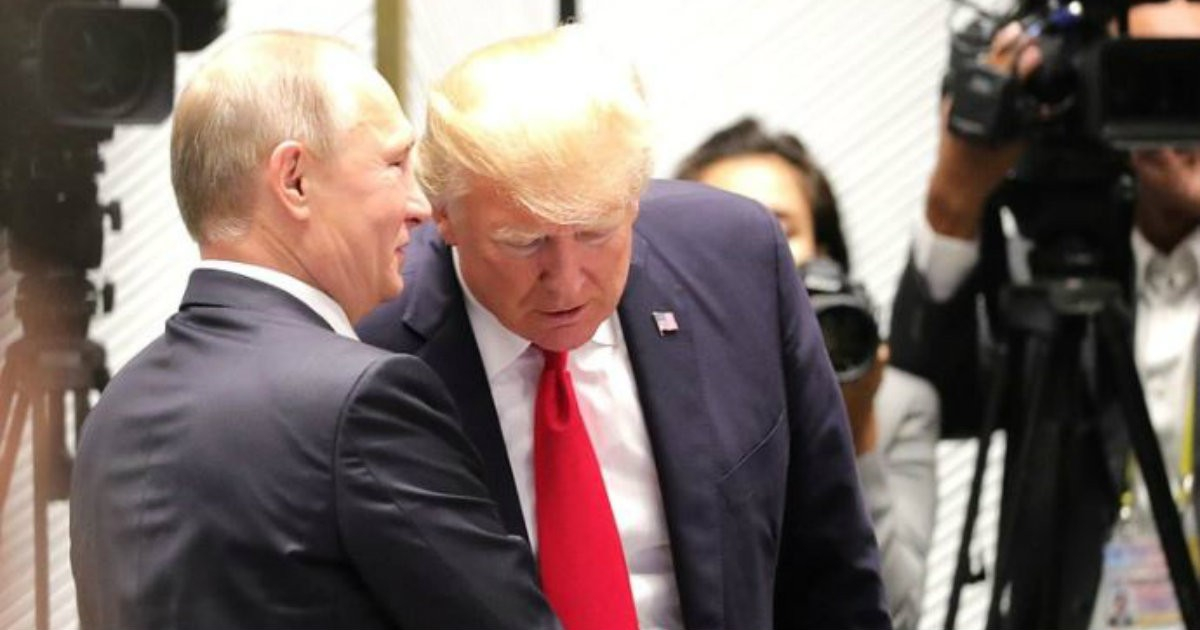
Vladimir Putin was the first foreign leader to call Donald Trump to congratulate him on his 80th birthday this past Sunday, June 14, in a 55-minute conversation described by the Kremlin as "friendly and frank."
Trump himself publicly acknowledged that Putin was the first to call him that day, according to the Russian news agency TASS, citing Kremlin presidential advisor Yuri Ushakov. The call also marked the first direct contact between the two leaders in about a month and a half, since they discussed a ceasefire proposal related to Victory Day on April 29.
The congratulations and the tone of the call
Putin published a message on the Kremlin's website in which he wrote: "Dear Mr. President, dear Donald, I wholeheartedly congratulate you, a truly brilliant and remarkable person and politician, on your 80th birthday."
The Russian leader added that "I appreciate the mutual understanding between us, which allows us to discuss... even the most complex issues on the bilateral and international agenda in an open and frank manner."
Ushakov emphasized that "President Putin's congratulatory message was very sincere and warm, reflecting the nature of the relationship between the two leaders." The Kremlin confirmed that Russia did not send any material gifts, but described the gesture as "particularly significant."
According to Ushakov, Putin also emphasized during the conversation Trump's ability to "withstand blows, successfully overcome obstacles, and pursue his goals with perseverance." The Kremlin advisor stated that the Russian leader highlighted the "exceptional qualities" of the U.S. president, which he attributed to part of his success in both politics and public life.
Ushakov also stated that the exchange included relaxed moments and even jokes between the two leaders. He recounted that Trump downplayed turning 80, claiming he feels "full of energy and strength."
Ukraine, Iran, and the special envoys
Beyond the congratulations, the call addressed three major topics on the international agenda.
Regarding Ukraine, Trump reiterated the need to end military operations and expressed his willingness to pressure both his European partners and Kyiv during the G7 summit that was set to begin that same Monday in Évian, France.
Putin stated that Ukrainian attacks on Russian civilian infrastructure "will not change the situation on the battlefield" and criticized Zelenski.
About Iran, Trump informed Putin that the United States is near an agreement with Tehran and expressed gratitude for the mediation of Russia and Pakistan. Both leaders agreed that special envoys Steve Witkoff and Jared Kushner will soon return to Moscow to continue the discussions.
Zelensky also called Trump
Hours before the conversation with Putin, Zelensky congratulated Trump over the phone in a call lasting about 30 minutes, thanking him for the military support "from Javelins to Patriots" and updating him on the situation at the front.
The next day, at the G7 in Évian, Trump stated: "We had a very good conversation yesterday with President Zelenski and President Putin, and I think we may be able to do something. I really believe that. Both are open to it."
The attack on the Kyiv cathedral, hours later
The diplomatic rhetoric collided head-on with the reality of the battlefield. Just a few hours after the call, Russia launched an offensive with drones and missiles that severely damaged the Dormition Cathedral of the Kyiv-Pechersk Lavra monastery, a nearly thousand-year-old complex protected by UNESCO.
The attack left 11 dead and 53 injured across Ukrainian territory. In Kharkiv, five rescuers lost their lives while trying to save civilians.
The French Foreign Minister, Jean-Noël Barrot, described the attack as equivalent to bombing Notre Dame. His Ukrainian counterpart, Andrii Sybiha, stated that Russia has already surpassed ISIS in crimes against cultural heritage.
The G7 summit in Évian will run until June 17, with the war in Ukraine as its central focus. French President Emmanuel Macron expressed his intention to persuade Washington to increase pressure on Moscow, arguing that "good negotiation means Ukraine and Russia sit at the same table, with Europeans and Americans present."
Filed under: