
Related videos:
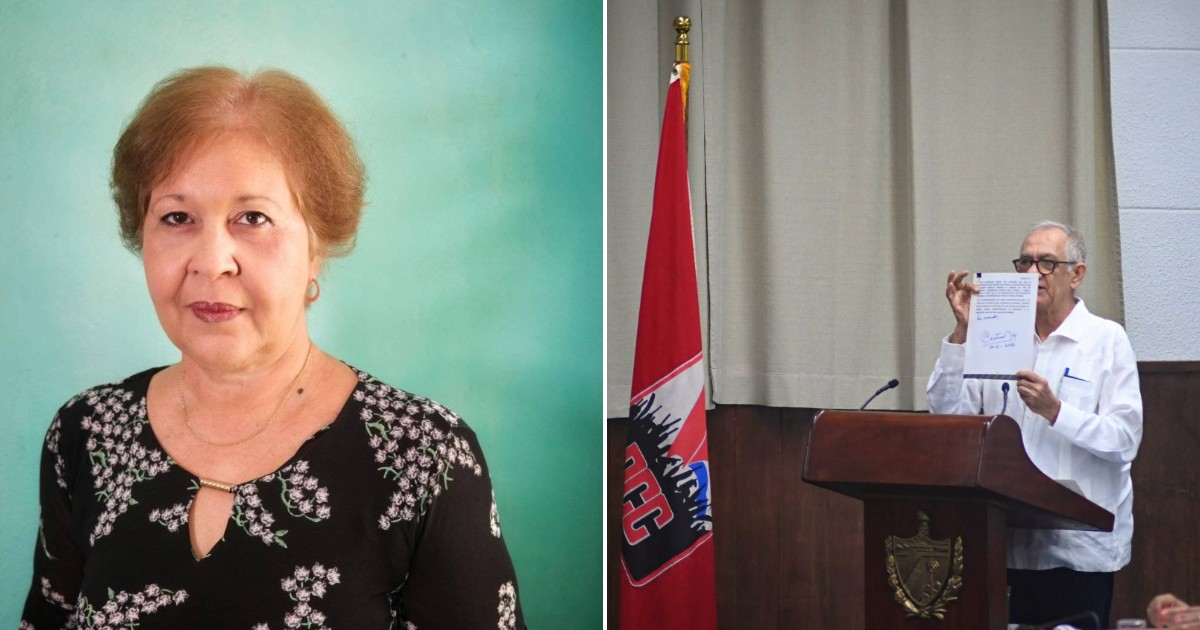
The historian and activist Alina Bárbara López Hernández reacted this Thursday to the regime's announcement of a package of more than 20 economic reforms approved during the Extraordinary Plenary of the Central Committee of the Communist Party of Cuba, held on Wednesday, and described the maneuver as a delaying tactic with no real intention for change.
"They are trying to buy time. This is an old strategy of the power group," wrote López Hernández on his Facebook profile, in a post that draws a direct parallel between the current rhetoric of the regime and that which Raúl Castro delivered nearly two decades ago.
"Words here and there, look for what Raúl Castro said when he launched his famous pro-reform campaign, which he called 'Updating the Cuban Economic and Social Model', in 2007. It's more or less the same as what he says now, nineteen years later," remarked the intellectual.
The trigger was the meeting in which the regime used the figure of Raúl Castro —who participated via videoconference at the age of 94— to legitimize the measures, which include reducing the number of ministries from 27 to 21, granting greater salary and commercial autonomy to state enterprises, eliminating the requirement to channel imports and exports through the state, and expanding small and medium-sized enterprises.
To support his argument, López Hernández elaborated a timeline of 11 failed economic strategies announced by the regime since the disappearance of the socialist camp: the Process of Rectification of errors and negative trends, the Business Perfection, the creation of the GAESA holding, the dismantling of the sugar industry, the national electro-energy program, the Economic Update, the Experiment of Artemisa and Mayabeque, the Special Development Zone of Mariel, the Ordering Task, the Reordering, and the government program to revive the economy.
The intellectual recalled that the reformist cycle that began in 2007 concluded at the 8th Congress of the PCC in 2021 with the failure of the Tarea Ordenamiento, the handing over of the position of General Secretary of the Party to Miguel Díaz-Canel, and the elimination of nearly all the Guidelines.
He also recalled July 11, 2021, when Cubans took to the streets in desperation less than three months after that congress concluded: "instead of 'putting their ears to the ground' and listening to it, they called for combat against it," he wrote.
López Hernández's skepticism is not isolated. Cubans responded on social media with irony and weariness to the announcement: "The same dog with different collars" and "The circus has begun" were among the most representative comments.
The meeting took place while pot banging protests shook Santa Clara, Havana, and Santiago de Cuba, with power outages of up to 22 hours daily and an electrical deficit nearing 2,000 MW. CEPAL projects a decline in Cuba's GDP of 6.5% in 2026, which would make Cuba the worst-performing economy in Latin America for the second consecutive year.
López Hernández concluded his publication with a warning that points to the heart of the problem: "They still haven't named what was approved today in the extraordinary Plenary of the PCC. But they forget something; the crisis is predominantly political. And time is up."
Filed under: