
Related videos:
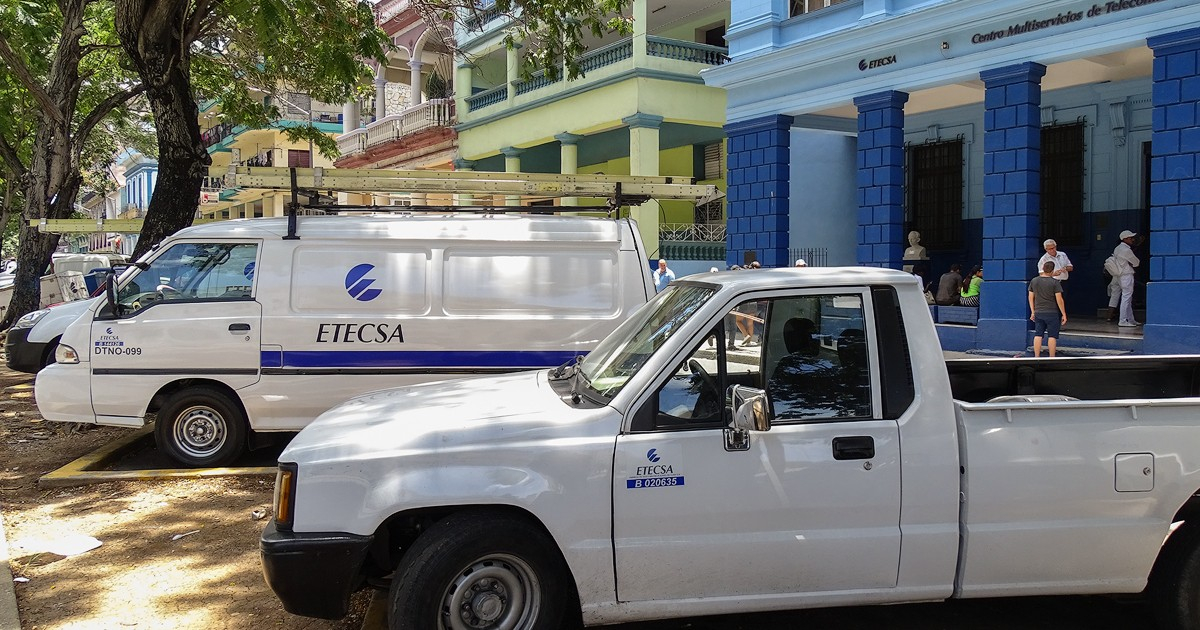
The Cuban regime announced a series of measures for the digital transformation and artificial intelligence (AI) sector, which include opening data centers of the Telecommunications Company of Cuba (ETECSA) to foreign investment, acknowledging the state's limitations in sustaining infrastructure deemed strategic.
The measures were presented by Prime Minister Manuel Marrero before the National Assembly of People's Power (ANPP), where he outlined a package of 176 economic and social transformations that the regime claims are aimed at reviving an economy trapped in an unprecedented crisis.
Among the initiatives, the authorization of foreign investment to expand the capacities of ETECSA's data centers stands out, a decision that highlights the urgent need to attract foreign capital in a sector that has been under a tight state monopoly for decades.
The plan also includes allowing the private sector to offer cloud computing services, VoIP, call centers, and other technological activities, while maintaining restrictions on those infrastructures that the government considers critical for national security.
The partial opening to private and foreign capital contrasts with years of controls and limitations imposed by authorities on the independent development of the technology sector.
Experts have repeatedly pointed out that Cuba's digital lag is not solely due to U.S. sanctions, which is the central argument of the official discourse, but also to an excessively centralized economic model that has stifled innovation, competition, and investment.
Another of the announced proposals is the creation of a national framework for interoperability, data governance, and artificial intelligence, as well as the implementation of a more competitive remuneration system to boost the export of digital services.
The government also aims to incorporate artificial intelligence tools into public procurement and bidding processes.
According to Marrero, a digital platform based on AI will ensure transparency and risk classification in those procedures.
However, the promise of greater transparency breeds skepticism in a country where state contracts and the management of public resources lack independent oversight mechanisms.
Additionally, the mixed management of postal infrastructure and last-mile logistics will be authorized (the physical, technological, and operational network responsible for the final stage in the process of delivering a package), another sector that has historically been monopolized by state entities which have shown serious difficulties in meeting the growing demand for services.
Among the most striking announcements is the recognition of data as the "fifth factor of production," alongside land, labor, capital, and entrepreneurship.
The Executive asserts that data should be considered an economic resource capable of generating wealth within the so-called knowledge economy.
The new measures are part of the so-called Axis 21 of Digital Transformation, Artificial Intelligence, and Knowledge Economy, included in the broad reform program presented by Marrero.
Although the regime insists that these decisions do not signify a renunciation of the socialist model, but rather an adaptation to the current circumstances, the announcements reflect a growing trend towards the liberalization of sectors that had been reserved exclusively for the State for years.
The opening up to foreign investment in areas as sensitive as ETECSA's data centers also highlights the severity of the economic crisis the country is facing.
After decades of defending technological sovereignty under state control, Havana is now forced to seek external partners to modernize essential infrastructures and sustain projects related to digitalization and artificial intelligence.
Filed under: