
Related videos:
The Cuban currency market is experiencing one of the greatest disconnections between official references and the actual prices observed on the street.
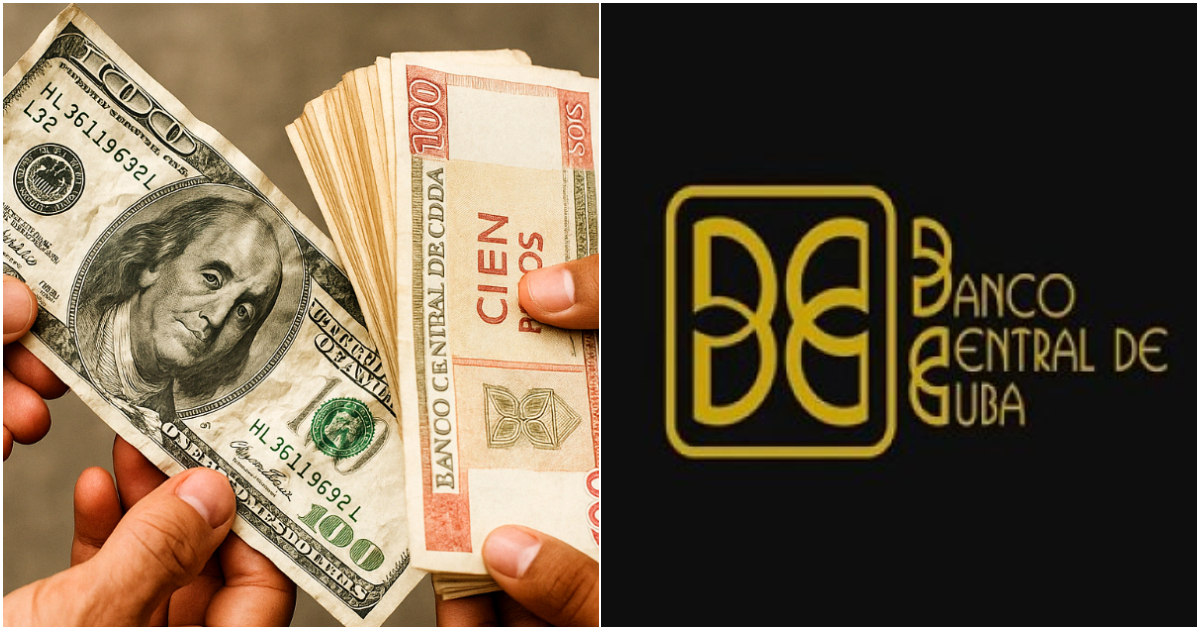
On June 21, the US dollar is trading at 695 Cuban pesos (CUP) and the euro reaches 800 CUP in the informal market, while the so-called floating rate of the Central Bank of Cuba (BCC) sets those same currencies at 565 CUP and 647.77 CUP, respectively.
The difference is striking. Between the two references, there is a gap of 130 pesos per dollar and over 152 pesos per euro, a distance that is not only the widest observed since the establishment of Segment III, but also calls into question the practical utility of the mechanism designed by the authorities to align the official rate with the market.
When in December 2025 the BCC announced the introduction of a "floating" exchange rate, the stated objective was to reduce the exchange rate distortions that had accumulated over the years and to provide a reference that is more in line with economic reality.
However, the developments in recent months show that the system has ended up functioning as a reactive mechanism rather than a true price formation market.
The evidence is clear. While the euro has risen from the 565 CUP recorded in February to the current 800 CUP, the official rate has advanced at a much slower pace.
The result is that the informal market continues to lead the formation of expectations and determining the effective value of currencies for families, entrepreneurs, and importers.
From a technical perspective, this situation reflects a problem of exchange rate credibility. An official rate can only become a reference if there is sufficient access to the foreign currencies it represents.
In Cuba, the opposite occurs: the state supply is limited and demand is primarily channeled towards the informal market, where transactions are conducted immediately and without the restrictions present in the official circuit.
The widening of the gap also has macroeconomic consequences. The differences between both markets create incentives for speculation, distort relative prices, and complicate the planning of businesses and economic actors.
In addition, they fuel expectations of further devaluations, increasing the demand for dollars and euros as a safe haven against the loss of value of the Cuban peso.
Not even the announcement of the 176 economic measures presented by Prime Minister Manuel Marrero Cruz before the National Assembly managed to ease the pressure on foreign currencies. On the contrary, the market reacted with new historical highs just hours after the reform package was revealed.
The conclusion is hard to avoid: the floating rate of the BCC continues to lag behind the informal market, but increasingly from a greater distance.
As the dollar approaches 700 CUP and the euro breaks the 800 barrier, the real price of the Cuban currency continues to be determined outside state institutions.
The current gap is not a temporary phenomenon, but rather the most visible manifestation of a deep crisis of confidence in the Cuban peso and the country’s currency policy.
Filed under: