
Related videos:
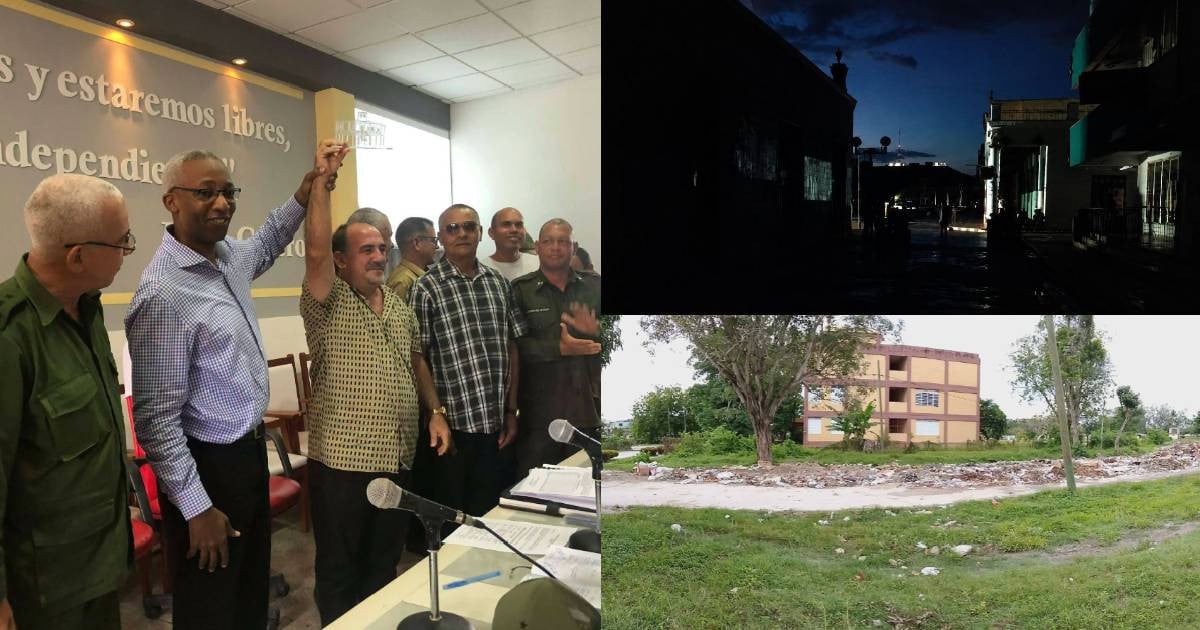
The municipality of Holguín was designated this Friday as the provincial headquarters for the celebrations of July 26, despite facing prolonged blackouts, water supply issues, and garbage accumulation that have led to growing public concerns.
The Provincial Bureau of the Communist Party and the Government of Holguín announced the selection of the provincial capital as the venue for the event commemorating National Rebelliousness Day, which will mark the 73rd anniversary of the assaults on the Moncada and Carlos Manuel de Céspedes barracks and pay tribute to the centenary of Fidel Castro's birth, reported the Cuban News Agency.
According to the authorities, the decision is a response to the sustained status of the municipality as surplus, the performance of exports, progress in educational institutions, the exceeding of food production targets, and the reduction of crime rates.
However, the announcement sparked a wave of critical reactions among residents, who contrasted those alleged achievements with the difficulties they face daily.
"What are the achievements of the municipality of Holguín? No electricity, no water, they don't collect the garbage, for these reasons we earned the venue," commented a user on the page on Facebook of the provincial station Radio Angulo.
Others directly questioned the purpose of the celebration and attributed the recognition to political decisions rather than actual results.
"Headquarters of the 26 amidst an electrical, food, and medication crisis," summarized another citizen on social media.
The most frequently asked question among the people of Holguín was whether they would at least have electricity service on the day of the event. This concern is significant in a province where the local Electric Company has acknowledged that many residential circuits receive barely three hours of electricity for every 39 or 40 hours of blackout.
The energy situation in Holguín reflects the depth of the crisis. Although the province has 383,180 electric customers and a maximum demand of 240 MW, it only has 70 MW available, less than 30% of the required capacity.
The general director of the Electric Company, Ruber Reynaldo González, admitted days ago that the constant cycles of disconnection and reconnection are deteriorating the infrastructure, causing recurring failures in transformers.
The electricity crisis is compounded by reports of deterioration in other essential services. Various municipalities have reported persistent issues with garbage collection, improvised landfills in public spaces, sewage systems overflowing for months, and a severe shortage of drinking water that forces numerous families to pay between 2,000 and 4,000 pesos for supplies transported by cart.
Contradictions also extend to other territories recognized during the ceremony. Among them is Mayarí, a municipality that in recent weeks has been the scene of protests due to the lack of electricity and water, where blackouts of up to 51 consecutive hours have been reported. Residents of that locality have publicly denounced the precarious living conditions resulting from the collapse of basic services.
While the authorities present the appointment as evidence of economic and social progress, many citizens interpret the decision as yet another demonstration of the gap between official rhetoric and the reality they face daily in a province battered by the energy crisis, deteriorating infrastructure, and shortages of basic resources.
Filed under: