
Related videos:
The province of Guantánamo is facing a water crisis that has extended water distribution cycles to up to 25 days in communities served by networks, acknowledged this Saturday by the official newspaper Venceremos in a report that describes the situation as "tense."
The provincial director of Aqueduct and Sewerage, Lexis Suárez Ramírez, identified four factors that combine to undermine the service: power outages, fuel shortages, high turbidity in the water sources, and breaks in the pumping stations.
"In most municipalities, the hours of electricity service are not sufficient for the water to benefit the entire population," the official admitted.
The southern area of the capital city has the worst conditions, as about 60,000 people rely on the Guanta pumping station, which has experienced power outages and obstructions due to the proliferation of aquatic plants in the canal.
The cleaning of the canal, although necessary, caused half a dozen additional obstructions when the dislodged algae got stuck in the internal networks and required specialized intervention.
Turbidity is also disrupting pumping in the municipalities of Yateras and Manuel Tames, as well as in areas of the city itself like Cecilia, Arroyo Hondo, and Paraguay, where the Bano pumping station, which supplies the northern high neighborhoods, is also halted.
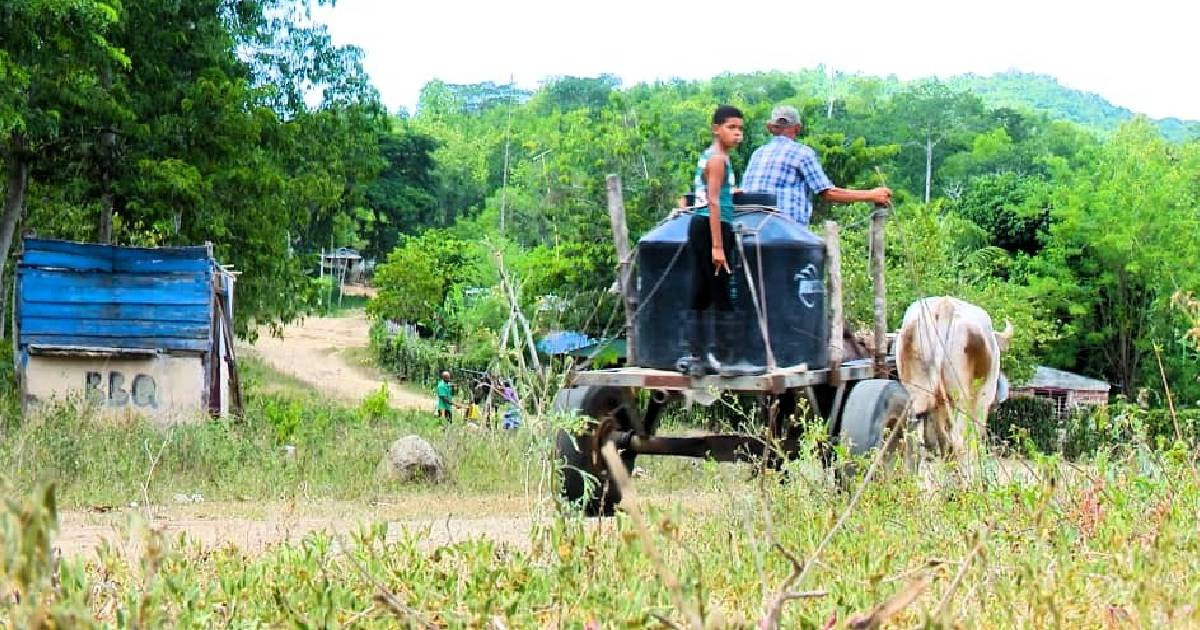
The fuel shortage further exacerbates the situation, as around a hundred communities that receive water regularly through tank trucks must wait more than a month for the service due to the inability to transport the trucks.
The pumping equipment from the El Jamal station in Baracoa and the Boquerón station in Manuel Tames is undergoing repairs at national workshops, with no confirmed return date, the source indicated.
The director also warned about the instability in the supply of chemicals for water treatment, which forces the prioritization of pumping that serves the largest number of people. In light of this, he urged citizens to boil water or use sodium hypochlorite and filters in their homes.
The situation is not new. In May, Guantánamo was already preparing to distribute water using animal traction —horse-drawn carts— due to the potential total depletion of fuel.
In November 2025, following Hurricane Melissa, more than 180,000 residents of Guantánamo were affected by pumping failures with cycles of 15 to 20 days.
The crisis is part of a national water collapse considering that 87% of Cuban aqueducts depend on the National Electric System to pump water, making each blackout a simultaneous water outage.
Meanwhile, the hydraulic system operates with only 37% of the necessary fuel, and around 2.7 million Cubans lack regular access to drinking water.
As the only medium-term improvement perspective, the authorities plan to import solar pumps for wells and pumping systems of up to 10 liters per second, although no dates or confirmed financing have been established.
Filed under: