
Related videos:
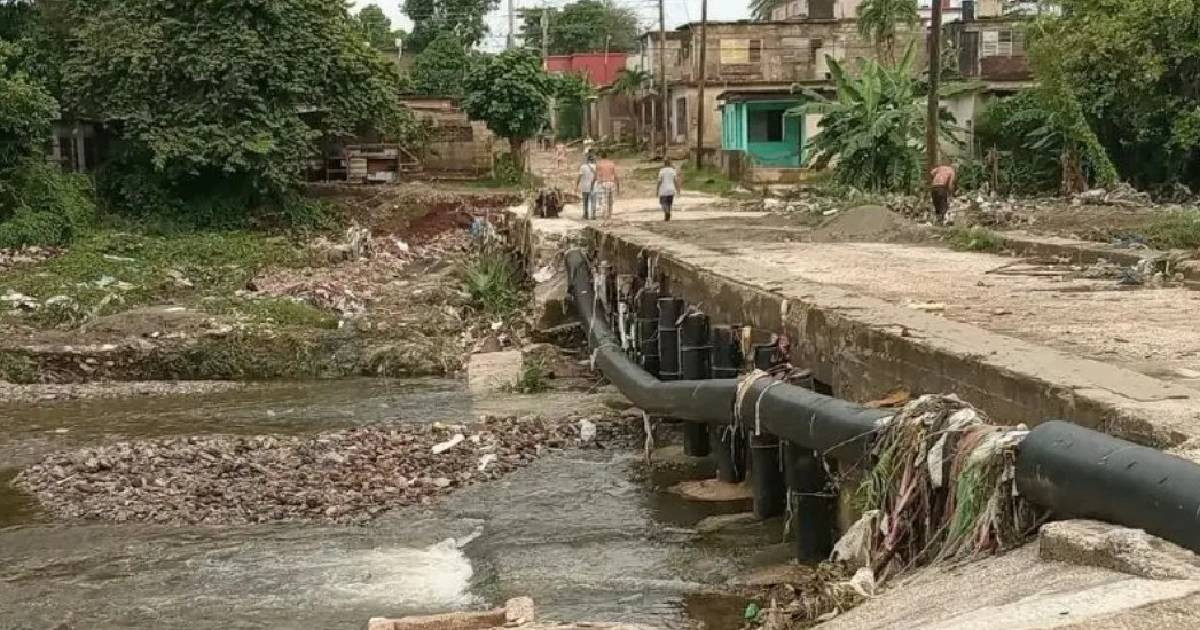
The accumulation of solid waste in the channels and banks of the rivers in the city of Holguín has become a factor that exacerbates urban flooding, acknowledged the digital profile of the provincial broadcaster Radio Angulo on Friday.
The Marañón, Jigüe, Miradero, and Milagrito rivers, all located in densely populated areas of the city, accumulate plastic bottles, sacks of debris, and various items that residents irresponsibly throw into the ravines.
When the rains come, that waste travels with the current until it clogs bridges, drains, and sewers, exacerbating flooding.
"Every plastic bottle, every bag of debris or junk that is irresponsibly thrown into a ravine does not disappear by magic; it travels with the current until it finds a bridge, a sewer, or a drain. There, the dams of indifference are built," the text pointed out.
He warned that the solution cannot rely solely on state investments in communal or hydraulic resources, while also demanding civic responsibility, collective monitoring, and clean-up days for river environments.
"The rain is inevitable; the complicity of garbage is not," concluded Radio Angulo.
On June 13, the river on Mendieta Street overflowed, leaving muddy water between 30 and 50 centimeters deep in the heart of the urban area, carrying plastic waste and sediments along with it.
Days earlier, the Marañón River experienced a rise that was described as alarming by the local media outlet La Antena.
Furthermore, firefighters from Holguín rescued a 73-year-old man trapped by the rising waters of the Marañón River, potentially suffering from a hip fracture, highlighting the direct human risks posed by these floods.
The flooding in Holguín after heavy rains this month adds to a history of emergencies that recur each rainy season, exacerbated by deteriorating drainage infrastructure and unmaintained waterways.
The consequences go beyond material damage. The improvised dumps along the rivers pose a direct risk of leptospirosis, hepatitis A, dengue, and oropouche due to the proliferation of mosquitoes and rodents, hitting the most vulnerable communities the hardest.
The problem of waste in Holguín has structural roots. Weeks ago, a viral video showed the out-of-control dump in the Zayas neighborhood, with waste piled up on both sides of a deteriorated street, a situation that has been documented without a real solution for at least six years.
In April, residents reported that garbage heaps burn at night in Holguín, generating toxic smoke in various neighborhoods. Additionally, the children's park Los Caballitos ended up turning into a garbage dump.
The waste management crisis is nationwide; by the end of 2025, Prime Minister Manuel Marrero himself admitted the institutional failure in garbage collection.
Filed under: