
Related videos:
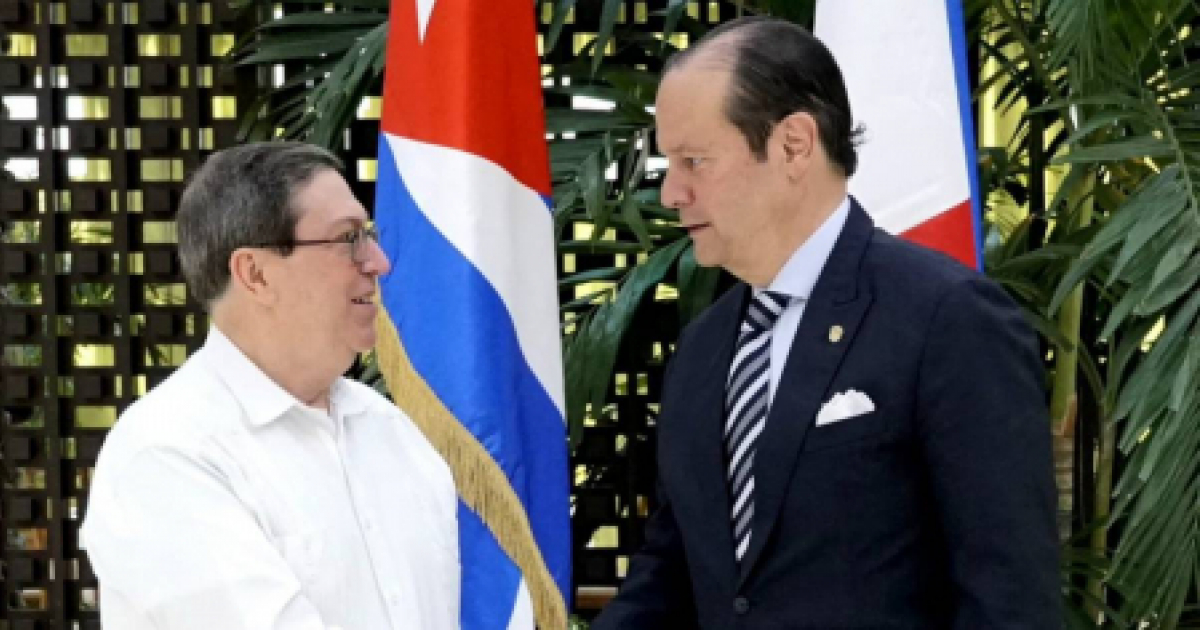
The Chancellor of Panama, Javier Martínez-Acha Vásquez, announced this Monday that his country has formally offered its territory as a neutral venue to facilitate diplomatic rapprochement between Cuba and the United States, and that the response from the Cuban regime was positive.
The announcement was made during the press conference prior to the opening of the 56th General Assembly of the OAS held in Panama City, where the head of Panamanian diplomacy expressed his government's willingness to act as an intermediary between Washington and Havana.
"I can say that Panama has offered itself as a country where this dialogue could take place based on equality and mutual respect," stated the chancellor.
According to Martínez-Acha, the responses from both parties have not been symmetrical: "The Cubans accepted, the United States has not accepted but does see it as a possibility."
The chancellor, who visited Havana on March 25 to meet with his Cuban counterpart Bruno Rodríguez Parrilla, described the aim of the mediation as promoting gradual concessions that would allow for real progress on the island.
"We can encourage dialogue to lead to an understanding and concessions that allow Cuban society to advance towards 21st-century progress, towards economic opening, and yes, towards a political process that gradually satisfies the interests of Cubans," he emphasized.
The diplomat acknowledged, however, the limits of external influence in that bilateral relationship: "It's a relationship where things happen that neither you nor I are aware of."
The Panamanian offer comes in a context of sustained tension between Washington and Havana. The Trump administration has accumulated more than 240 sanctions against Cuba, reinstated the island on the list of state sponsors of terrorism, and extended the embargo until September 14, 2026.
Despite this tightening, Cuban Deputy Minister Josefina Vidal acknowledged at the end of May that the diplomatic channel with Washington "is open," although with "not much progress."
Among the issues being discussed is the possible repatriation of up to 500,000 Cubans residing in the United States, a topic of great sensitivity for the Cuban community abroad.
Aside from the mediation initiative, Martínez-Acha reported that his office continues to diplomatically manage the situation of seven Panamanian citizens detained in Cuba on charges of opposing political propaganda. Of the ten Panamanians arrested at the end of February, three were subsequently released; the rest remain under judicial process.
In the same press conference, the chancellor reaffirmed that Panama recognizes Edmundo González as the elected president of Venezuela: "For Venezuela to be integrated into the Latin American community, it must have a government supported by the ballot boxes."
Panama has a history of being a setting for significant interactions between Cuba and the United States: in April 2015, it hosted the Summit of the Americas where Raúl Castro and Barack Obama shared a handshake that symbolized the thaw in bilateral relations, a precedent that the Panamanian government now invokes to support its aspiration to once again play that role as a diplomatic bridge in the hemisphere.
Filed under: