
Related videos:
The repatriation of up to 500,000 Cubans residing in the United States has become one of the eight key points in the ongoing negotiations between Washington and Havana, according to an article published this Saturday by the .
The is based on statements from former congressman and Miami businessman Joe García, who maintains direct contact with officials from both governments.
García described this point as "perhaps the most difficult" of the entire negotiation and warned that it would be "counterproductive for Florida and the United States."
"This is something that Trump wants," Garcia stated, specifying that the group of 500,000 people includes those who entered under the humanitarian parole program during the Joe Biden administration (2021-2025) and thousands of individuals "who can be excluded for having committed a crime."
The discussions suggest a framework in which these individuals would receive work permits and their deportations would be staggered over a period of years, rather than being immediate, given that Cuba, amid a severe energy and economic crisis, is not in a position to absorb such a flow of returnees.
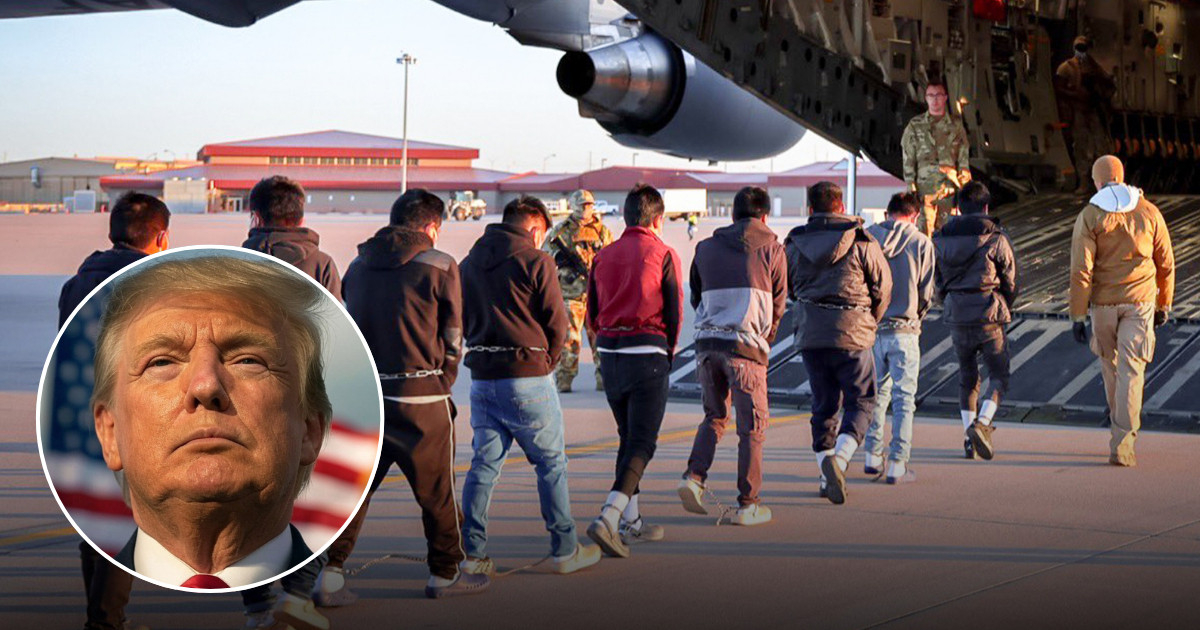
The ongoing pace of deportations illustrates the magnitude of the challenge. In the first five months of 2026, 612 Cubans were deported in 18 operations, and since the beginning of Trump's second term, the total number has risen to 1,952 deported individuals.
The detentions of Cubans by the Immigration and Customs Enforcement (ICE) skyrocketed by 463% between October 2024 and January 2026, while approvals for permanent residency plummeted by 99.8% during the same period.
Mass repatriation is just one of the eight negotiation axes identified by Garcia. The others include the release of more than 1,000 political prisoners, which Garcia himself deemed "essential" for the Cuban-American electorate.
This is joined by extensive economic reforms, compensation for properties expropriated since 1959, political reforms, lifting of the embargo, Cuba's readmission to multilateral institutions such as the World Bank and the International Monetary Fund, and the granting of Most Favored Nation status.
The context of these negotiations is one of maximum pressure on Havana. Since January, the Trump administration has imposed over 240 sanctions against Cuba and intercepted at least seven tankers carrying oil intended for the island.
On May 14, the director of the Central Intelligence Agency (CIA), John Ratcliffe, visited Havana and met with the Cuban Minister of the Interior, marking the highest-level contact between the two governments since 2016.
On May 20, the Department of Justice filed federal charges against Raúl Castro for the downing of planes from Brothers to the Rescue in 1996, which added a new dimension of legal pressure to the discussions.
The Secretary of State Marco Rubio acknowledged last Wednesday that "honestly, I don't see much progress" in the contacts with Havana, although he admitted that the communication channels remain open.
Garcia, for his part, emphasized that Trump occupies a historically unique position to advance the Cuban issue. "There has never been a president in American history who could lift the embargo as decisively as Trump can," he stated, highlighting the president's control over the Republican Party and the MAGA movement as determining factors.
Trump himself summarized it last Wednesday with a statement that set the tone for the week. "It seems that I will be the one to do it", the president said when referring to resolving the Cuban issue after decades of failed attempts.
Filed under: