
Related videos:
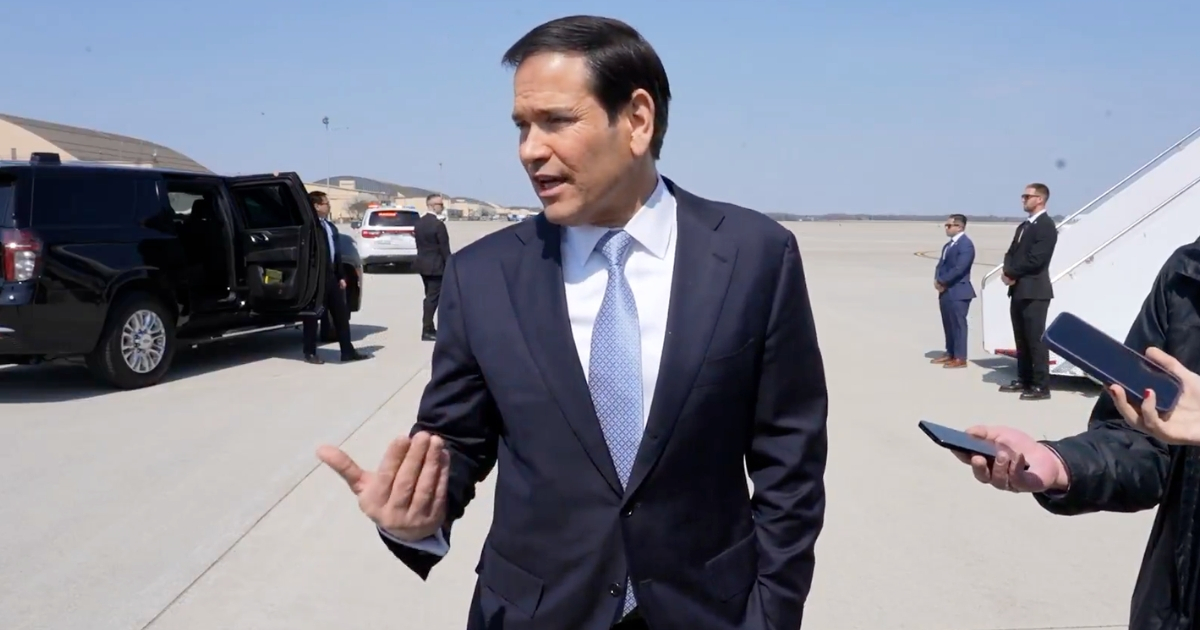
The United States Secretary of State, Marco Rubio, will embark on a tour of three Gulf countries—United Arab Emirates, Kuwait, and Bahrain—from June 23 to 25, with the aim of consolidating the fragile agreement reached with Iran and ensuring the free passage through the Strait of Hormuz, the State Department announced this Monday.
The spokesperson Tommy Pigott confirmed that Rubio will meet with officials from the three countries to address "a series of U.S. foreign policy priorities," including the memorandum of understanding signed with Iran, efforts to ensure full and free transit through Hormuz, and shared priorities with members of the Gulf Cooperation Council. In Bahrain, the agenda will include a meeting with all six members of that regional bloc.
The journey comes at a time of high diplomatic tension. The military conflict between the United States and Israel against Iran, which openly escalated on February 28, 2026, with coordinated bombings over Iranian territory, resulted in a ceasefire around April 8, although the truce is still considered fragile.
On June 17, President Trump digitally signed a 14-point memorandum of understanding with Iran that outlines a permanent cessation of hostilities, nuclear negotiations lasting for 60 days with the possibility of extension, oversight by the International Atomic Energy Agency regarding Iranian enriched material, sanctions relief, and specific commitments concerning the Strait of Hormuz.
However, the negotiation process has been fraught with setbacks. Iran suspended the talks on June 1 citing that Israeli attacks in Lebanon violated the ceasefire, and the planned negotiations in Switzerland were canceled at the last minute on June 19. Tehran has also denied that the text of the memorandum is final and claims that it is still under review.
Rubio himself expressed doubts on June 17 about whether Iran would comply with a potential nuclear agreement, while the Trump administration maintains its stance of "zero uranium enrichment" for the Iranian regime. Iran, for its part, has only offered temporary pauses on enrichment and demands sanction relief and economic compensation.
The energy dimension of the journey is equally critical. Approximately 20% of the world's consumption of oil and liquefied natural gas passes through the Strait of Hormuz, making any disruption in that passage a direct threat to the global economy.
During the conflict, Iran threatened to close the strait, laid mines, and interfered with the global positioning system of commercial ships. In May, it even proposed, together with Oman, to charge for "security and navigation services" in those waters. By June 20, very few ships were crossing the strait, and shipping companies were altering their routes to safer areas.
The United States pushed for a resolution in the UN Security Council to defend freedom of navigation in Hormuz, but China and Russia vetoed it. The International Maritime Organization expressed "deep concern" for the welfare and safety of the sailors affected by the situation.
The Gulf countries that Rubio will visit —all members of the Gulf Cooperation Council— are the most directly affected by any closure of the strait, both due to their dependence on hydrocarbon exports and their geographic proximity to the conflict. This tour thus becomes a crucial piece to consolidate the agreement with Iran before the 60-day deadline for nuclear negotiations outlined in the memorandum expires.
Filed under: