
Related videos:
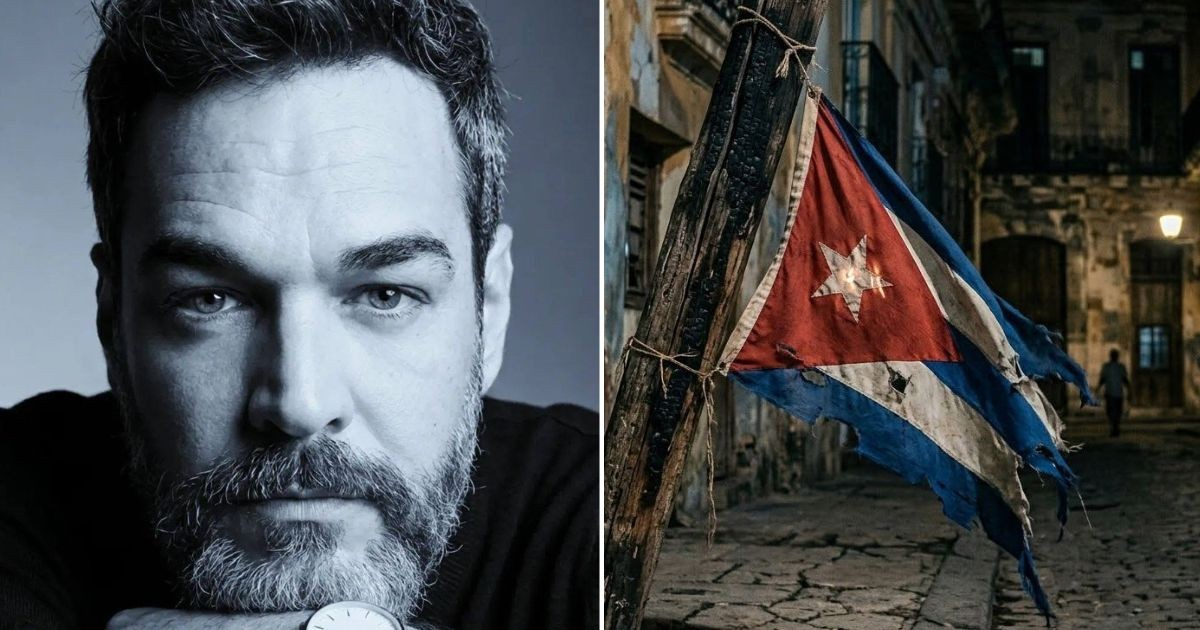
L. Eduardo Domínguez, who worked as a journalist and editor for the government-affiliated portal Cubadebate, published on his Facebook profile a detailed account of a blackout in Havana, which turned into a direct criticism of the Cuban state and the state-owned electric company, with a phrase that encapsulates the paradox of the system: "When you pay for private efficiency, you get it immediately; when you depend on the State, you suffer from deprivation."
The text, based on true events, recounts how their building accumulated more than 42 hours of continuous blackout before a spark burned a cable in the clock room, leaving their apartment completely in the dark.
Domínguez tried to report the outage through the electric company's Telegram bot, but the system did not generate any report number. "My complaint fell into a digital black hole," he wrote.
The neighbors amassed what he calls "ghost reports": no one had any documentation, no one had confirmation.
Not even the intervention of a neighbor from the building, described as a "former deputy minister and current member of the National Assembly," was able to get a maintenance truck to show up. "Even power is powerless against a burnt wire," noted the journalist.
The solution came from two sources outside the State. The chief engineer of the private company that installed the solar kit personally called him that Sunday morning—Father's Day—to diagnose the problem remotely: "You have a phase drop; the equipment is trying to start a 220v machine using only 110v. You need to reverse the connection of the cables."
A retired electrician from the neighboring building carried out the repair with his own hands and a pair of pliers, without a crew or work order.
"The problem is solved, but not by those who charge to resolve it, rather by a private engineer over the phone and a retired man with a pair of pliers," wrote Domínguez.
The contrast drawn by the journalist is devastating: “On one hand, you have a private company —which has everything: panels, cables, insurance, spare parts— where the head of the company calls you on a Sunday morning, worried about solving a customer's issue. And on the other hand, you have the socialist state electric company, which by law is required to provide this public service, but has no resources, doesn't show up, doesn't respond, and doesn't exist.”
The story includes a human dimension that exacerbates the situation. The author's mother has been waiting for a head surgery for a month and a half due to an undiagnosed lump, with the surgery indefinitely suspended due to a lack of anesthesia.
Consume paracetamol purchased on the black market and Clonazepam "at oil prices."
Father's Day was reduced to a video call with his son, without being able to take him to the National Aquarium.
"A long time ago, we stopped buying for weeks; today, Cubans buy to survive for two or three days. The blackout has even robbed us of the right to plan for tomorrow," he wrote.
The text by Domínguez is published at the worst moment of the Cuban electrical crisis. In June 2026, the generation deficit exceeds 2,000 MW, with seven of the country's 16 thermoelectric plants out of operation and blackouts in some areas lasting over 20 hours a day. Matanzas recorded 85 consecutive hours without electricity between June 14 and June 17.
That a journalist from Cubadebate publishes such a direct critique of the state's ineffectiveness on their personal social media — while the regime attributes the crisis to the U.S. embargo — is, in itself, a testimony to the magnitude of the collapse.
"The only certain thing is that this weekend we learned, the hard way, that the State has left us to fend for ourselves. And that in this country, the true darkness doesn't come when the power goes out, but when you realize that uncertainty is your only companion," concluded Domínguez.
Filed under: