
Related videos:
Cuba faces another day of extreme blackouts this Saturday. According to the informative note from the Electric Union, the forecast for the peak hours indicates an availability of just 1,015 MW against a demand of 3,150 MW, resulting in an estimated deficit of 2,135 MW and a projected impact of 2,165 MW.
Friday was a day of total collapse. The service was interrupted due to capacity deficits for 24 hours, including the entire early morning, with a maximum impact of 2,149 MW recorded at 7:50 PM.
At six in the morning this Saturday, the situation had not improved: only 1,015 MW available against a demand of 2,730 MW, with 1,718 MW out of service.
The lack of fuel is the most devastating factor of the collapse. A total of 106 distributed generation plants remain out of service due to diesel unavailability, resulting in a loss of 890 MW.
Combined with the strategic facilities that are currently inactive —the Patana de Regla, the Patana de Melones, the Central Fuel de Mariel, and the Central Fuel de Moa— the total number of megawatts unavailable for this reason amounts to 1,203 MW.
This is compounded by breakdowns in thermal generation. The affected units include unit 6 of the CTE Máximo Gómez, a unit of the CTE Antonio Guiteras, unit 6 of the CTE Diez de Octubre, and unit 2 of the CTE Lidio Ramón Pérez, with 298 MW out of service for this reason. Other units remain under scheduled maintenance.
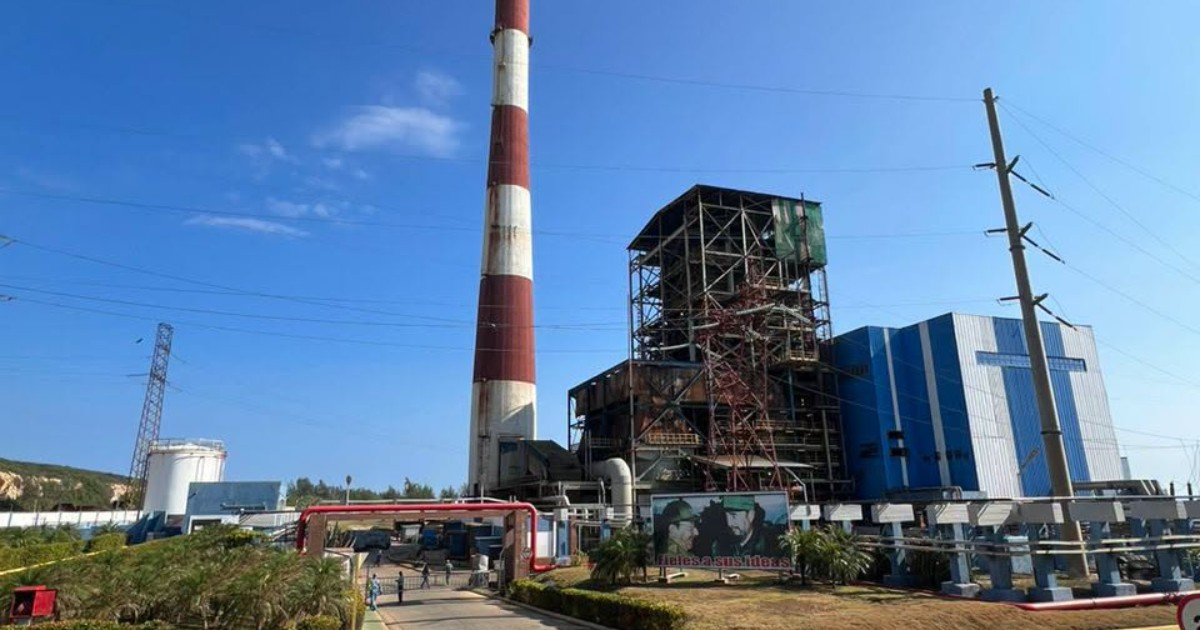
The CTE Antonio Guiteras, the largest power generation plant in the country, is still undergoing emergency repairs.
Their official Facebook account reported this Saturday that "after completing the cooling process, access to the damaged area was achieved, the damaged pipes were identified, and repairs are proceeding."
This is the 16th breakdown the plant has experienced in 2026, a facility that has gone 16 years without major maintenance, with damage to more than 500 tubes of the economizer.
The 54 photovoltaic solar parks installed by the regime generated 4,788 MWh on Friday, with a maximum power output of 731 MW at noon. However, this generation does not meet the peak nighttime demand, and the system lacks storage batteries, so its impact on nighttime blackouts is nonexistent.
This weekend comes just two days after Cuba recorded an all-time historical electrical deficit: a maximum impact of 2,208 MW on June 25 at 8:50 PM. Communities in Matanzas experienced up to 85 consecutive hours without electricity during that day.
The fuel shortage has structural and geopolitical roots. The Minister of Energy and Mines, Vicente de la O Levy, acknowledged on May 13, according to CNN en Español, that oil reserves were "practically depleted" and that "we have absolutely no diesel."
The donated Russian oil that arrived in late March was exhausted by early May, and the Executive Order signed by Trump on January 26, 2026, which imposes tariffs on countries selling crude to Cuba, disrupted the Venezuelan supply.
Experts estimate that recovering the Cuban electrical system would require between 8,000 and 10,000 million dollars and between three to five years of work, a perspective that the regime is not capable of facing while Cubans continue to live without electricity.
Filed under: