
Related videos:
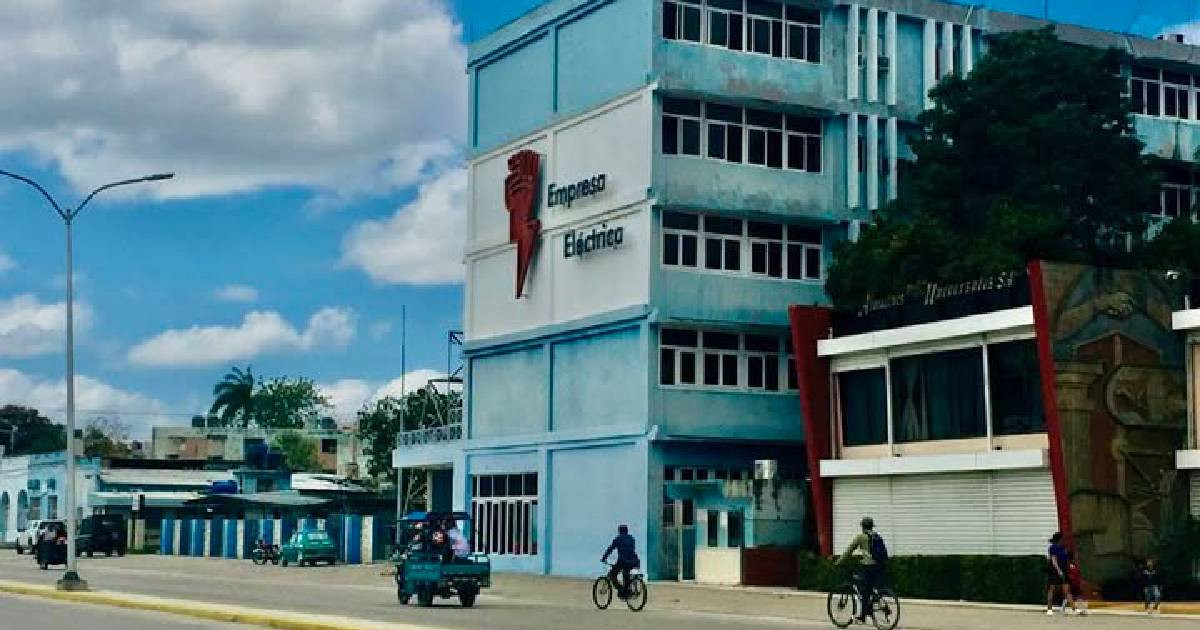
The Electric Company of Holguín requested this Saturday that citizens gradually connect their appliances after each restoration of service, in order to avoid overloads that could damage the distribution transformers.
According to the post on the entity's Facebook profile, the simultaneous connection of devices after prolonged outages generates consumption spikes of between 180% and 200%, which causes transformers to burn out due to overheating and deterioration of internal insulation.
The company warned that the shortage of transformers and resources for their maintenance could cause delays of several days in repairing faults. It identified oil leaks in the early hours after restoring the supply and the blowing of protective fuses as warning signs.
The call, however, immediately clashed with the reality faced by the residents of Holguín, as the residential circuits receive approximately three hours of electricity for every 39 or 40 hours of blackout, a scheme that the director general of the entity, Ruber Reynaldo González, publicly acknowledged.
"We cannot ask someone, or a home that spends 40 hours in the dark, or 39, not to connect everything, but the overload surpasses us," González admitted days ago.
González also acknowledged that the prolonged service interruptions are causing a series of overloads and breakdowns that further exacerbate the energy crisis in the province.
It also acknowledged that every time a circuit is restored, between 10 and 20 transformers fail, and that the replacement capacity is minimal.
The public reaction in the comments on the post was one of widespread rejection and sarcasm.
"Staggered use is impossible. Three hours of electricity are not enough, especially after two days of blackout. Additionally, there are reports of oil leaks in the transformers, and no one comes to check to prevent a breakdown in time," wrote a resident.
Another citizen summed up the contradiction with an image: "I don't know whether to laugh or cry; it's like telling a castaway not to cling to the first log that comes by."
Several comments shifted the blame directly onto the company. "They don't want there to be overloads and for the transformers to blow... it's simple, don't be so abusive and stop causing those long blackouts of over 50 hours, it's that easy," stated a resident of Holguín.
Another neighbor accurately described the practical impossibility of the so-called: "22 hours without power and two hours with electricity: when it arrives, turn on the electric stove with the beans, at 20 minutes the kids' fan, at 40 minutes the washing machine... they dream more about planes than Silvio Rodríguez."
The province, the second highest in the number of electric customers in Cuba with 383,180 users, operates with only 70 MW against a maximum demand of 240 MW, less than 30% of what is needed.
Of the 70 MW available, 26 are allocated to essential services and about 20 MW to the nickel industry, leaving only 14 MW to meet a residential demand of 190 MW.
This Sunday, the deficit of the National Electroenergetic System reached 2,120 MW during peak hours, with only 980 MW available against a demand of 2,650 MW, according to data from the Electric Union.
A citizen from Holguín summed it up bluntly in the comments: "We are not living poorly; we are dying miserably, and that is the harsh reality."
In late May, residents in the eastern province erupted in outrage on social media against the Electric Company, demanding that they stop restoring electrical service if it will only last five minutes before cutting it off again, after enduring more than 24 continuous hours without electricity.
"After 24 hours without electricity, we don't need you to turn it on for 5 minutes, then turn it off again, turn it back on for another five minutes, and repeat the cycle multiple times. It's true that we hardly use the equipment anymore, but when it breaks, it's our poor economy that has to bear the costs," emphasized a post that went viral on social media.
Filed under: