
Related videos:
Humberto Pérez González, economist and former chairman of the Central Planning Board (JUCEPLAN), passed away on Saturday in Havana at the age of 88, as confirmed by his friend and colleague, economist Julio Carranza, on his social media.
Carranza described him as “a great economist, a very influential personality, a great revolutionary, and for me, a brother,” and lamented that Cuba lost “one of its most prominent sons.”
Born on December 6, 1937 in Cabaiguán, now part of Sancti Spíritus province, Pérez González was involved in the clandestine activities of the Movimiento 26 de Julio from a young age and fought in Column 8, led by Che Guevara, participating in the capture of Santa Clara in December 1958, as documented by Ecured.
After the revolutionary triumph, he trained as an economist at the Higher School of the Communist Party of the Soviet Union in Moscow, where he graduated in 1964, and obtained his doctorate in Economic Sciences from the University of Havana in 1984.
His political rise was meteoric: advisor to Raúl Castro during two periods (1972-1976 and 1985-1987), Vice President of the Council of Ministers, member of the Political Bureau of the Communist Party of Cuba from 1980 to 1985, and deputy to the National Assembly of People's Power from 1976 to 1986.
As the president minister of JUCEPLAN from 1976 to 1985, he led the Cuban economy for over a decade. Carranza stated that this was "the period of greatest order, stability, and growth" of the revolutionary economy. He is also credited with a central role in the reorganization that the country undertook after the failure of the Ten Million Harvest of 1970, the voluntarist project of Fidel Castro that concluded with only 8.5 million tons and left the economy in chaos.
His fall was as abrupt as his rise. In 1986, when Castro launched the process of "rectification of errors and negative trends," Pérez González was made the main scapegoat. According to journalist Wilfredo Cancio Isla, "he was accused of being Sovietizing and mimetic, a copier of foreign dogmas," reversing the same policies that Castro himself had supported years earlier.
This pattern of elevation and subsequent defenestration is a constant in Castroism with its own leaders, sacrificed when the results do not meet the expectations of those in power.
After his dismissal, he held lesser positions, including financial manager of the Cuban branch of the Canadian firm Tri Star Caribbean from 2008 to 2012. Until the end of his life, he sought to contribute: about five years ago, along with four other economists, he developed a proposal for economic reform that they submitted to the government. “We never received a response, nor the opportunity to discuss it,” lamented Carranza, who is currently part of a c advisory group to the Cuban government for economic transformations.
That ignored proposal takes on an ironic dimension today: the regime approved in June 2026 a package of 176 economic reform measures aimed at dismantling the very centralized planning that Pérez González designed and for which he was subsequently sacrificed.
The Cuban economy is facing its deepest crisis in decades, characterized by shortages of food, medicine, and prolonged blackouts, exacerbated by U.S. sanctions and an ineffective economic model
Carranza noted that in his final months, Pérez wanted to record his testimony, but a journalist denied him an interview, claiming she didn't know who he was. "Anyone who does not know who Humberto Pérez was cannot know much about the history of the Cuban revolution over these 67 years," he wrote.
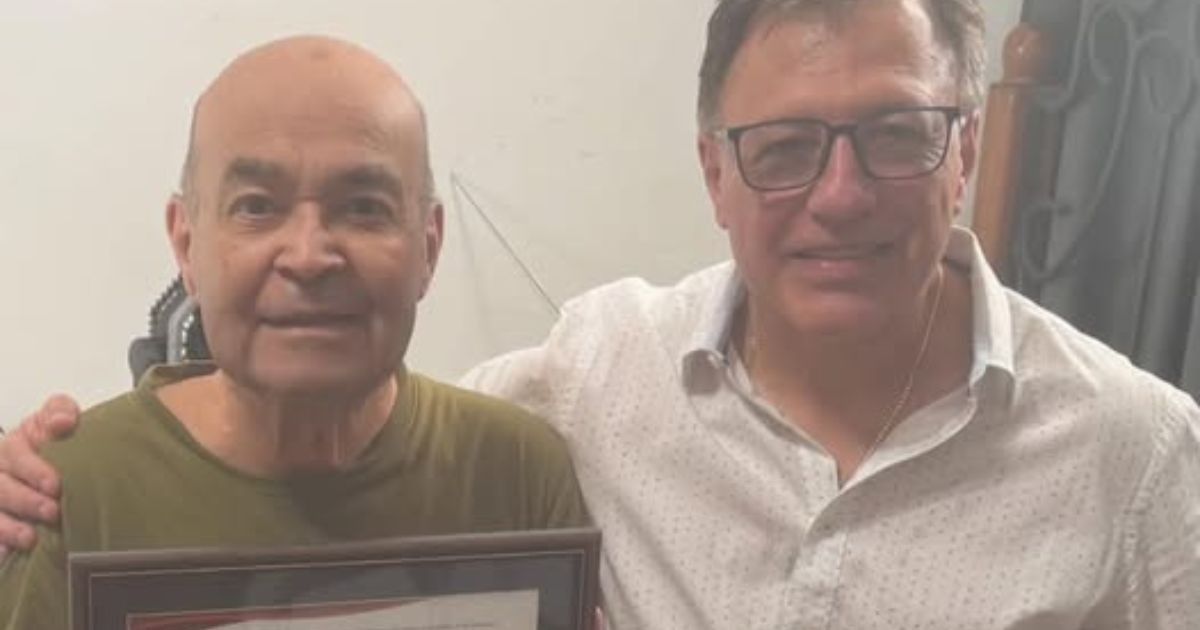
In December 2025, the Center for Cuban Economic Studies at the University of Havana paid tribute to Pérez, who could not receive it in person due to his deteriorating health; the recognition was presented at his home. He passed away in the same bed where he had hung that diploma.
"Nunca traicionó sus ideas ni su historia, eso hoy vale mucho," Carranza wrote in his posthumous tribute.
Filed under: