
Related videos:
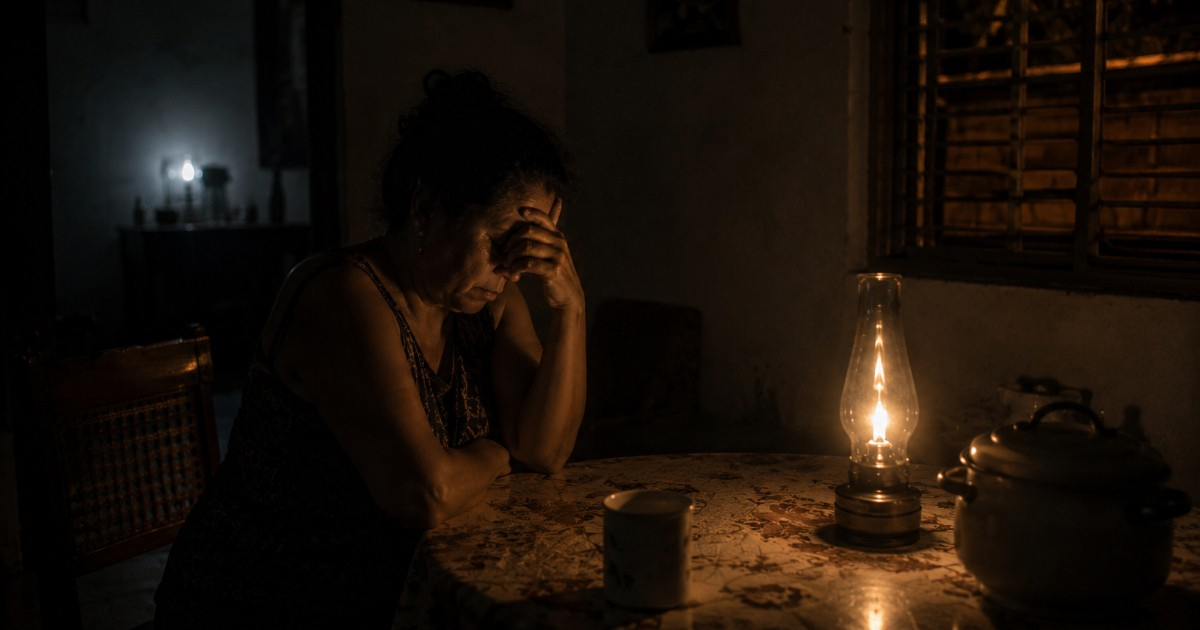
The photographer and visual artist María Isabel, known as Vida Winter, published a text this weekend on Facebook that starkly captures the mood of millions of Cubans: the forced resignation in the face of an electrical crisis that the regime is unable to resolve, which has turned 24-hour blackouts into a silently endured routine.
"We have already adapted, silently, to 24 hours without power. If they give us 30 or 40, we will endure that too, silently," wrote the artist from Santa Clara.
Winter describes how his building "boasts the best performance in the city," a bitter irony that portrays the normalization of the unbearable under the dictatorship of Miguel Díaz-Canel.
In his text, he draws on literature to explain what politics cannot name without risk: he compares Cuba to Macondo, the doomed town from the novel "One Hundred Years of Solitude," and the ruling elite to the Buendía family, a caste that perpetuates its power from generation to generation.
"The Cuban has lost his lineage, his mambi blood; we have been defeated by the ambition of a group that, like the Buendía, belongs to the same caste. A truly cursed generation," he wrote.
He even wonders if it wouldn't be preferable to have "an ending like that of Macondo, which wipes us off the face of the earth," a phrase that reflects the extreme despair that permeates Cuban society.
The context surrounding this text is that of the worst electrical crisis in recent Cuban history: on June 25, the national electrical deficit reached a historical record of 2,208 MW, surpassing the previous peak of 2,174 MW recorded on May 14.
Demand exceeds 3,000 MW, but the system's availability barely reaches between 950 and 1,090 MW. In Matanzas, there were up to 85 consecutive hours without electricity; in Holguín, up to 50.
Winter also refers to the only remaining form of resistance for the people: "Our national logo has become a cauldron with a ladle, the sound of which is feared by the 'segurosos'." He recounts that in his building, someone started a small protest, and State Security agents scoured the floors "like rats" searching for the person responsible.
That repression is documented: the Cuban Observatory of Human Rights recorded 1,289 repressive actions and 154 arbitrary detentions between January and June.
The artist also jokes about the official recognition of Villa Clara as a "distinguished" province (referring to the competition for the July 26th headquarters), just as its residents—who call it Villa Oscura—endure between 20 and 22 hours a day without electricity.
Regarding the hopes placed in external figures, Vida Winter is blunt: "Those who believe that a Marco Rubio, Trump, or Bukele will come to save us from the crustacean and his family, I love their enthusiasm. Change is not going to come from the outside."
The text concludes with a question that serves as an epitaph for a generation: "Cuban, do you remember the last time you were happy?"
Filed under: