
Related videos:
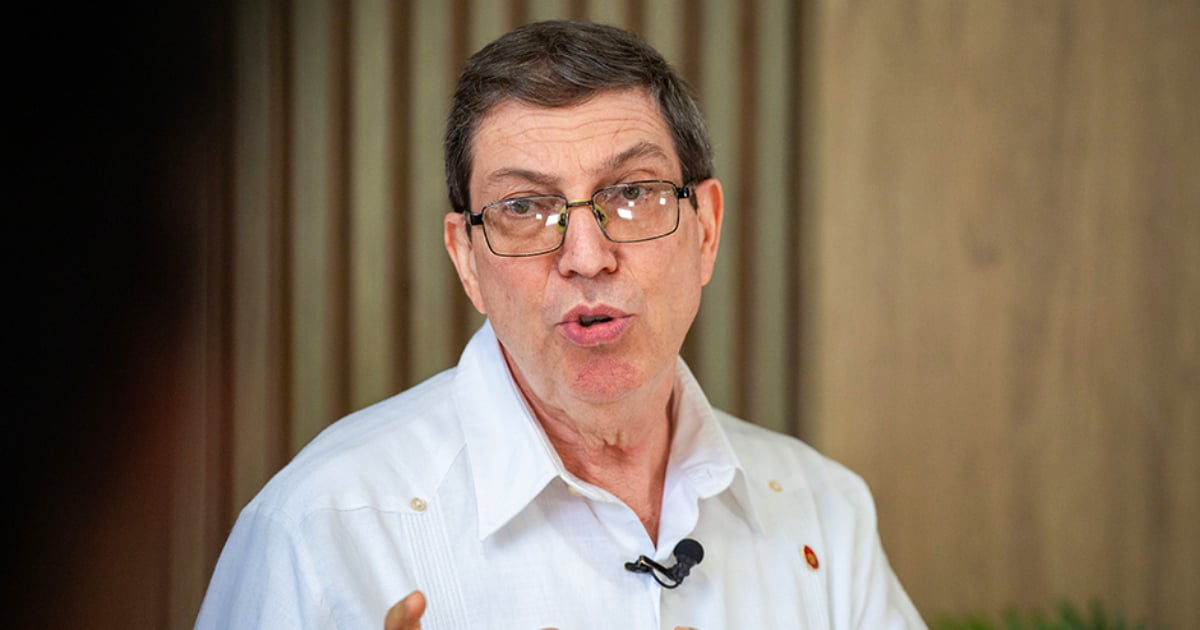
Cuban Foreign Minister Bruno Rodríguez Parrilla stated this Wednesday that the situation in Cuba, characterized by prolonged blackouts and widespread shortages, does not constitute a humanitarian crisis comparable to that experienced during the COVID-19 pandemic, although he acknowledged that the population is suffering severe hardships.
He made the statements in an interview with CNN en Español in Havana, where he spoke with journalist Juan Carlos López.
"The situation is painful. I wouldn't compare it to the pandemic period, which was very serious. However, it cannot be said that there is currently a humanitarian crisis in Cuba comparable to the pandemic situation," stated the foreign minister, who has held the position since 2009.
At the same time, Rodríguez acknowledged that "the Cuban people are experiencing suffering, hardships, and anxieties that are truly severe, which seriously harm the well-being of our population." He attributed this situation to what he called an "energy blockade" imposed by the administration of Donald Trump, which he claims has prevented the entry of fuel supplies to the island for the past seven months.
The energy crisis currently afflicting Cuba is the most severe in its recent history. The country is facing blackouts of up to 22 hours daily and a generation deficit exceeding 2,000 MW during peak hours. Cuban Minister Vicente de la O Levy admitted on May 14 that the country has no fuel reserves, and the economy is projected to contract by 7.2% in 2026.
The deterioration accelerated following Executive Order 14380, signed by Trump on January 29, 2026, which imposed secondary sanctions on the Cuban energy sector, and the official blockade on CUPET, the state oil company, on May 1. On June 24, Washington imposed new sanctions against five Cuban entities and one individual.
Rodríguez described these measures as "a violation of international law" and "an act of collective punishment that emphasizes the genocidal nature of the blockade."
In this context, the Cuban regime called an extraordinary session of the UN General Assembly for July 7, 2026, under Agenda Item 38, which is dedicated to the U.S. embargo against Cuba.
Regarding the diplomatic conversations with Washington, the Chancellor was straightforward: "There are diplomatic discussions between the governments of the United States and Cuba that are not showing progress."
He pointed out a "blatant contradiction" between the tone of the American interlocutors at the dialogue tables and the actions of Secretary of State Marco Rubio outside of them.
In a prior press conference, Rodríguez had accused Rubio of lying before the Senate to advocate for military intervention in Cuba.
In response to Trump's statements that after dealing with Iran, "Cuba would be next," Rodríguez replied that the idea of the island posing a threat to the United States "sounds ridiculous," although he warned that any military aggression would be met with the full force of the Cuban state.
"It will be a bloodbath. Thousands and thousands of Cubans will die, and young Americans will also die, taken to a war that is not theirs," he stated.
The extraordinary UN session on July 7 will be the next stage where the regime will seek international pressure, at a time when more than 96,000 surgeries have been postponed in Cuba, including 11,000 for children, as a direct consequence of the energy collapse.
Filed under: