
Related videos:
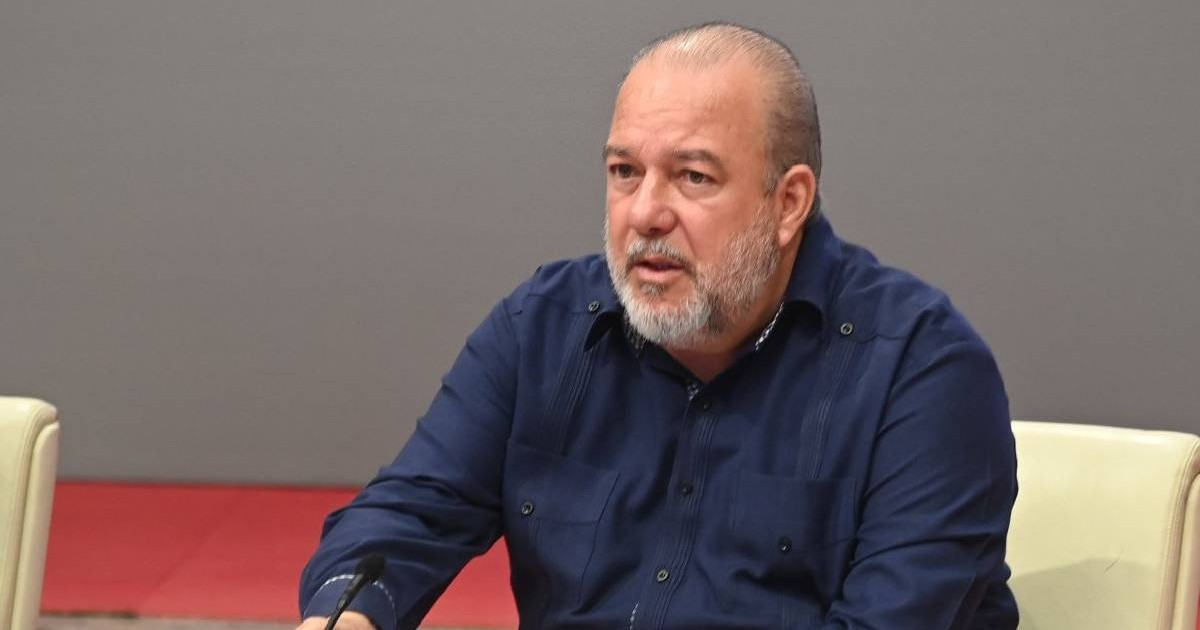
The Cuban Prime Minister Manuel Marrero Cruz used his Twitter account this Wednesday to explain the purpose of the package of 176 Economic and Social Transformations approved by the regime: in his own words, the goal is to "recover the economy and preserve the gains of the Revolution."
In a series of posts, Marrero detailed the scope of the reform package and announced that the first concrete actions will begin to be implemented in the coming days. "We will keep our people informed about the implementation process of each of the transformations, with the certainty that their participation is crucial to achieving the proposed objectives," he wrote.
Among the immediately applicable measures, the Prime Minister mentioned the approval of new powers for the state-owned enterprise, the reduction of the list of activities prohibited for the non-state sector, and the salary increase in the budgeted sector.
Marrero also specified that the transformations are organized into 23 priority thematic axes and encompass all state agencies, which, according to him, requires updating the work systems to dedicate as much time as possible to their implementation.
The package, ratified by the National Assembly of People's Power on June 19, 2026, includes reforms that had been prohibited for decades: authorization of private banking and private exchange houses, removal of the limit of 100 workers for small and medium-sized enterprises (mipymes), allowing individuals to own more than one private company, selective bankruptcy of unviable state enterprises, and the elimination of the requirement to channel imports and exports through the State.
In the labor sector, the minimum wage in the budgeted sector will rise from 2,100 to 3,210 pesos —a 53% increase— starting in August 2026, a measure that will benefit 51% of the workforce. Pluriemployment and reduced hours with union agreement have also been approved.
The structure of the State would be reduced from 27 to 21 ministries, and the INAEES (National Institute of State Business Assets) would be created as a new regulatory body for the state enterprise system.
Marrero's speech comes a day after he acknowledged that the main obstacle to implementing reforms lies within the state apparatus itself, by demanding a change in mentality from the regime's officials. On the same day, President Miguel Díaz-Canel admitted that the 2026 Economic Plan does not serve as a guide for executing the new measures and reiterated that the central objective is to "save the Revolution."
The official announcement contrasts sharply with the reality that the Cuban population faces: blackouts of up to 25 hours a day, critical shortages of food and medicine, and a projected GDP contraction of 6.5% for 2026 according to CEPAL. When the regime published the document on the 176 measures the regime is attempting to implement, the response on social media was one of widespread skepticism.
"Download them and eat them while you shine with the measurements on paper," summarized a comment that went viral among Cubans.
Filed under: